
Contents
Overview
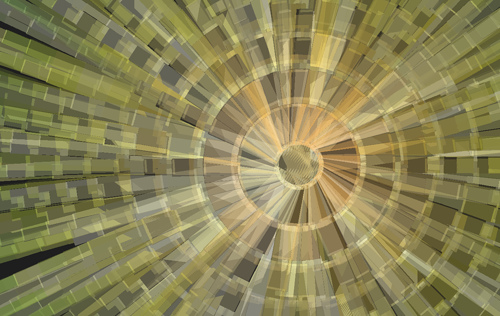
Algorithmic art is a genre where the visual design is generated by a set of rules, or an algorithm, executed by a computer. This practice, often referred to as 'algorism,' spans digital paintings, sculptures, interactive installations, and even music composition. While its modern iteration is deeply intertwined with computing, the conceptual roots of algorithmic art can be traced back to ancient practices like Islamic geometric patterns and the structured processes of weaving. The advent of digital tools has amplified its potential, enabling artists to explore complexity and precision far beyond manual capabilities, though it also introduces debates about authorship and intentionality. The field continues to evolve rapidly, fueled by advancements in AI and machine learning, pushing the boundaries of what constitutes art and the role of the artist.
🎵 Origins & History
The lineage of algorithmic art stretches back millennia, predating digital computation. Ancient Islamic art, with its intricate geometric patterns meticulously constructed according to mathematical principles, serves as a foundational precursor. Similarly, the repetitive, rule-based nature of weaving can be seen as an early form of algorithmic creation. The conceptual leap into the digital realm began in earnest with the development of computers. These early works, often abstract and geometric, demonstrated the potential for machines to participate in the creative process, laying the groundwork for future exploration.
⚙️ How It Works
At its core, algorithmic art relies on a defined set of instructions—an algorithm—that dictates how visual elements are generated, manipulated, and arranged. This can range from simple mathematical formulas to complex neural networks trained on vast datasets. An artist typically defines the parameters, variables, and constraints of the algorithm, acting as a conceptual architect. The algorithm then executes these instructions, often with elements of randomness or emergent behavior introduced to create unique outputs. For instance, an artist might write code that generates fractal patterns, simulates natural growth processes, or creates variations on a theme based on user input. The output can be a static digital image, an animation, a 3D model, or even a dynamic, interactive installation that responds to its environment, as seen in the work of artists like Refik Anadol.
📊 Key Facts & Numbers
The market for algorithmic art is experiencing significant growth. The rise of NFTs has further propelled this market. Generative art platforms like Artbreeder host millions of user-generated images, demonstrating the widespread adoption of algorithmic tools. The computational power required for complex generative processes has also become more accessible, with cloud computing services offering vast processing capabilities for artists. Furthermore, the number of academic papers and conferences dedicated to computational creativity and algorithmic art has seen a steady increase, indicating growing research interest and development in the field.
👥 Key People & Organizations
Key figures in algorithmic art include pioneers like Frieder Nake, Georg Nees, and A. Michael Noll. Contemporary artists such as Refik Anadol, known for his data-driven installations, and Hannah Perry, who explores digital fabrication and algorithmic design, are pushing the medium forward. Organizations like the Rhizome Art Foundation play a crucial role in supporting and exhibiting digital art, including algorithmic works. Research institutions and university departments, such as those at MIT Media Lab, are also hubs for innovation, fostering collaborations between artists, computer scientists, and designers. Companies like NVIDIA provide the underlying hardware and software tools that enable many of these artistic endeavors.
🌍 Cultural Impact & Influence
Algorithmic art has permeated various aspects of culture, influencing graphic design, animation, and even architectural aesthetics. Its ability to generate novel and complex visuals has made it a popular tool in advertising and visual effects for films and video games. The accessibility of generative tools has also democratized art creation, allowing individuals without traditional artistic training to produce visually compelling works. This has led to a broader public engagement with computational creativity, sparking discussions about the nature of art and authorship. Moreover, the aesthetic principles derived from algorithmic art, such as fractal geometry and emergent complexity, have found their way into fashion, product design, and urban planning, shaping our visual environment in subtle yet profound ways.
⚡ Current State & Latest Developments
The current landscape of algorithmic art is characterized by rapid advancements in GANs and other machine learning models, enabling increasingly sophisticated and nuanced outputs. Platforms like Midjourney and Stable Diffusion have brought powerful text-to-image generation capabilities to a mass audience, blurring the lines between artist and prompt engineer. Artists are exploring new forms of interactivity, with real-time generative systems responding to biometric data, environmental sensors, or social media trends. The integration of algorithmic art into virtual and augmented reality environments is also a growing trend, creating immersive artistic experiences. Furthermore, there's a burgeoning interest in the ethical implications of AI-generated art, particularly concerning copyright and originality, as highlighted by recent discussions around AI-generated entries in art competitions.
🤔 Controversies & Debates
The most significant controversy surrounding algorithmic art revolves around authorship and originality. Critics question whether an artist truly creates a work when the final output is determined by a machine, even if guided by an algorithm. This debate intensifies with the rise of generative AI tools, where prompts can yield finished pieces with minimal direct artistic intervention. The potential for algorithms to perpetuate biases present in their training data, leading to art that reflects societal inequalities, is another point of contention. The economic impact on traditional artists and the copyright implications of AI-generated works are also subjects of intense debate. For instance, the question of who owns the copyright to an image generated by DALL-E 2 remains a complex legal and ethical challenge.
🔮 Future Outlook & Predictions
The future of algorithmic art appears inextricably linked to the continued development of AI and computational power. We can anticipate more sophisticated generative models capable of producing art with greater emotional depth and conceptual complexity. The lines between human and machine creativity will likely continue to blur, leading to new collaborative models where artists and AI work in tandem. Interactive and responsive artworks will become more prevalent, seamlessly integrating with our physical and digital environments. There's also potential for algorithmic art to play a larger role in scientific visualization and education, making complex data more accessible and engaging. The ethical frameworks governing AI-generated art will need to evolve to address issues of ownership, bias, and artistic intent, shaping how this field is perceived and regulated.
💡 Practical Applications
Algorithmic art finds practical applications across numerous domains. In design, it's used for generating unique patterns for textiles, wallpapers, and product surfaces. Architects employ algorithmic tools for parametric design, optimizing building structures and facades. The entertainment industry utilizes it for creating visual effects, character designs, and procedural content in video games. Data visualization artists use algorithms to transform complex datasets into understandable and aesthetically pleasing graphics. Furthermore, algorithmic art can be used in therapeutic settings, with interactive installations designed to promote relaxation or cognitive engagement. Even in fields like fashion, algorithms are employed to design novel garment patterns and styles, demonstrating its broad utility.
Key Facts
- Category
- aesthetics
- Type
- topic