
Contents
Overview
The genesis of Aston Martin traces back to 1913, when Lionel Martin and Robert Bamford united their surnames to christen a new automotive venture. Their initial workshop, located in a shed on Henniker Mews, Kensington, London, produced its first car, the 'Coal Scuttle,' in 1914. The company's early years were marked by financial instability, a recurring theme throughout its existence, leading to its acquisition by Augustus Cesare Bertelli in 1920. Under Bertelli's stewardship, the company was renamed Aston Martin Motors and began producing road cars and racing cars, achieving notable success at the 24 Hours of Le Mans in the late 1920s. A pivotal moment arrived in 1947 when industrialist Sir David Brown purchased the company, ushering in an era of iconic models like the DB2 and the legendary DB5. Brown's vision transformed Aston Martin into a purveyor of luxurious, high-performance grand tourers, solidifying its reputation for elegance and speed, a legacy that continues to define the brand today.
⚙️ How It Works
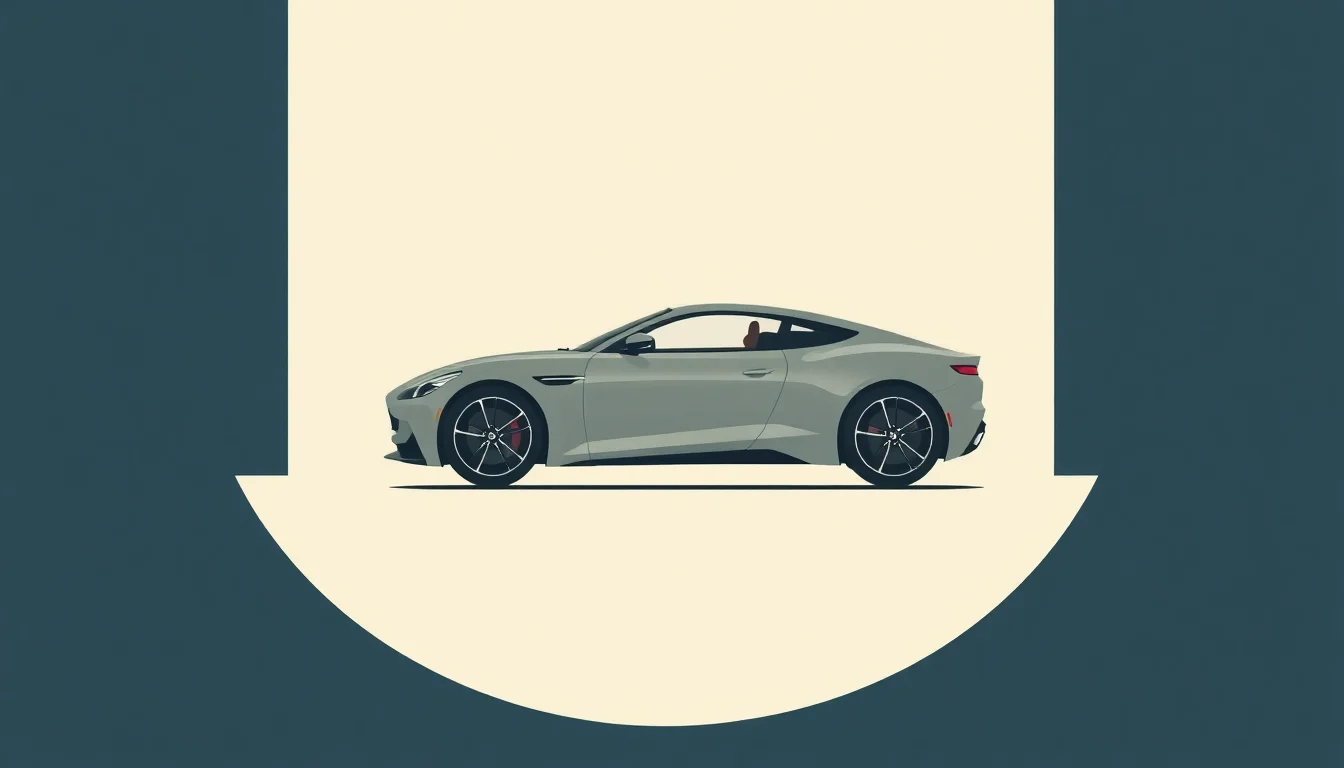
At its core, Aston Martin vehicles are engineered for a blend of exhilarating performance and refined luxury, a philosophy that dictates their design and manufacturing. Each car is a testament to meticulous craftsmanship, often featuring hand-stitched leather interiors, bespoke trim options, and hand-finished body panels. The engineering emphasizes a powerful, naturally aspirated or turbocharged engine, typically a V8 or V12, paired with a sophisticated chassis and suspension system designed for dynamic handling. Modern Aston Martins integrate advanced driver-assistance systems and infotainment technology, but the emphasis remains on the visceral driving experience. The production process, primarily at the Gaydon facility in Warwickshire, involves a significant degree of manual assembly, ensuring that each vehicle meets the brand's exacting standards for quality and exclusivity, a stark contrast to the mass-production methods of many competitors like BMW or Mercedes-Benz.
📊 Key Facts & Numbers
Aston Martin's financial narrative is as dramatic as its automotive creations. The company has faced bankruptcy seven times in its history, a testament to the high-stakes, capital-intensive nature of luxury car manufacturing. Despite these challenges, it boasts a global reach with over 160 car dealerships spanning 53 countries, demonstrating significant international market penetration. In 2003, Aston Martin was awarded the Queen's Award for Enterprise for its outstanding contribution to international trade, highlighting its export success. The brand's valuation has fluctuated wildly, with significant investments from figures like Lawrence Stroll in recent years aiming to stabilize and grow the company. The average price of a new Aston Martin can range from approximately $150,000 for models like the Vantage to upwards of $300,000 for the flagship DBS or limited editions, reflecting its ultra-luxury positioning.
👥 Key People & Organizations
The history of Aston Martin is intertwined with several key figures and organizations. Lionel Martin and Robert Bamford, the founders, set the initial vision. Sir David Brown, who acquired the company in 1947, is arguably the most influential figure, overseeing the development of many of its most celebrated models and forging the brand's association with James Bond. More recently, Canadian billionaire Lawrence Stroll led a consortium that acquired a significant stake in the company in early 2020, becoming its Executive Chairman and spearheading a strategic turnaround. The Aston Martin F1 Team (formerly Racing Point) also plays a crucial role in brand visibility and technological development, leveraging its motorsport pedigree. Other significant entities include the Mercedes-AMG division of Mercedes-Benz, which holds a technical partnership and a minority stake, providing access to advanced powertrain and electrical architecture.
🌍 Cultural Impact & Influence
Aston Martin's cultural impact extends far beyond the automotive realm, deeply embedding itself in popular culture as a symbol of British aspiration and refined taste. The indelible link to James Bond, beginning with the iconic DB5 in Goldfinger (1964), has cemented its image as the ultimate spy car, synonymous with sophistication, danger, and suave heroism. This cinematic association has been a powerful marketing tool for decades, influencing perceptions of luxury and performance. Beyond film, Aston Martin has been featured in countless other media, from music videos to fashion spreads, consistently representing a pinnacle of automotive design and engineering. Aston Martin has held a royal warrant since 1982, further underscoring its status as a national treasure and a purveyor of excellence, recognized globally as a quintessentially British icon.
⚡ Current State & Latest Developments
The current era for Aston Martin is defined by a strategic pivot towards electrification and a renewed focus on profitability under the leadership of Lawrence Stroll. The company has outlined ambitious plans to launch its first plug-in hybrid model, the Valhalla, followed by a fully electric vehicle by 2025. This transition is critical for meeting evolving emissions regulations and consumer demand, a challenge faced by all luxury automakers, including Ferrari and Lamborghini. Aston Martin has also been investing heavily in its Formula 1 program, aiming to enhance brand visibility and technological synergy between its road cars and motorsport endeavors. Recent financial results have shown signs of improvement, but the company remains under intense scrutiny to deliver on its turnaround strategy and achieve sustainable growth in a highly competitive market.
🤔 Controversies & Debates
The most persistent controversy surrounding Aston Martin is its historical financial instability, having undergone seven bankruptcies. This recurring pattern raises questions about the long-term viability of its business model, which relies on low-volume, high-margin sales in a capital-intensive industry. Critics often point to the significant investments required for developing new platforms and powertrains, particularly the costly transition to electrification, as potential stumbling blocks. The brand's reliance on high-profile partnerships, such as its technical tie-up with Mercedes-Benz, also sparks debate about its independence and the extent to which it controls its own technological destiny. Furthermore, the exclusivity and high price point of its vehicles naturally limit its market share, leading to ongoing discussions about its competitive positioning against rivals like Porsche and Bentley.
🔮 Future Outlook & Predictions
The future of Aston Martin hinges on its successful navigation of the automotive industry's seismic shift towards electrification and autonomous driving. The company's roadmap includes the introduction of hybrid and fully electric models, a move essential for remaining relevant in global markets. The Formula 1 team is expected to play an increasingly significant role in driving technological innovation and brand awareness, with potential spillover benefits for road car development. Analysts predict that Aston Martin will continue to focus on its core strengths of design, performance, and luxury, while seeking strategic partnerships to manage the immense costs of electrification. The success of its turnaround plan, spearheaded by Lawrence Stroll, will be crucial in determining whether Aston Martin can secure a stable and prosperous future, potentially solidifying its position as a leading independent luxury automotive brand.
💡 Practical Applications
Aston Martin's primary application is as a high-performance luxury automobile, serving discerning customers who value design, engineering, and exclusivity. Beyond personal ownership, Aston Martin vehicles are often featured in automotive media, film, and television, serving as aspirational objects and cultural touchstones. The brand's association with motorsport through the Aston Martin F1 Team also serves as a platform for technological developme
Key Facts
- Category
- aesthetics
- Type
- topic