
Contents
- 🏛️ What is the Austrian Government?
- 📍 Location & Access: The Ballhausplatz
- 🗓️ When to Visit & What to Expect
- ⚖️ Structure of Power: Chancellor, Ministers, and Parliament
- 📜 Key Historical Milestones
- 💡 How it Actually Works: The Coalition Dance
- 💰 Funding & Budgetary Oversight
- ⭐ Vibe Check: Public Perception & Trust
- 🌐 International Relations & EU Influence
- 🚀 Future Trajectories & Potential Shifts
- ❓ Frequently Asked Questions
- 🔗 Related Vibepedia Entries
- Frequently Asked Questions
- Related Topics
Overview
Austria's government operates as a federal parliamentary republic, a system shaped by centuries of history and a commitment to consensus. At its apex sits the Federal President, a largely ceremonial but symbolically crucial figure, currently Alexander Van der Bellen. The real executive power resides with the Federal Chancellor, who leads the cabinet and is typically the head of the strongest party or coalition in the National Council (Nationalrat), the lower house of parliament. This bicameral legislature, comprising the National Council and the Federal Council (Bundesrat), is where the nation's laws are debated and enacted. Understanding Austria's political landscape requires grasping the interplay between these institutions, the influence of its federal states (Länder), and the enduring legacy of its coalition governments, often characterized by a 'grand coalition' between the conservative ÖVP and the social democratic SPÖ, though recent years have seen shifts.
🏛️ What is the Austrian Government?
The Austrian Government, officially the Federal Government (Bundesregierung), is the executive arm of the Republic of Austria. It's not just a collection of offices; it's the engine room where policy is forged and implemented. Think of it as the cabinet of ministers, led by the Chancellor, who steer the nation's course. This entity is responsible for the day-to-day administration of the country, from economic policy to foreign affairs, and its decisions ripple through every aspect of Austrian life. Understanding its composition and function is key to grasping the nation's political pulse.
📍 Location & Access: The Ballhausplatz
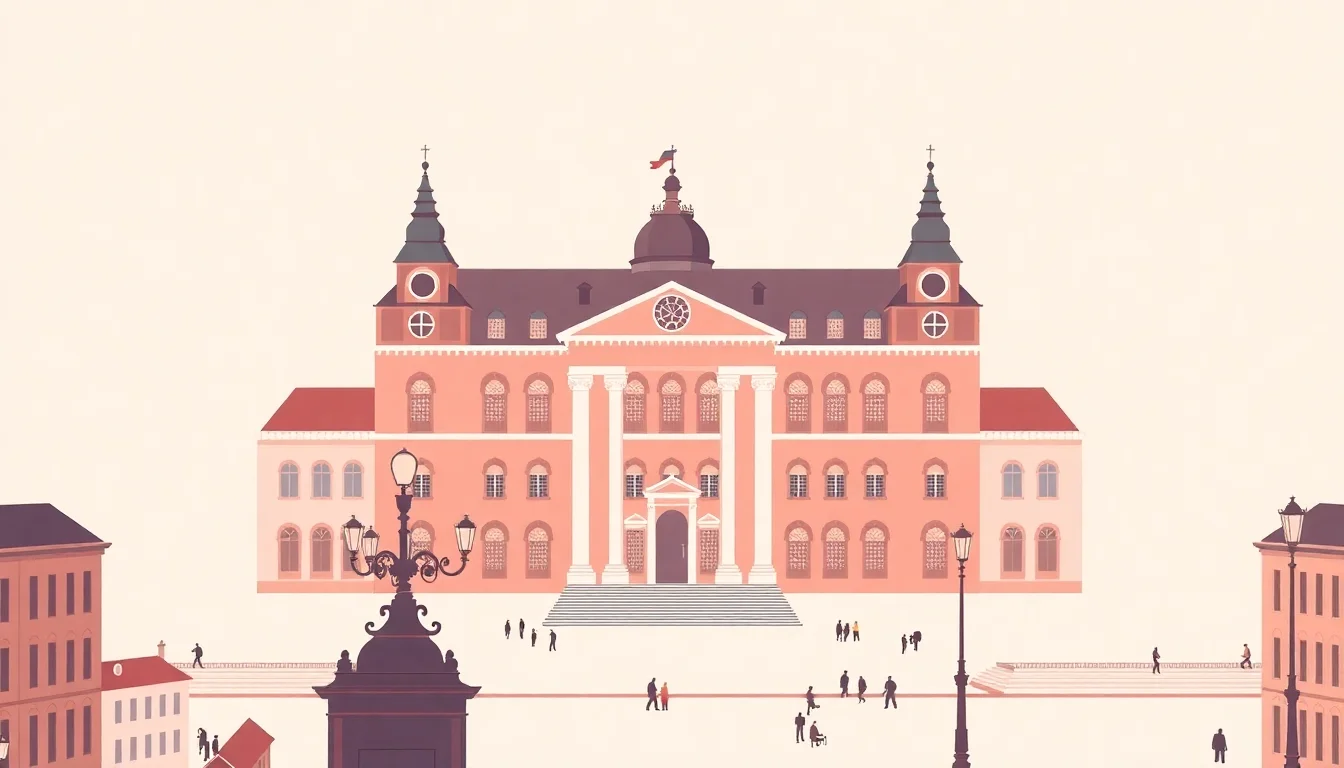
The physical heart of the Austrian Government beats at the Federal Chancellery on Ballhausplatz in Vienna. This imposing building is more than just an address; it's a symbol of executive power. While public access to ministerial offices is restricted, the surrounding area is a hub of political activity. You can observe the comings and goings of officials, and the grandeur of the architecture offers a tangible sense of the state's presence. It’s a place where history is made, and where the nation’s future is debated behind closed doors.
🗓️ When to Visit & What to Expect
The Austrian Government operates year-round, with its core functions continuing regardless of the season. However, the political calendar is punctuated by significant events like parliamentary sessions, which typically run from September to July, and elections, which can occur every few years. Visiting Vienna during these periods offers a chance to witness the political machinery in motion, though public tours of government buildings are rare. The most accessible way to engage is through public debates and official announcements, often covered extensively by Austrian media.
⚖️ Structure of Power: Chancellor, Ministers, and Parliament
At the apex sits the Bundeskanzler, currently Karl Nehammer, who is the head of government and the most powerful political figure. Alongside the Chancellor is the Vizekanzler, who often represents a coalition partner. The government is further composed of various ministers, each heading a specific department (e.g., Finance, Interior, Foreign Affairs). These ministers, along with the Chancellor and Vice Chancellor, form the cabinet. Their actions are subject to parliamentary oversight by the Nationalrat and the Bundesrat, the two chambers of the Austrian Parliament.
📜 Key Historical Milestones
Austria's governmental history is a complex narrative. The establishment of the First Republic in 1918, following the collapse of the Austro-Hungarian Empire, laid the groundwork for modern parliamentary democracy. The interwar period saw significant political turmoil, leading to the authoritarian Ständestaat and subsequent Anschluss with Nazi Germany. Post-World War II, the Second Republic was founded in 1945, ushering in a long era of coalition governments, particularly between the ÖVP and the SPÖ. Key moments include the constitutional reforms of the 1920s and the enduring neutrality pact of 1955.
💡 How it Actually Works: The Coalition Dance
The Austrian Government functions through a system of coalition politics, a hallmark of its post-war stability. Since the 1970s, no single party has held an absolute majority, necessitating the formation of coalition governments. This means that the Chancellor and ministers are often drawn from different political parties, requiring constant negotiation and compromise. The current coalition, for example, involves the ÖVP and the Greens, a pairing that reflects a significant shift in the political landscape. This collaborative, albeit sometimes tense, approach shapes policy outcomes and governmental stability.
💰 Funding & Budgetary Oversight
The Austrian Government is funded through taxation and other state revenues, managed by the Bundesministerium für Finanzen. The annual budget is a critical document, debated and approved by the Nationalrat. This process involves extensive scrutiny of proposed expenditures and revenue projections. Public funds are allocated to various ministries and state functions, from social welfare programs to infrastructure projects. Transparency in budgetary matters is a key concern, with oversight mechanisms in place to ensure accountability and prevent misuse of public funds.
⭐ Vibe Check: Public Perception & Trust
Public perception of the Austrian Government is a dynamic entity, often reflected in Vibe scores for political institutions. Historically, there has been a degree of trust in established parties, but recent years have seen fluctuating approval ratings, influenced by scandals, policy effectiveness, and the performance of coalition partners. The ÖVP and the SPÖ have traditionally been the dominant forces, but the rise of parties like the FPÖ and the Greens has reshaped the political consensus. Citizen engagement, protests, and media commentary all contribute to the ongoing narrative of public trust.
🌐 International Relations & EU Influence
As a member of the EU, Austria's government operates within a complex supranational framework. EU directives and regulations significantly influence national policy, particularly in areas like trade, environmental standards, and justice. The Austrian government actively participates in EU decision-making processes through its representation in the Council of Ministers and the European Parliament. This dual role means that Austrian policy is shaped both by domestic priorities and by its commitments and influence within the broader European context.
🚀 Future Trajectories & Potential Shifts
The future of the Austrian Government is likely to be characterized by continued coalition negotiations and evolving political alignments. The increasing fragmentation of the party system suggests that forming stable majorities will remain a challenge. Key debates will likely revolve around economic competitiveness, climate change policy, immigration, and Austria's role within the EU. The rise of populist sentiments and the digital transformation of society will also exert pressure on traditional governance structures, potentially leading to new forms of political engagement and policy innovation.
❓ Frequently Asked Questions
What is the primary role of the Austrian Government? The primary role is to administer the Republic of Austria, implementing laws passed by parliament, managing state finances, conducting foreign policy, and ensuring public services. It's the executive body responsible for the day-to-day running of the country.
Who leads the Austrian Government? The Federal Chancellor (Bundeskanzler) is the head of government, currently Karl Nehammer. They are appointed by the President and lead the cabinet of ministers.
How are ministers appointed? Ministers are typically proposed by the Chancellor and appointed by the President. They are usually members of the parties forming the governing coalition.
What is a coalition government in Austria? Due to the electoral system, it's rare for one party to win an outright majority. A coalition government is formed when two or more political parties agree to govern together, sharing ministerial posts and policy responsibilities.
How can I find out about current government policies? Official government websites, press releases from the Federal Chancellery, and reputable Austrian news outlets are the best sources for information on current policies and government activities.
Is it possible to visit government buildings? Public access to ministerial offices is generally restricted. However, some historical buildings or specific event days might offer limited public tours. Checking the official websites of the respective ministries is advisable.
Key Facts
- Year
- 1918
- Origin
- The modern Austrian state, in its current republican form, emerged from the dissolution of the Austro-Hungarian Empire following World War I.
- Category
- Government & Politics
- Type
- Governmental Body
Frequently Asked Questions
What is the primary role of the Austrian Government?
The primary role is to administer the Republic of Austria, implementing laws passed by parliament, managing state finances, conducting foreign policy, and ensuring public services. It's the executive body responsible for the day-to-day running of the country.
Who leads the Austrian Government?
The Federal Chancellor (Bundeskanzler) is the head of government, currently Karl Nehammer. They are appointed by the President and lead the cabinet of ministers.
How are ministers appointed?
Ministers are typically proposed by the Chancellor and appointed by the President. They are usually members of the parties forming the governing coalition.
What is a coalition government in Austria?
Due to the electoral system, it's rare for one party to win an outright majority. A coalition government is formed when two or more political parties agree to govern together, sharing ministerial posts and policy responsibilities.
How can I find out about current government policies?
Official government websites, press releases from the Federal Chancellery, and reputable Austrian news outlets are the best sources for information on current policies and government activities.
Is it possible to visit government buildings?
Public access to ministerial offices is generally restricted. However, some historical buildings or specific event days might offer limited public tours. Checking the official websites of the respective ministries is advisable.