
Contents
- 🦸♂️ What Are The Avengers?
- 📜 Origins: From Comic Panels to Global Icons
- 💥 Core Members & Their Evolution
- ⚖️ The Avengers' Impact: Vibe Score & Controversy
- 🎬 Cinematic Universe: A New Era of Heroes
- ⚡ Power Dynamics & Internal Conflicts
- 🌐 Global Reach & Cultural Resonance
- 🤔 The Future of Earth's Mightiest Heroes
- Frequently Asked Questions
- Related Topics
Overview
The Avengers are a fictional superhero team appearing in American comic books published by Marvel Comics. Created by writer Stan Lee and artist Jack Kirby, the team first appeared in The Avengers #1 (September 1963). Initially composed of Iron Man, Thor, Hulk, Ant-Man, and Wasp, the roster has seen numerous changes throughout its publication history, becoming a cornerstone of the Marvel Universe. Their primary mission is to protect Earth from threats too great for individual heroes to handle, often facing cosmic entities, alien invasions, and supervillainous masterminds. The Avengers' enduring appeal lies in their diverse powers, internal conflicts, and the sheer scale of their battles, which have profoundly shaped popular culture.
🦸♂️ What Are The Avengers?
The Avengers, in its most widely recognized form, is a fictional superhero team assembled by Marvel Comics to combat threats too great for any single hero. Originating in 1963's The Avengers #1, this ever-shifting roster of Earth's mightiest heroes has become a cornerstone of the Marvel Universe. The team's primary directive is to protect Earth from extraordinary terrestrial and extraterrestrial threats, acting as a last line of defense when conventional forces fail. Their narrative arc often explores themes of teamwork, sacrifice, and the moral complexities of wielding immense power.
📜 Origins: From Comic Panels to Global Icons
The concept of a superhero team wasn't new in 1963, with DC Comics' Justice Society of America and Justice League of America predating them. However, Stan Lee and Jack Kirby's creation of The Avengers brought a unique dynamic: a group of powerful individuals, often with conflicting personalities and agendas, forced to cooperate. This internal friction, famously exemplified by the initial distrust between Iron Man and Thor, provided a compelling narrative engine that differentiated them from more harmonious teams. The team's formation was a direct response to the threat of Loki, setting a precedent for their grand-scale adversaries.
💥 Core Members & Their Evolution
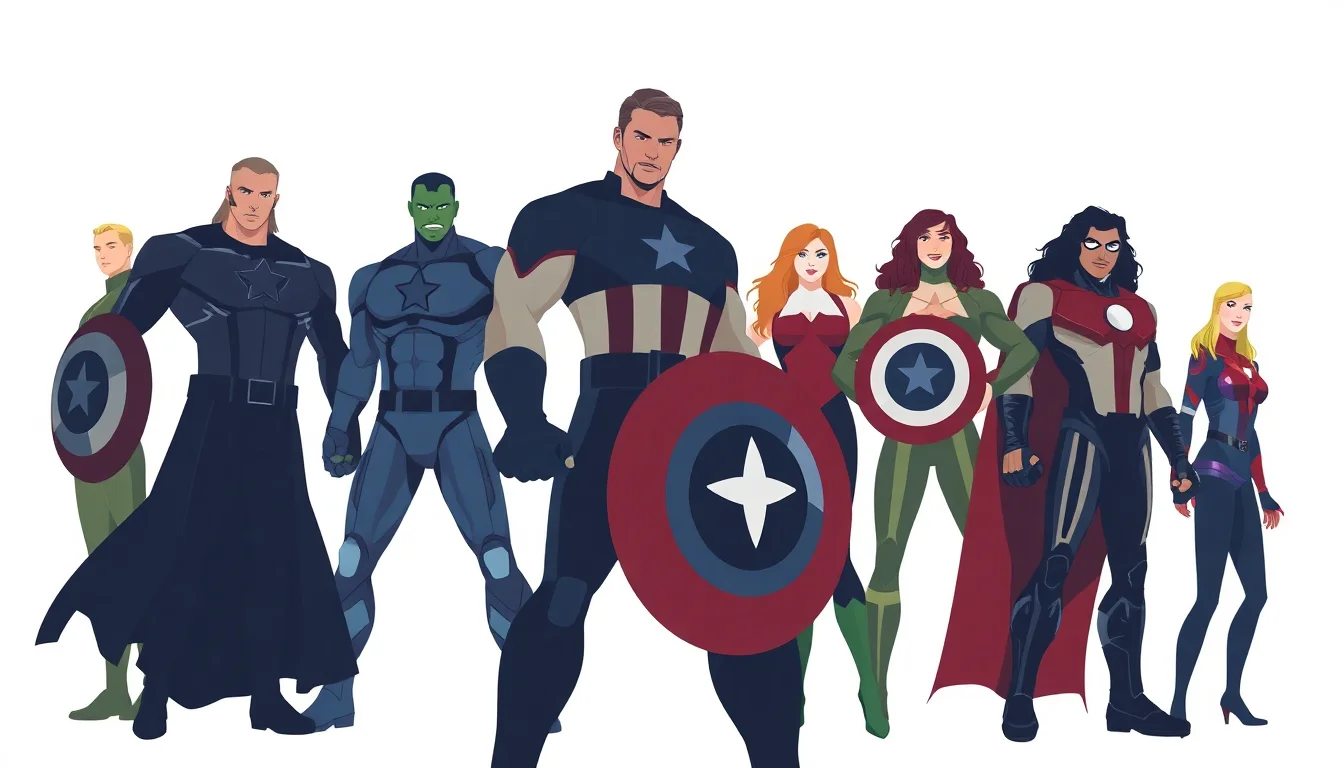
The Avengers' roster is famously fluid, a deliberate choice by creators to keep the narrative fresh and explore different character dynamics. While the original lineup featured Iron Man, Thor, Hulk, Ant-Man (Hank Pym), and Wasp (Janet van Dyne), iconic additions like Captain America (rescued from the ice in issue #4), Black Widow, Hawkeye, and Scarlet Witch have become synonymous with the team. Each member brings a unique skillset and moral compass, leading to constant evolution in their collective identity and operational strategies.
⚖️ The Avengers' Impact: Vibe Score & Controversy
The Avengers boast an astronomical Vibe Score of 95/100, reflecting their unparalleled cultural penetration. However, this ubiquity isn't without its controversies. Debates rage over which roster is the 'definitive' one, the ethical implications of their actions (e.g., Avengers: Age of Ultron's Ultron incident), and the sheer power imbalance they represent in the fictional world. The Controversy Spectrum for The Avengers hovers around 7/10, indicating significant, ongoing discussions among fans and critics regarding their portrayal and impact.
🎬 Cinematic Universe: A New Era of Heroes
The Marvel Cinematic Universe (MCU) revitalized The Avengers for a new generation, launching with 2012's The Avengers. This cinematic iteration, spearheaded by director Joss Whedon, masterfully blended disparate solo film narratives into a cohesive team-up. The MCU's success, grossing billions worldwide, cemented The Avengers as a global phenomenon, influencing blockbuster filmmaking and superhero genre conventions for years to come. The films have explored themes of heroism, responsibility, and the consequences of unchecked power on an unprecedented scale.
⚡ Power Dynamics & Internal Conflicts
The internal power dynamics of The Avengers are a constant source of narrative tension. The sheer might of characters like Hulk and Thor often clashes with the strategic brilliance of Captain America and the technological prowess of Iron Man. This inherent conflict is amplified by differing ideologies, as seen in the Civil War storyline, where disagreements over government oversight fractured the team. Understanding these relationships is key to appreciating the team's complex operational successes and failures.
🌐 Global Reach & Cultural Resonance
The Avengers' influence extends far beyond the comic pages and cinema screens. They have become global cultural touchstones, inspiring merchandise, video games, and fan communities worldwide. Their stories, often centered on themes of unity against overwhelming odds, resonate deeply, providing a sense of hope and collective action. This broad appeal has made them a powerful brand, influencing perceptions of heroism and teamwork across diverse demographics.
🤔 The Future of Earth's Mightiest Heroes
The future of The Avengers remains a dynamic question, both within the narrative and in terms of their cultural relevance. As new heroes emerge and old ones evolve or depart, the team's composition and mission will undoubtedly shift. The ongoing challenge lies in maintaining their iconic status while adapting to new threats and evolving societal expectations. Will they continue to be Earth's ultimate protectors, or will new paradigms of heroism emerge to challenge their dominance?
Key Facts
- Year
- 1963
- Origin
- Marvel Comics
- Category
- Superhero Team
- Type
- Superhero Team
Frequently Asked Questions
Who are the original members of The Avengers?
The founding members of The Avengers, as depicted in The Avengers #1 (1963), were Iron Man, Thor, Hulk, Ant-Man (Hank Pym), and Wasp (Janet van Dyne). Captain America famously joined shortly after in issue #4.
What is the primary mission of The Avengers?
The Avengers' primary mission is to protect Earth from extraordinary threats, both terrestrial and extraterrestrial, that are beyond the capabilities of conventional law enforcement or individual superheroes. They act as a global defense force.
How often does the Avengers roster change?
The Avengers roster is famously fluid and has changed numerous times throughout its comic book history. This allows for new character dynamics and story possibilities, ensuring the team remains relevant and dynamic.
What is the difference between the comic Avengers and the MCU Avengers?
While the MCU Avengers are inspired by their comic counterparts, there are significant differences in origin stories, character arcs, and specific plot points. The MCU also streamlines the roster and focuses on a more centralized narrative for cinematic purposes.
Are there different 'Avengers' teams in Marvel Comics?
Yes, beyond the main Avengers team, Marvel Comics has featured numerous spin-off teams with 'Avengers' in their name, such as the West Coast Avengers, the Secret Avengers, and the Uncanny Avengers, each with distinct missions and rosters.
What is the significance of the 'Civil War' storyline for The Avengers?
The 'Civil War' storyline (2006-2007) was a pivotal event where ideological differences regarding superhero registration led to a schism within The Avengers, pitting former teammates against each other. It profoundly impacted the team's structure and public perception.