
Contents
Overview
AWS IoT is a comprehensive suite of cloud services designed to enable businesses to connect, manage, and secure Internet of Things (IoT) devices. It provides a scalable and robust infrastructure for collecting data from devices, processing it, and acting upon it. The platform offers a range of services, including AWS IoT Core for device connection and message brokering, AWS IoT Device Management for onboarding and managing device fleets, and AWS IoT Analytics for analyzing IoT data. AWS IoT facilitates everything from smart home automation and industrial monitoring to connected vehicles and healthcare solutions, underpinning a significant portion of the global IoT ecosystem. Its integration with other AWS services like Amazon S3, Amazon Kinesis, and AWS Lambda allows for sophisticated data processing, storage, and application development.
🎵 Origins & History
The genesis of AWS IoT can be traced back to Amazon's broader strategy to leverage its massive cloud infrastructure for emerging technologies. Recognizing the need for a scalable, secure, and managed cloud backend for the burgeoning number of connected devices, Amazon announced AWS IoT Core at its annual AWS re:Invent conference. This initial offering provided essential device connectivity, message routing, and security features, laying the groundwork for a comprehensive IoT platform. The subsequent years saw rapid expansion with the introduction of services like AWS IoT Device Management and AWS IoT Analytics, reflecting Amazon's commitment to addressing the full lifecycle of IoT solutions.
⚙️ How It Works
At its core, AWS IoT operates by providing a secure and scalable cloud gateway for devices to communicate. AWS IoT Core acts as the central hub, enabling devices to connect using standard protocols like MQTT, HTTP, and WebSockets. It handles device authentication and authorization through X.509 certificates and AWS Identity and Access Management (IAM). Once connected, devices can publish messages to topics, which are then routed by AWS IoT Core to various AWS services or custom applications. AWS IoT Device Management simplifies the onboarding, organization, and remote management of device fleets, including firmware updates and diagnostics. AWS IoT Analytics provides tools for cleaning, transforming, and analyzing large volumes of IoT data, often feeding insights into Amazon QuickSight for visualization or triggering actions via AWS Lambda.
📊 Key Facts & Numbers
As of early 2024, AWS IoT supports billions of connected devices, processing trillions of messages monthly. The platform's global infrastructure spans 25 AWS Regions, ensuring low latency and high availability for devices worldwide. AWS IoT Core alone handles an average of 1.7 trillion messages per month, a figure that has seen consistent year-over-year growth exceeding 100%. The cost structure is consumption-based, with pricing for AWS IoT Core starting at $0.000000001 per message for the first 100 billion messages. AWS IoT Device Defender has been adopted by over 50,000 organizations to monitor and secure their IoT fleets, with an estimated 95% reduction in security incidents reported by users.
👥 Key People & Organizations
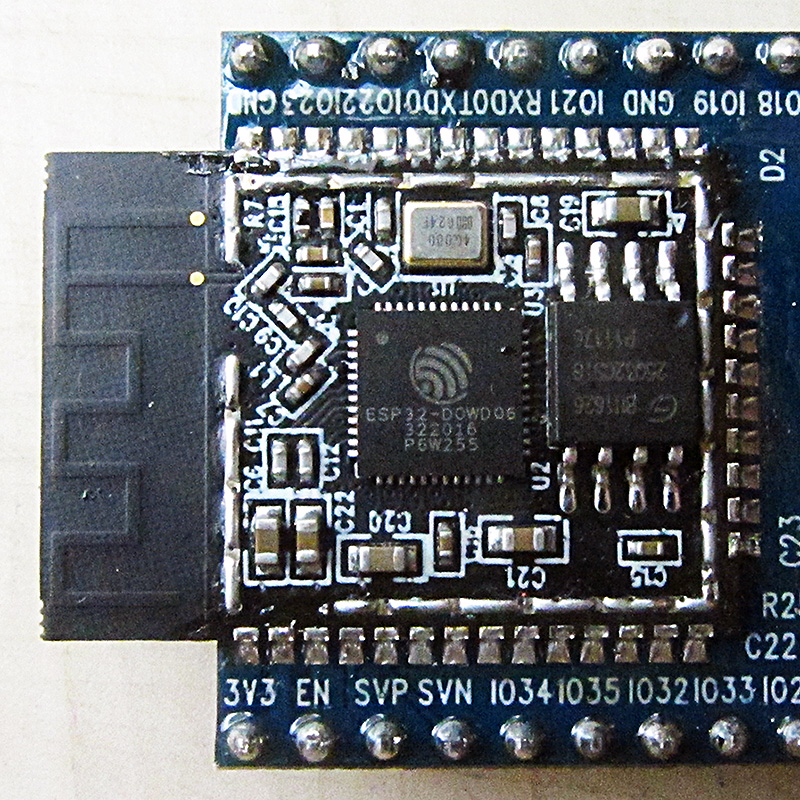
The AWS IoT ecosystem is shaped by a confluence of Amazon's internal leadership and a vast network of partners and developers. Andy Jassy, former CEO of AWS and now CEO of Amazon, was instrumental in driving the cloud platform's expansion, including its IoT capabilities. Key figures within the AWS IoT team, such as Jonathan Emery (Director of AWS IoT), have been pivotal in defining the product roadmap and strategy. Beyond Amazon, the platform's success is amplified by hardware manufacturers like Espressif Systems (makers of ESP32 microcontrollers), STMicroelectronics, and NXP Semiconductors, who provide devices optimized for AWS IoT integration. A significant portion of the developer community relies on resources from Hackster.io and Adafruit for prototyping and learning.
🌍 Cultural Impact & Influence
AWS IoT has profoundly influenced the trajectory of connected devices, democratizing access to enterprise-grade cloud infrastructure for IoT solutions. It has enabled a surge in innovation across industries, from smart agriculture using AWS IoT Analytics to monitor crop conditions, to smart cities leveraging AWS IoT Device Management for public infrastructure. The platform's robust security features, including AWS IoT Device Defender, have set a benchmark for securing IoT deployments, influencing industry best practices. Its integration with Amazon Alexa has also blurred the lines between consumer IoT and cloud services, making voice-controlled smart home experiences more accessible. The sheer scale of AWS IoT has also driven down costs for IoT connectivity and data processing, accelerating adoption globally.
⚡ Current State & Latest Developments
The AWS IoT platform continues its rapid evolution in 2024 with a focus on enhanced machine learning capabilities and edge computing. Recent developments include the expansion of AWS IoT Greengrass to support more complex edge AI workloads, allowing for local processing of data and faster decision-making. Amazon has also introduced new features for AWS IoT TwinMaker, which simplifies the creation of digital twins for industrial environments, integrating real-world data with 3D models. Furthermore, there's a growing emphasis on sustainability, with new tools to help customers monitor and optimize the energy consumption of their connected devices. The integration of generative AI capabilities into IoT analytics is also a key area of exploration for future service offerings.
🤔 Controversies & Debates
The primary controversies surrounding AWS IoT often revolve around data privacy, security vulnerabilities, and vendor lock-in. Critics argue that the vast amounts of data collected from connected devices raise significant privacy concerns, especially when sensitive information is involved. While AWS IoT Device Defender aims to mitigate security risks, the complexity of IoT networks presents a persistent attack surface, with high-profile breaches occasionally highlighting these vulnerabilities. Vendor lock-in is another point of contention; once a company commits to the AWS IoT ecosystem, migrating to a different cloud provider can be a complex and costly undertaking due to deep integrations with other AWS services. The environmental impact of massive data centers powering these services also remains a subject of ongoing debate.
🔮 Future Outlook & Predictions
The future of AWS IoT is poised for deeper integration with artificial intelligence and edge computing, alongside a continued push towards industry-specific solutions. Expect to see more sophisticated predictive maintenance capabilities powered by AWS IoT Analytics and Amazon SageMaker on the edge via AWS IoT Greengrass. The development of more autonomous systems, from connected vehicles to robotic factories, will rely heavily on the platform's ability to process data and make decisions in near real-time. Furthermore, Amazon is likely to expand its offerings for specific verticals like healthcare and manufacturing, providing tailored solutions that address unique regulatory and operational requirements. The increasing demand for digital twins, facilitated by AWS IoT TwinMaker, suggests a future where virtual replicas of physical assets become standard for monitoring and optimization.
💡 Practical Applications
AWS IoT finds practical application across a vast spectrum of industries. In manufacturing, it enables predictive maintenance for machinery, reducing downtime and optimizing production schedules through services like AWS IoT Analytics. For smart homes, it powers voice-controlled devices, automated lighting, and security systems integrated with Amazon Alexa. In the automotive sector, it facilitates connected car features, fleet management, and over-the-air software updates. Healthcare providers use AWS IoT for remote patient monitoring, ensuring timely alerts and data analysis for better patient care. Retailers leverage it for inventory management, smart shelves, and personalized customer experiences. Even in agriculture, it aids in optimizing irrigation and monitoring crop health.
Key Facts
- Category
- technology
- Type
- topic