
Contents
Overview
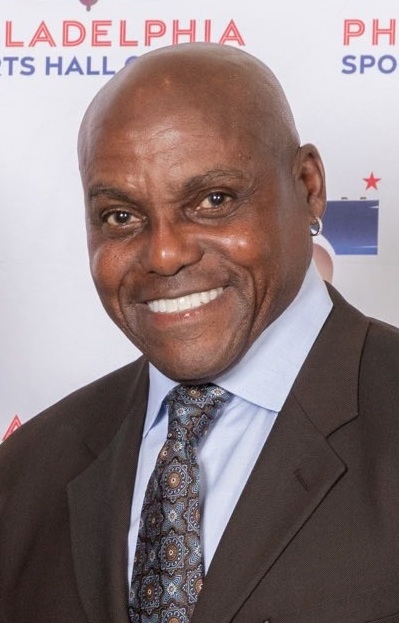
Frederick Carlton Lewis, born July 1, 1961, is an American track and field legend. Dominating both sprinting and the long jump from the early 1980s through the mid-1990s, Lewis achieved an unprecedented feat by winning gold in the same individual event across four consecutive Olympic Games. His career was marked by a remarkable 65 consecutive victories in the long jump, a streak spanning a decade, and world records in the 100m and various relay events. Beyond his athletic prowess, Lewis has also ventured into coaching, notably as the head track and field coach for the University of Houston, and has been recognized with numerous accolades, including the Associated Press Athlete of the Year award multiple times. His influence extends beyond the track, making him a significant cultural icon in sports history.
🎵 Origins & History
Frederick Carlton Lewis emerged from Willingboro, New Jersey, a product of a family deeply rooted in athletics; his father, William Lewis, was a football player, and his mother, Evelyn Lewis, was a coach. Born on July 1, 1961, Lewis's athletic trajectory was clear from a young age. He honed his skills at Willingboro High School, where his prodigious talent in both sprinting and the long jump quickly garnered national attention. His collegiate career at the University of Houston further propelled him onto the international stage, setting the stage for a professional career that would redefine track and field excellence. Lewis's early development was shaped by dedicated coaching and a competitive environment that fostered his innate abilities, preparing him for the global spotlight.
⚙️ How It Works
Lewis's dominance stemmed from a rare combination of explosive speed and exceptional leaping ability, meticulously trained and executed. In sprinting, his technique emphasized a powerful drive phase and a high cadence, allowing him to excel in the 100 meters and 200 meters. For the long jump, his approach was characterized by a strong, consistent run-up, a precise takeoff, and an explosive, technically refined jump. He employed techniques like the 'hitch-kick' to maximize his distance in the air. This dual-threat capability meant he was a constant threat in multiple disciplines, requiring competitors to prepare for different challenges depending on the event. His training regimen, overseen by coaches like Tom Tellez, was rigorous, focusing on strength, speed, endurance, and technical precision, ensuring he was always at peak performance.
📊 Key Facts & Numbers
Carl Lewis's career statistics are staggering: he amassed nine Olympic gold medals and one silver, alongside ten World Championship medals, including eight golds. He is one of only six athletes to win an individual Olympic event four times consecutively, a feat matched by Al Oerter in discus. Lewis topped the world rankings in the 100m, 200m, and long jump multiple times between 1981 and the early 1990s. His world record in the indoor long jump, set in 1984, remained unbroken for decades. Furthermore, his 65 consecutive long jump victories over a ten-year span is one of the most remarkable streaks in sports history, underscoring his unparalleled consistency and dominance.
👥 Key People & Organizations
Key figures in Carl Lewis's career include his long-time coach Tom Tellez, who guided him through much of his Olympic success at the University of Houston. His contemporary rivals, such as Ben Johnson in sprinting and Mike Powell in the long jump, pushed him to his limits and defined an era of intense competition. The International Olympic Committee (IOC) and World Athletics (formerly IAAF) are the governing bodies whose events provided the global stage for his achievements. Organizations like the Associated Press and L'Équipe recognized his unparalleled performances with Athlete of the Year awards, solidifying his legendary status.
🌍 Cultural Impact & Influence
Carl Lewis's impact transcends mere athletic achievement; he became a global icon synonymous with excellence and perseverance in the 1980s and 1990s. His ability to win across multiple disciplines challenged conventional thinking about athletic specialization. Lewis's performances were often broadcast to millions worldwide, inspiring a generation of athletes and sports fans. He was a prominent figure in the 1984 Los Angeles Olympics, a Games that significantly boosted the commercial appeal of track and field. His image graced magazine covers, including multiple appearances in Sports Illustrated, and he became a sought-after endorser for brands like Nike, further embedding him in popular culture.
⚡ Current State & Latest Developments
In recent years, Carl Lewis has transitioned into a prominent coaching role, most notably as the head track and field coach at the University of Houston since 2014. He continues to shape the next generation of athletes, imparting his knowledge and experience. While his competitive days are behind him, Lewis remains an active voice in sports, occasionally commenting on current events and athlete performances. He has also been involved in various charitable initiatives and public speaking engagements, maintaining a visible presence in the sports world and beyond. His focus now is on nurturing talent and advocating for the sport he dedicated his life to.
🤔 Controversies & Debates
One of the most persistent controversies surrounding Carl Lewis involves the 1988 Seoul Olympics 100m final. While Lewis finished second to Ben Johnson, Johnson was later disqualified for doping, and Lewis was retroactively awarded the gold medal. However, Lewis himself faced scrutiny regarding missed drug tests earlier in his career, though he was never formally sanctioned. Another point of discussion has been the perceived rivalry and tension between Lewis and other prominent athletes of his era, particularly Mike Powell, whose world record in the long jump eventually surpassed Lewis's. These debates highlight the intense competitive pressures and the evolving standards of athletic integrity during his era.
🔮 Future Outlook & Predictions
The future for Carl Lewis likely involves continued leadership in collegiate athletics, potentially grooming future Olympians and world champions at the University of Houston. His influence may extend to broader roles within sports governance or advocacy, leveraging his extensive experience and public profile. As the landscape of track and field evolves with new training methodologies and emerging talents, Lewis's role as a mentor and a figurehead remains significant. There's also potential for him to contribute to the narrative of sports history through documentaries, autobiographical works, or continued commentary on the sport's development, ensuring his legacy continues to inspire.
💡 Practical Applications
Carl Lewis's primary practical application lies in his role as a coach and mentor. At the University of Houston, he applies his decades of elite experience to train student-athletes in sprinting, jumping, and multi-event disciplines. His coaching philosophy emphasizes discipline, technical mastery, and mental fortitude, mirroring the principles that underpinned his own unparalleled career. Beyond coaching, Lewis has served as an inspirational speaker, sharing his insights on success, overcoming adversity, and the pursuit of excellence with corporate audiences and aspiring individuals. His athletic achievements also serve as a benchmark for performance analysis and training program design in track and field globally.
Key Facts
- Category
- culture
- Type
- person