
Contents
Overview
The Chechen Wars against Russia encompass two major armed conflicts and a protracted insurgency that have defined the relationship between the Chechen Republic of Ichkeria and the Russian Federation. The First Chechen War (1994-1996) erupted after Chechnya declared independence, resulting in a devastating conflict and a nominal peace treaty. The Second Chechen War (1999-2009), triggered by cross-border incursions and apartment bombings, saw a more brutal Russian military campaign that reasserted federal control but failed to extinguish the insurgency. These wars have left deep scars on both societies, characterized by immense human cost, widespread destruction, and complex geopolitical ramifications, including the rise of figures like Shamil Basayev and the eventual consolidation of power under Ramzan Kadyrov with Moscow's backing.
🎵 Origins & History
The roots of the Chechen Wars stretch back centuries, marked by Chechen resistance to Russian imperial expansion beginning in the 18th century. The Soviet era itself was not without its tensions, notably the brutal deportation of the Chechen people under Joseph Stalin in 1944, a historical trauma that fueled later separatist sentiments. Following the Soviet Union's collapse in 1991, Chechnya, under Dzhokhar Dudayev, declared independence, setting the stage for the First Chechen War. The first war concluded with the Khasavyurt Accords in 1996, granting Chechnya de facto independence for three years, a period marred by internal strife and banditry.
⚙️ How It Works
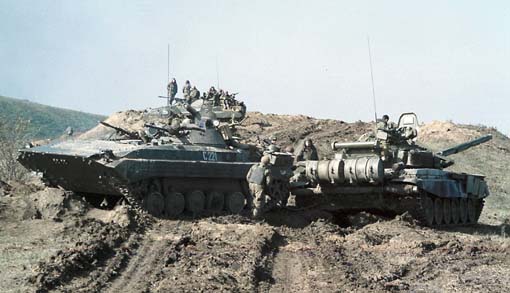
The First Chechen War (1994-1996) was characterized by direct, large-scale conventional warfare. The Russian military, despite its numerical superiority, struggled against determined Chechen guerrilla tactics and urban warfare, particularly in the disastrous Battle of Grozny. The Second Chechen War (1999-2009) began with a more strategic, albeit brutal, approach by Russia. Following alleged apartment bombings in Russian cities, which Moscow blamed on Chechen militants, Russia launched a massive military operation. This involved extensive aerial bombardment, a prolonged siege of Grozny, and the eventual establishment of a pro-Moscow administration. The conflict evolved into a protracted counter-insurgency campaign, with Chechen fighters employing asymmetric warfare, including suicide bombings and ambushes, across the North Caucasus region, often coordinated by figures like Shamil Basayev.
📊 Key Facts & Numbers
The human cost of the Chechen Wars is staggering. Estimates suggest over 100,000 civilians perished in the First Chechen War alone, with the Second War also resulting in tens of thousands of deaths, both combatant and civilian. The economic devastation is equally profound; Grozny, the Chechen capital, was reduced to rubble during the Second War, with reconstruction costs estimated in the billions of dollars. Over 250,000 people were displaced during the conflicts, creating a significant refugee crisis. Russian military casualties are officially reported in the thousands for each war, though independent estimates often suggest higher figures. The economic impact on Russia also includes substantial military expenditures, estimated to be in the tens of billions of dollars over the two decades of conflict.
👥 Key People & Organizations
Key figures dominate the narrative of the Chechen Wars. Dzhokhar Dudayev, the first president of Ichkeria, led the initial push for independence and the First Chechen War. His successor, Aslan Maskhadov, sought a diplomatic solution but ultimately presided over a period of instability. On the militant side, Shamil Basayev emerged as a notorious and feared commander, responsible for numerous high-profile attacks, including the Budyonnovsk hospital raid and the Beslan school siege (though his direct involvement in Beslan is debated). For Russia, Boris Yeltsin initiated the first war, while Vladimir Putin oversaw the more decisive campaign of the second war, leveraging his strongman image. Post-war, Ramzan Kadyrov, son of Akhmad Kadyrov (a former Chechen president who defected to Moscow), has led the republic under Russian federal authority, often employing controversial methods.
🌍 Cultural Impact & Influence
The Chechen Wars have had a profound and often disturbing cultural impact. They have been depicted in numerous films, books, and documentaries, shaping international perceptions of Chechnya as a land of conflict and resilience. The wars fueled nationalist sentiments in Russia and contributed to a hardening of attitudes towards separatism. For Chechens, the experience has forged a complex identity, marked by both fierce independence and deep trauma. The rise of Islamist ideology within the insurgency, particularly under figures like Basayev, also complicated the narrative, drawing parallels to global jihadist movements. The aesthetic of war-torn landscapes and the stories of survival have become ingrained in the cultural memory of the region and its diaspora.
⚡ Current State & Latest Developments
As of 2024, the active phase of the Second Chechen War officially concluded in April 2009, with Russia declaring victory. However, low-level insurgency and sporadic acts of violence continue to occur in the broader North Caucasus region, though significantly diminished compared to the peak years. The Chechen Republic itself is now governed by Ramzan Kadyrov, whose administration maintains tight control with significant financial and political support from Moscow. Kadyrov's rule is often described as authoritarian, with widespread allegations of human rights abuses, though his supporters credit him with restoring order and rebuilding the republic. The region remains under a heavy security presence, and the long-term stability is contingent on continued federal support and the absence of renewed large-scale militant activity.
🤔 Controversies & Debates
The Chechen Wars are rife with controversy. The attribution of the 1999 apartment bombings remains a point of contention, with many suspecting Russian security services involvement to justify the second invasion, a claim officially denied by Moscow. The conduct of Russian forces, including widespread allegations of war crimes, torture, and extrajudicial killings, has been heavily criticized by international human rights organizations like Human Rights Watch and Amnesty International. The nature of Ramzan Kadyrov's regime, its human rights record, and its relationship with the Kremlin are also subjects of intense debate. Furthermore, the role of foreign fighters and the radicalization of some Chechen militant groups have raised concerns about the spread of transnational extremism.
🔮 Future Outlook & Predictions
The future outlook for Chechnya and the wider North Caucasus remains complex. While large-scale warfare is unlikely to resume, the underlying issues of political grievances, economic disparity, and ethnic tensions persist. The long-term stability of the region is heavily dependent on the continued patronage of the federal government and the effectiveness of Ramzan Kadyrov's administration in maintaining order. The potential for renewed radicalization, particularly among disaffected youth, remains a concern. Some analysts predict a gradual easing of federal control as Kadyrov consolidates power, while others foresee continued reliance on Moscow's backing. The legacy of the wars will continue to shape regional identity and political dynamics for generations.
💡 Practical Applications
The Chechen Wars offer stark lessons in counter-insurgency warfare, the complexities of ethnic separatism, and the devastating human cost of prolonged conflict. For military strategists, the conflicts highlight the challenges of urban warfare and the importance of winning the 'hearts and minds' of the local population, a lesson Russia arguably failed to learn in the initial phases. The wars also underscore the geopolitical implications of regional conflicts, influencing Russia's domestic and foreign policy. For international policymakers, the Chechen experience serves as a case study in managing secessionist movements and addressing humanitarian crises arising from conflict, emphasizing the need for robust human rights monitoring and accountability mechanisms, as exemplified by the work of the United Nations and various NGOs.
Key Facts
- Category
- history
- Type
- topic