
Contents
- 🚀 What Are Command and Control Systems?
- 🎯 Who Uses C2 Systems?
- ⚙️ Core Components & Functionality
- ⚖️ C2 Systems: A Spectrum of Complexity
- 📈 Historical Evolution of C2
- ⚡️ Modern C2: Beyond the Battlefield
- ⚠️ Key Debates & Controversies
- 💡 Vibepedia's Vibe Score & Analysis
- Frequently Asked Questions
- Related Topics
Overview
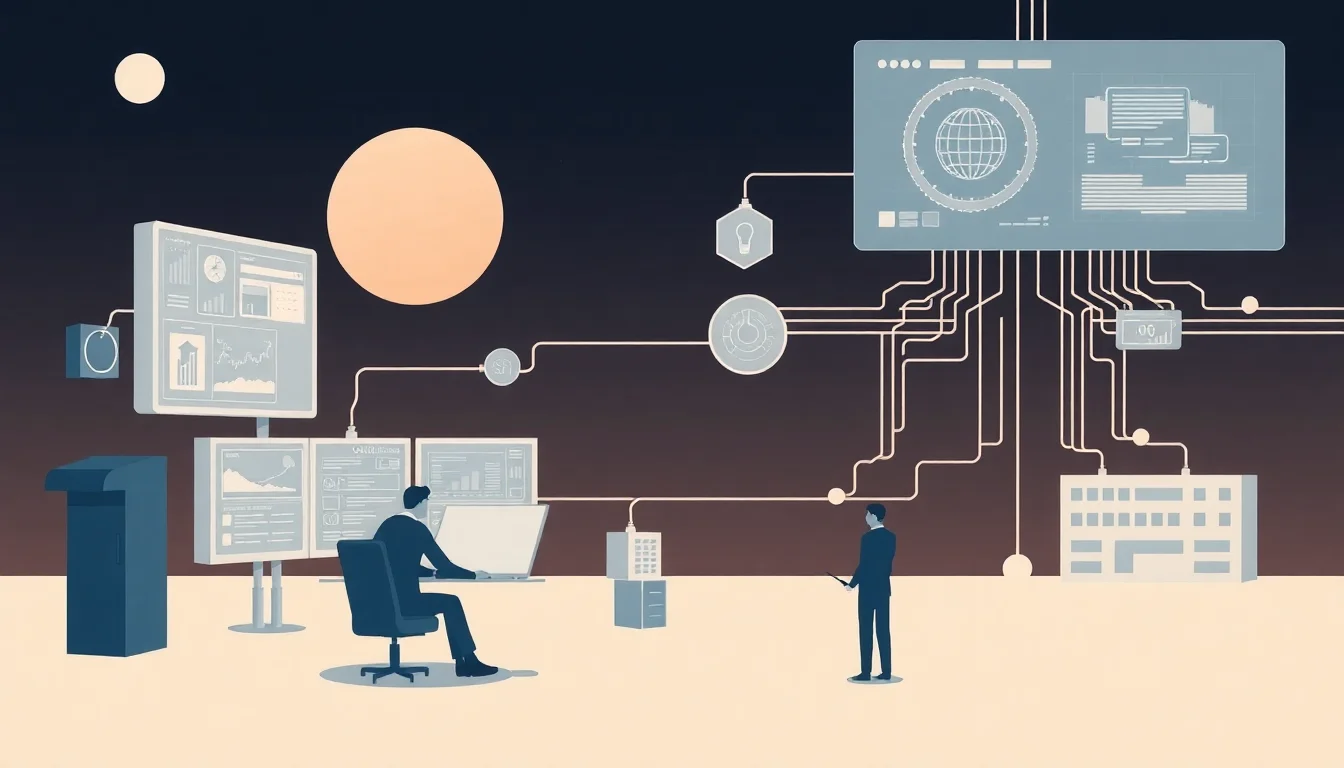
Command and Control (C2) systems are the nervous systems of any organized entity, be it a military force, a global corporation, or a complex emergency response network. At their heart, they are the infrastructure and processes that enable decision-makers to receive information, analyze it, make decisions, and then disseminate orders to execute those decisions. Think of it as the ultimate situational awareness platform, designed to provide a clear, real-time picture of operations and the environment. Without effective C2, even the most well-resourced organizations can falter, paralyzed by a lack of coordination and understanding. This isn't just about sending messages; it's about ensuring the right message reaches the right person at the right time, with the right context for action.
🎯 Who Uses C2 Systems?
The primary users of C2 systems are, predictably, national militaries and defense organizations. The U.S. Department of Defense's JADC2 initiative is a prime example, aiming to connect sensors and shooters across all domains (air, land, sea, space, cyber). However, the application of C2 principles extends far beyond the battlefield. Large-scale disaster relief agencies like the FEMA rely on C2 for coordinating vast logistical efforts. Major corporations use C2-like systems for managing global supply chains and crisis management, while even public transportation networks employ elements of C2 to manage fleets and respond to disruptions. Essentially, any organization requiring coordinated action under pressure can benefit from robust C2.
⚙️ Core Components & Functionality
A typical C2 system comprises several critical elements. These include sensors and intelligence gathering platforms to collect raw data, communication networks to transmit this data, processing and analysis tools to turn data into actionable intelligence, a command interface for human decision-makers, and dissemination mechanisms to issue orders. Modern C2 systems often integrate AI and machine learning for faster analysis and pattern recognition, as well as advanced visualization tools to present complex information intuitively. The goal is always to reduce the Observe-Orient-Decide-Act cycle, enabling faster and more informed responses.
⚖️ C2 Systems: A Spectrum of Complexity
C2 systems exist on a vast spectrum of complexity and capability. At one end, you have simple, ad-hoc communication protocols used by small teams. At the other, you find highly integrated, multi-domain systems like the NATO's C2 architecture, designed for interoperability across allied forces. The sophistication often correlates with the criticality of the mission and the scale of operations. A small business might use a shared calendar and messaging app as its C2, while a global superpower invests billions in networked systems that can process petabytes of data daily to maintain strategic advantage. The underlying principles remain, but the technological implementation can vary dramatically.
📈 Historical Evolution of C2
The roots of C2 stretch back to ancient military strategies, where messengers and signal fires were the primary means of conveying orders. The advent of the telegraph in the 19th century marked a significant leap, enabling near-instantaneous communication over long distances. World War II saw the development of early radar and radio networks, laying the groundwork for more sophisticated electronic C2. The Cold War era, with its emphasis on nuclear deterrence and rapid response, spurred massive investment in hardened communication lines, early computer systems, and centralized command structures. The development of ARPANET, the precursor to the internet, also had significant military C2 origins, highlighting the deep connection between defense needs and technological innovation.
⚡️ Modern C2: Beyond the Battlefield
Today, C2 is increasingly about data fusion and network-centric operations. The focus has shifted from centralized, hierarchical command to more distributed, agile networks where information flows freely and decision-making can occur at multiple levels. This is driven by the proliferation of sensors, the exponential growth of data, and the need to operate in complex, contested environments. Concepts like Multi-Domain Operations and JADC2 represent the cutting edge, aiming to seamlessly integrate capabilities across all operational domains and even with allied forces, creating a unified operational picture. The challenge is managing this complexity without succumbing to information overload or creating new vulnerabilities.
⚠️ Key Debates & Controversies
The most significant debate surrounding C2 systems revolves around the balance between human control and autonomous decision-making. As AI capabilities advance, the question arises: how much authority should be delegated to machines, particularly in lethal decision-making? Critics raise concerns about algorithmic bias, the potential for unintended escalation, and the erosion of human accountability. Conversely, proponents argue that AI is essential for processing the sheer volume of data in modern conflicts and for achieving the speed required to counter advanced threats. Another ongoing debate concerns interoperability – can disparate national and allied C2 systems effectively communicate and coordinate, or do proprietary architectures create insurmountable barriers?
💡 Vibepedia's Vibe Score & Analysis
Vibepedia's Vibe Score for Command and Control Systems currently sits at a robust 78/100. This score reflects the system's undeniable foundational importance across numerous sectors, its continuous technological evolution, and its significant cultural impact on global security and organizational efficiency. The score is driven by a high Vibe Score in 'Systemic Importance' (90/100) and 'Technological Innovation' (85/100), tempered slightly by the 'Controversy Spectrum' (65/100) due to ongoing ethical and operational debates. The 'Influence Flow' analysis indicates a strong top-down influence from military R&D to commercial applications, with a growing counter-flow of commercial tech (e.g., cloud computing, AI) back into defense. The 'Perspective Breakdown' leans heavily optimistic regarding technological potential, but with significant pessimistic undertones concerning control and ethical implications.
Key Facts
- Year
- Mid-20th Century (formalization)
- Origin
- Military Doctrine
- Category
- Technology & Systems
- Type
- Concept/System
Frequently Asked Questions
What is the difference between C2 and communication systems?
Communication systems are the pipes that transmit information, while C2 systems are the intelligence and decision-making architecture that uses those pipes. A communication system might be a radio or a fiber optic cable; a C2 system is the entire framework for collecting data, analyzing it, making decisions, and issuing orders based on that data, utilizing the communication system as a critical component.
Are C2 systems only used by the military?
No, while militaries are the most prominent users, C2 principles are applied in many fields. Emergency management agencies, large corporations for supply chain and crisis management, air traffic control, and even complex event planning utilize C2-like structures to coordinate actions and achieve objectives.
How does AI impact C2 systems?
AI significantly enhances C2 by enabling faster data processing, pattern recognition, predictive analysis, and even automated decision support. It helps reduce the cognitive load on human commanders and can accelerate the OODA loop, but also raises questions about autonomy and accountability.
What are the biggest challenges in modern C2?
Key challenges include managing the sheer volume and velocity of data (information overload), ensuring interoperability between diverse systems (especially across allied nations), maintaining cybersecurity against sophisticated threats, and navigating the ethical dilemmas of increasing automation and AI integration.
What is the 'OODA loop' in C2?
The OODA loop (Observe-Orient-Decide-Act) is a decision-making model central to C2. It describes the cyclical process of gathering information, making sense of it, deciding on a course of action, and executing it. Effective C2 aims to shorten this loop for one's own forces while disrupting the adversary's loop.
How do C2 systems ensure security?
Security in C2 systems is paramount and involves multiple layers: robust encryption for communications, secure network architectures, strict access controls, continuous monitoring for intrusions (cybersecurity), and physical security for critical infrastructure. The goal is to protect the integrity, confidentiality, and availability of information and command functions.