
Contents
Overview
The concept of organized commodity trading stretches back millennia, with evidence of grain markets in ancient Mesopotamia and Ancient Rome. In the West, the formalization accelerated in the 19th century, particularly in the United States, driven by the expansion of agriculture and industry. The Chicago Board of Trade (CBOT) became a pivotal institution, standardizing contracts for grains like corn and soybeans, and later expanding into metals and financial futures. Early exchanges like the New York Mercantile Exchange (NYMEX) also played crucial roles in developing markets for energy products. These early exchanges laid the groundwork for today's global, interconnected commodity trading networks.
⚙️ How It Works
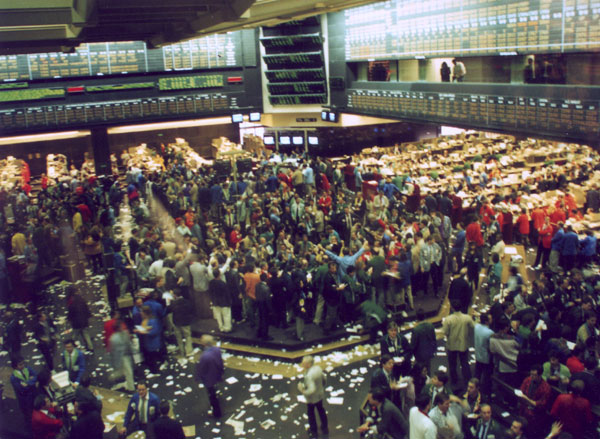
Commodity markets function through a complex interplay of physical trading and financial derivatives. Physical trading involves the actual buying and selling of raw materials, often facilitated by spot markets where goods are exchanged for immediate delivery at the current market price. More prevalent, however, is derivatives trading, primarily through futures and options contracts. A futures contract is an agreement to buy or sell a specific commodity at a predetermined price on a future date. These contracts are standardized and traded on exchanges like the CME Group (which now includes the CBOT) and Intercontinental Exchange (ICE). Financial derivatives derive their value from an underlying commodity, allowing traders, producers, and consumers to speculate on price movements or hedge against risk without necessarily taking physical possession of the commodity itself. Clearing houses, such as those operated by CCIL or LCH.Clearnet, play a vital role by acting as central counterparties, guaranteeing the performance of these contracts and mitigating systemic risk.
📊 Key Facts & Numbers
The scale of commodity markets is significant, with energy products accounting for a major share of activity. Benchmarks like Brent Crude and WTI set global price standards for the crude oil market. Agricultural commodities are critical for food security, while precious metals like gold act as a traditional safe-haven asset. The market capitalization of listed commodity futures contracts reflects significant financial activity beyond physical goods.
👥 Key People & Organizations
Key figures and organizations have shaped the commodity market landscape. Early pioneers include Charles Dow, co-founder of Dow Jones & Company, who developed the Dow Jones Industrial Average partly as a way to track industrial commodity prices. Institutions like the Chicago Board of Trade (CBOT) and the New York Mercantile Exchange (NYMEX), now part of the CME Group, have been instrumental in developing standardized contracts and exchange infrastructure. Major trading firms, such as Glencore, Vitol, and Trafigura, are colossal players in the physical commodity trading space, moving vast quantities of oil, metals, and agricultural products. The International Monetary Fund (IMF) and the World Bank also monitor commodity markets due to their significant impact on global economic stability and development.
🌍 Cultural Impact & Influence
Commodity markets exert a profound influence on global culture and daily life, often in unseen ways. The price of coffee on exchanges like ICE directly impacts the cost of your morning brew, while fluctuations in copper prices affect everything from construction costs to the price of electronics. Energy commodities, particularly crude oil, have shaped geopolitical landscapes, driving conflicts and alliances, and fundamentally enabling modern transportation and industrialization. The speculative aspect of commodity trading has also permeated popular culture, influencing films and literature that depict the high-stakes world of traders and market crashes. The very concept of a 'bull market' and 'bear market,' originating from stock and commodity trading, is now part of everyday financial vernacular.
⚡ Current State & Latest Developments
The commodity market in 2024 is characterized by increasing volatility and the growing influence of geopolitical events and climate change. The ongoing war in Ukraine has significantly disrupted global energy and grain markets, leading to price spikes and supply chain realignments. Extreme weather events, from droughts impacting agricultural yields to hurricanes affecting oil production in the Gulf of Mexico, are becoming more frequent and are increasingly factored into market analysis. Furthermore, the global push towards renewable energy is creating new dynamics, driving demand for metals like lithium and cobalt used in batteries, while potentially impacting long-term demand for fossil fuels. Digitalization is also transforming trading, with more platforms offering algorithmic trading and real-time data analytics, as seen with advancements by firms like Refinitiv.
🤔 Controversies & Debates
Commodity markets are rife with controversy, primarily centered on price manipulation, speculation, and their impact on developing economies. Critics argue that excessive speculation by financial institutions, detached from physical supply and demand, can artificially inflate prices, harming consumers and exacerbating food insecurity, a concern frequently raised by organizations like the FAO. The role of hedge funds and other speculative investors in commodity futures markets is a perennial debate. Furthermore, the environmental impact of extracting and transporting hard commodities like oil sands and coal is a major point of contention, leading to calls for greater regulation and a faster transition to sustainable alternatives. The concentration of power among a few large trading houses, such as Vitol and Trafigura, also raises concerns about market fairness and transparency.
🔮 Future Outlook & Predictions
The future of commodity markets will likely be shaped by the accelerating energy transition and the increasing impact of climate change. Demand for metals crucial to green technologies—lithium, cobalt, nickel, and copper—is projected to surge, potentially leading to new supply chain challenges and price volatility. Conversely, the long-term outlook for fossil fuels like crude oil and natural gas remains uncertain, dependent on the pace of decarbonization and the development of alternative energy sources. Geopolitical tensions will continue to be a significant factor, potentially leading to further supply disruptions and price shocks. Innovations in blockchain technology and AI are also expected to enhance market transparency, efficiency, and risk management, though their widespread adoption may face regulatory hurdles.
Key Facts
- Category
- economics
- Type
- topic