
Contents
Overview
The intellectual lineage of the Efficient Market Hypothesis stretches back to the early 20th century, with Louis Bachelier's thesis on the mathematics of speculation in the Paris Stock Exchange laying foundational groundwork. Benoit Mandelbrot further explored the statistical properties of market prices, questioning traditional assumptions of normality. The EMH was later formally synthesized and popularized by Eugene Fama in his seminal 1970 review paper, "Efficient Capital Markets: A Survey and Introduction to Critical Review." Fama, then at the University of Chicago, categorized market efficiency into three forms: weak, semi-strong, and strong, based on the type of information incorporated into prices. This framework became a cornerstone of financial economics, shaping academic research and investment theory for decades.
⚙️ How It Works
The EMH operates on the principle of rapid information dissemination and rational investor behavior. In a market considered efficient, any new, relevant information—be it an earnings report, a geopolitical event, or a change in interest rates—is immediately reflected in asset prices. This occurs because a vast number of sophisticated investors are constantly analyzing information and trading on it. If an asset is undervalued, demand will increase, driving its price up to its "correct" level. Conversely, overvalued assets will be sold, pushing their prices down. This continuous arbitrage process ensures that prices always represent the best available estimate of intrinsic value, making predictable patterns impossible to exploit for consistent profit.
📊 Key Facts & Numbers
Empirical tests of the EMH have yielded a complex picture. Studies have shown that the average mutual fund manager fails to outperform the S&P 500 index over extended periods. The 'January effect,' where stock prices historically tended to rise in January, was observed to be a statistically significant anomaly, though its predictive power has diminished over time. The 'size effect,' suggesting smaller companies outperform larger ones, and the 'value effect,' where undervalued stocks outperform growth stocks, have also been documented, though their persistence is debated.
👥 Key People & Organizations
Eugene Fama is undeniably the central figure, whose work at the University of Chicago Booth School of Business cemented the EMH's status. Myron Scholes and Robert Merton, Nobel laureates for their work on option pricing, provided theoretical underpinnings that, while not directly EMH, assumed efficient markets for their models to function. Prominent institutions like the National Bureau of Economic Research have been crucial in funding and disseminating research on market efficiency. Investment firms like Vanguard Group, founded by John C. Bogle, champion passive investing strategies directly aligned with EMH principles, contrasting with active management firms like Bridgewater Associates which, while sophisticated, operate on different assumptions.
🌍 Cultural Impact & Influence
The EMH has profoundly shaped the investment industry and public perception of financial markets. It provided the intellectual justification for the rise of index funds and ETFs, which aim to replicate market performance rather than beat it. This has democratized investing, making sophisticated portfolio management accessible to a broader audience. The hypothesis also influences regulatory frameworks, as regulators often assume markets are largely efficient, impacting how they approach issues like insider trading and market manipulation. The cultural narrative around 'stock market wizards' is often challenged by the EMH, promoting a more pragmatic view of investing as a long-term, risk-managed endeavor.
⚡ Current State & Latest Developments
In the current financial landscape of 2024, the EMH remains a dominant theoretical framework, yet its practical application is constantly tested. The rise of high-frequency trading (HFT) and sophisticated algorithms has accelerated price discovery, arguably making markets more efficient in the semi-strong sense. However, events like the 'meme stock' phenomenon of 2021, where assets like GameStop experienced extreme volatility driven by social media coordination rather than fundamental news, highlight potential deviations from strong efficiency. The ongoing debate between active and passive management strategies continues, with asset managers like BlackRock offering both passive ETFs and active funds, reflecting market demand for diverse approaches.
🤔 Controversies & Debates
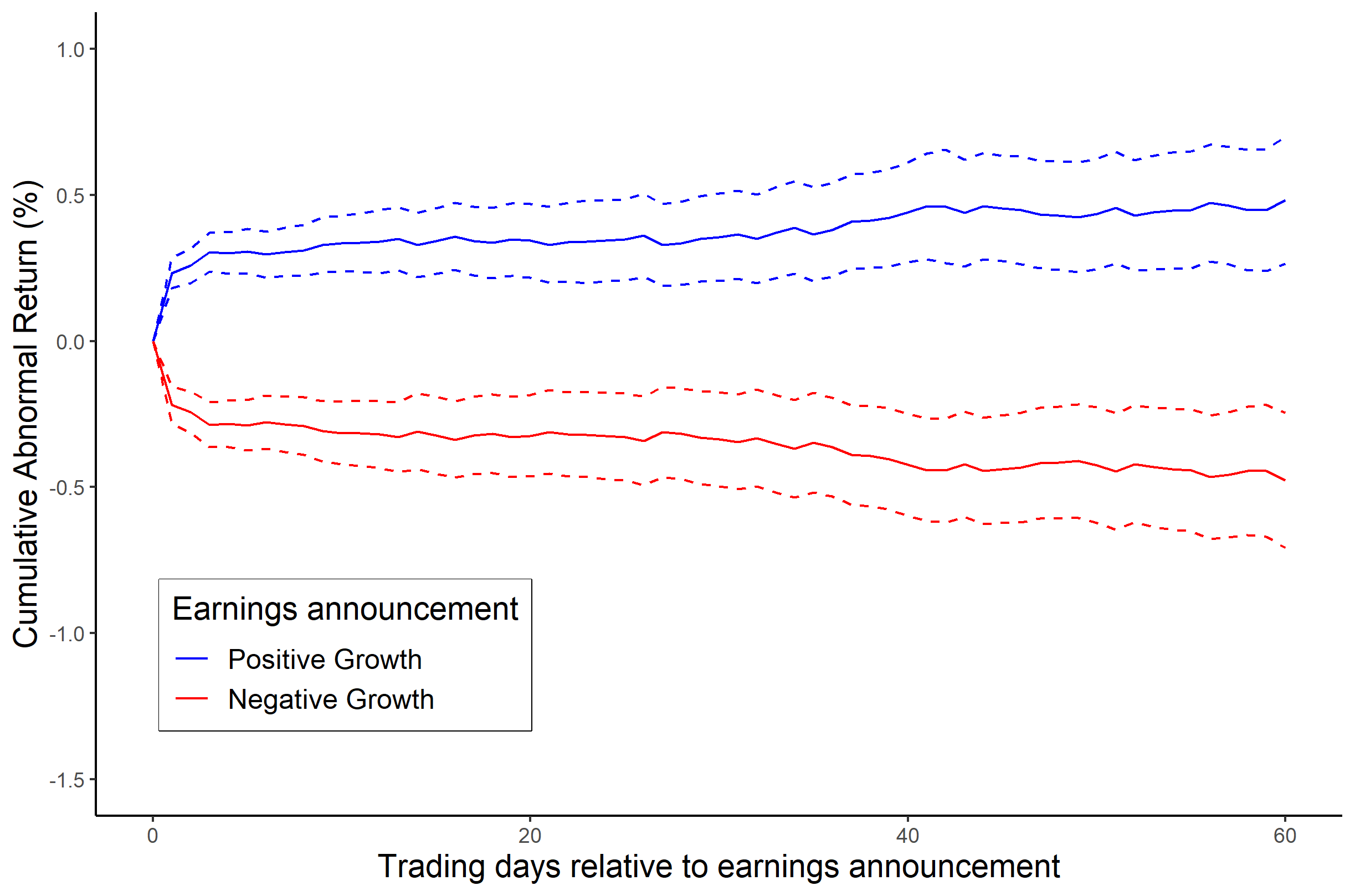
The EMH is not without its detractors, sparking intense debate. Behavioral finance, championed by researchers like Daniel Kahneman and Amos Tversky, argues that psychological biases—such as overconfidence, herd behavior, and loss aversion—lead investors to make irrational decisions, creating predictable patterns that EMH proponents overlook. Market anomalies, like the aforementioned 'January effect' or the 'post-earnings announcement drift,' are cited as evidence against strong efficiency. Critics also point to the existence of highly successful investors like Warren Buffett, who have consistently outperformed the market, suggesting that skill, not just luck, can play a role. The very existence of financial advisors and active fund managers implies a belief that markets are not perfectly efficient.
🔮 Future Outlook & Predictions
Looking ahead, the future of market efficiency will likely be shaped by the interplay of technology and human behavior. Advances in artificial intelligence and machine learning could lead to even faster price adjustments, pushing markets closer to theoretical efficiency. Conversely, the increasing influence of social media and retail investor coordination, as seen with WallStreetBets, might introduce new forms of irrationality and volatility. Future research may focus on developing more dynamic models of efficiency that account for varying degrees of information flow and behavioral influences. The debate will likely continue to center on whether markets are becoming more or less efficient over time, and what the implications are for investors and regulators.
💡 Practical Applications
The EMH has direct practical applications in investment strategy and portfolio construction. For individual investors, it forms the bedrock of the passive investing philosophy, advocating for low-cost index funds and ETFs that track broad market indices like the Dow Jones Industrial Average. This approach minimizes trading costs and management fees, aligning with the EMH's assertion that consistently beating the market is difficult. Financial advisors often use EMH principles to set realistic client expectations and recommend diversified portfolios designed to capture market returns rather than chase alpha. It also informs risk management, as understanding that prices reflect available information helps in assessing the true risk of an investment.
Key Facts
- Category
- philosophy
- Type
- concept