
Contents
Overview
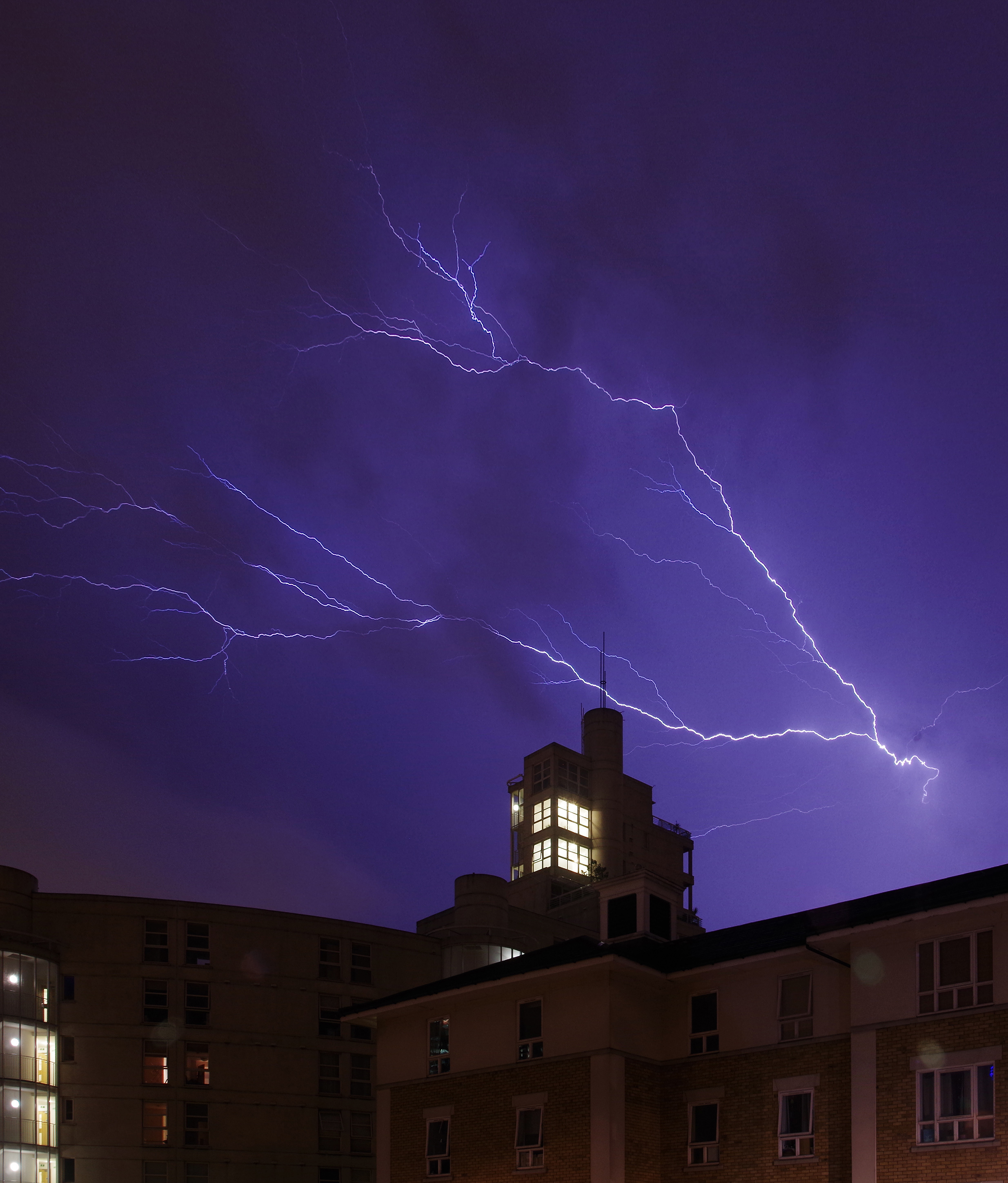
Electric phenomena encompass the fundamental physical processes involving electric charge, its presence, and its motion. These phenomena are intrinsically linked to magnetism, forming the unified field of electromagnetism, as elucidated by Maxwell's equations. Manifestations range from the dramatic spectacle of lightning and the subtle crackle of static electricity to the ubiquitous flow of electric current powering our world and the intricate workings of electronics. The presence of electric charge generates an electric field, while the movement of these charges constitutes an electric current, which in turn produces a magnetic field. The interaction between charges is governed by Coulomb's law, dictating the forces exerted between them, and the concept of electric potential quantifies the energy required to move charge within an electric field, typically measured in volts. Understanding electric phenomena is not merely an academic pursuit; it is the bedrock of countless modern technologies, driving everything from global power grids to the microprocessors in our pockets.
🎵 Origins & History
The study of electric phenomena traces back to ancient observations of static electricity. The Greek word for amber, 'elektron,' eventually gave rise to the term 'electricity.' Significant early contributions came from William Gilbert in his 1600 treatise 'De Magnete,' who distinguished between magnetic and electric attraction. The 18th century saw pivotal work by figures like Benjamin Franklin, who proposed the concept of positive and negative charge. Later, the force between electric charges was quantified with Coulomb's law. The unification of electricity and magnetism into electromagnetism was a monumental achievement, culminating in James Clerk Maxwell's formulation of his equations, which predicted the existence of electromagnetic waves traveling at the speed of light.
⚙️ How It Works
Electric phenomena arise from the behavior of electric charges, fundamental properties of matter. Charges exist in two forms: positive (associated with protons) and negative (associated with electrons). In neutral matter, the number of positive and negative charges is equal. When this balance is disturbed, either by adding or removing electrons, the matter becomes electrically charged. Like charges repel each other, while opposite charges attract. The presence of a charge creates an electric field in the surrounding space, exerting forces on other charges. The movement of these charges constitutes an electric current, which, according to Ampère's law, generates a magnetic field. These electric and magnetic fields are intertwined aspects of a single electromagnetic field, described by Maxwell's equations, which govern all electromagnetic interactions.
📊 Key Facts & Numbers
The speed of electricity through a conductor is nearly the speed of light, approximately 299,792 kilometers per second, though the drift velocity of individual electrons is much slower. Michael Faraday, a self-taught scientist, made groundbreaking discoveries in electromagnetism and induction in the early 19th century, laying the foundation for electric motors and generators. Nikola Tesla's innovations in alternating current (AC) systems, particularly his work with AC motors and Tesla coils, revolutionized power transmission. Thomas Edison, a prolific inventor and businessman, championed direct current (DC) systems and established the first central power stations, famously competing with Tesla's AC system in the 'War of Currents.' Organizations like the Institute of Electrical and Electronics Engineers (IEEE) and the American Physical Society continue to advance research and disseminate knowledge in this field.
👥 Key People & Organizations
Electric phenomena are foundational to virtually all aspects of modern civilization. The ability to harness and control electricity has enabled mass production and the development of new industries. It underpins communication technologies, from the telegraph and telephone to the internet and mobile phones. The ubiquity of electric light transformed daily life, extending productive hours and altering social patterns. In medicine, electric phenomena are critical for diagnostics like ECGs and EEGs, as well as therapeutic devices. The cultural impact is profound, with electricity becoming synonymous with progress, modernity, and convenience, shaping urban landscapes and global economies. The very concept of 'power' is now intrinsically linked to electrical energy, influencing art, literature, and popular culture.
🌍 Cultural Impact & Influence
The current state of electric phenomena research is heavily focused on sustainable energy solutions and advanced electronics. Significant efforts are directed towards improving battery technology for electric vehicles and grid-scale energy storage, aiming to overcome limitations of current lithium-ion batteries. The development of superconductors that operate at higher temperatures continues to be a major research frontier, promising lossless power transmission. In electronics, the miniaturization of semiconductor devices is pushing the boundaries of Moore's Law, leading to advancements in artificial intelligence and quantum computing. The integration of smart grid technologies is enhancing the efficiency and reliability of electricity distribution, while research into fusion power offers a potential long-term solution for clean energy. The ongoing transition to renewable energy sources like solar power and wind power necessitates sophisticated management of electrical grids.
⚡ Current State & Latest Developments
One persistent debate revolves around the efficiency and environmental impact of different energy storage technologies, particularly the sourcing of materials for lithium-ion batteries and the disposal challenges. The 'War of Currents' between Thomas Edison's direct current (DC) and Nikola Tesla's alternating current (AC) systems, though largely settled in favor of AC for transmission, continues to echo in discussions about localized DC grids for specific applications. The safety of high-voltage transmission lines and the potential health effects of electromagnetic radiation remain subjects of ongoing scientific scrutiny and public concern, though consensus among major scientific bodies generally supports their safety within established limits. The ethical implications of resource extraction for battery production and the equitable distribution of clean energy technologies are also significant points of contention.
🤔 Controversies & Debates
The future of electric phenomena will likely be defined by the pursuit of ever-greater energy efficiency and novel applications. Breakthroughs in solid-state battery technology could revolutionize portable power and electric vehicles, offering higher energy density and improved safety. Research into [[quantu
Key Facts
- Category
- science
- Type
- topic