
Contents
Overview
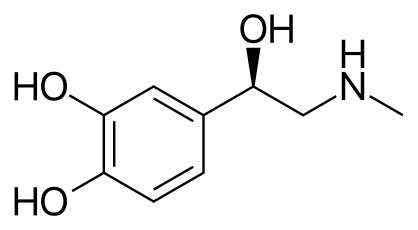
The story of epinephrine is intrinsically linked to the discovery of the adrenal glands' function. In the late 19th century, researchers like George Oliver and Albert Schafer observed that extracts from the adrenal glands could cause significant physiological effects, including blood pressure changes. By 1901, Jokichi Takamine had successfully isolated and crystallized the active compound, which he named 'adrenalin'. Simultaneously, William Edward Dixon independently isolated a similar substance. The chemical structure was elucidated by Henry Dale and others, paving the way for its synthesis and therapeutic use. This breakthrough marked a pivotal moment in understanding hormonal signaling and developing emergency medicine, transforming treatments for conditions previously considered untreatable.
⚙️ How It Works
Epinephrine operates by binding to specific adrenergic receptors on cell surfaces, primarily alpha (α) and beta (β) receptors, which are found throughout the body. Activation of β1 receptors in the heart increases heart rate and contractility. β2 receptors in the lungs and blood vessels cause bronchodilation and vasodilation in skeletal muscle, respectively, shunting blood where it's needed most. α1 receptors constrict blood vessels in the skin and gut, further redirecting blood flow. Simultaneously, epinephrine stimulates the liver to release glucose, providing readily available energy. This complex interplay of receptor activation prepares the body for intense physical exertion or to escape immediate danger, a process honed by millions of years of evolution.
📊 Key Facts & Numbers
Globally, epinephrine auto-injectors, commonly known as EpiPens, are prescribed to millions worldwide. The global market for epinephrine was projected to grow at a compound annual growth rate (CAGR) of 5.2% through 2030. A single epinephrine auto-injector typically contains 0.3 mg of epinephrine. In the United States, emergency departments treat many cases of anaphylaxis each year, with epinephrine being the first-line treatment in most of these instances. The half-life of injected epinephrine is remarkably short, necessitating prompt administration and often repeat doses.
👥 Key People & Organizations
Key figures in epinephrine's journey include Jokichi Takamine, who first isolated and crystallized the hormone in 1901, coining the name 'adrenalin'. George Oliver and Albert Schafer were pioneers in demonstrating the physiological effects of adrenal extracts in the late 1890s. Henry Dale made significant contributions to understanding its mechanism of action on adrenergic receptors. Pharmaceutical giants like Pfizer (through its Meda Pharmaceuticals subsidiary) and Mylan (now Viatris) have been major players in the production and distribution of epinephrine auto-injectors, with Kaléo also emerging as a significant manufacturer. The U.S. Food and Drug Administration (FDA) plays a crucial regulatory role in approving and overseeing epinephrine-based medications.
🌍 Cultural Impact & Influence
Epinephrine's dramatic physiological effects have cemented its place in popular culture, often symbolizing intense moments of crisis, courage, and heightened awareness. It's frequently invoked in literature, film, and television to depict characters under extreme duress or experiencing sudden bursts of energy and determination. From the adrenaline-fueled stunts in action movies to the internal monologues of characters facing life-or-death situations, the concept of 'adrenaline' has become shorthand for peak human performance and survival instinct. This cultural resonance, while often simplified, reflects a deep-seated understanding of the hormone's power to transform ordinary moments into extraordinary ones, influencing how we perceive stress, bravery, and the limits of human capability.
⚡ Current State & Latest Developments
Current developments in epinephrine therapy focus on improving accessibility and ease of use. The FDA has approved over-the-counter (OTC) epinephrine auto-injectors for individuals with a history of anaphylaxis, a significant shift from prescription-only status, aiming to reduce barriers to immediate treatment. Companies like Kaléo are developing next-generation auto-injectors with enhanced features, such as voice-guided instructions and smaller, more portable designs. Research also continues into alternative delivery methods, including nasal sprays and inhalers, to offer more options for patients and potentially faster absorption rates. The ongoing debate around the pricing of auto-injectors, particularly by manufacturers like Viatris (formerly Mylan), remains a critical issue impacting patient access.
🤔 Controversies & Debates
The most persistent controversy surrounding epinephrine revolves around its cost, particularly for auto-injector devices. The price of EpiPens has seen dramatic increases over the past two decades, drawing widespread criticism from patient advocacy groups, lawmakers, and the public. Debates also exist regarding the appropriate training and administration protocols for epinephrine, especially among laypeople, and concerns about potential overuse or misuse in non-emergency situations. Furthermore, the environmental impact of disposable auto-injector devices is an emerging area of discussion.
🔮 Future Outlook & Predictions
The future of epinephrine therapy is likely to be shaped by increased competition and technological innovation. With the advent of OTC availability and the introduction of generic alternatives, the cost of epinephrine auto-injectors is expected to decrease, improving affordability. Research into novel delivery systems, such as epinephrine nasal sprays, aims to provide faster absorption and potentially more convenient administration for certain patient populations. Furthermore, ongoing studies are exploring the broader therapeutic potential of epinephrine and related catecholamines in conditions beyond anaphylaxis and cardiac arrest, though these remain largely experimental. The development of more stable formulations and longer-acting versions could also revolutionize emergency medical care.
💡 Practical Applications
Epinephrine's primary practical application is as an emergency medication for life-threatening conditions. It is the cornerstone treatment for anaphylaxis, a severe, rapid-onset allergic reaction that can cause airway constriction and a dangerous drop in blood pressure. It's also used in cardiac arrest to stimulate the heart and in asthma attacks to relieve bronchospasm. In ophthalmology, dilute solutions are used during eye surgery to constrict blood vessels and dilate pupils. Local anesthetics are often combined with epinephrine to prolong their effect by constricting local blood vessels, reducing bleeding and systemic absorption. Its use extends to veterinary medicine for similar emergency applications.
Key Facts
- Category
- science
- Type
- concept