
Contents
Overview
Future trends represent the discernible directions and patterns of change across various domains, encompassing technological advancements, societal evolution, environmental shifts, and economic transformations. This field, often termed 'futures studies' or 'futurology,' moves beyond simple prediction to systematically explore plausible alternative futures, understanding what is likely to persist and what could fundamentally alter our world. It draws on historical analysis, statistical forecasting, and qualitative scenario planning to map potential trajectories. The scale of impact is immense, influencing everything from individual consumer choices to global policy decisions, with key areas like artificial intelligence, climate change, and demographic shifts dominating current discourse. Understanding these trends is crucial for strategic planning, innovation, and societal preparedness.
🎵 Origins & History
The systematic study of future trends, often called futures studies or futurology, has roots stretching back to early philosophical inquiries into destiny and progress. Early pioneers like Oswald Spengler with his cyclical theory of history and H.G. Wells with his speculative fiction laid some groundwork. Scenario planning, notably employed by Shell in the 1970s to anticipate oil crises, was developed by thinkers like Bertram Gross and Emile Deschamps in the 1950s and 60s, who began formalizing methods for exploring potential futures. Institutions like the Stanford Research Institute (SRI) and the Institute for the Future (IFTF) provided crucial academic and research platforms.
⚙️ How It Works
Futures studies operates through a multi-methodological approach, blending quantitative forecasting with qualitative scenario building. Quantitative methods involve analyzing historical data to identify patterns and extrapolate them into the future, often employing statistical models and algorithms, as seen in predictive analytics for market trends. Qualitative methods, however, are central to exploring the plausibility of different futures, not just their probability. This includes techniques like Delphi method, trend analysis, horizon scanning, and the creation of detailed, narrative scenarios that explore the implications of various driving forces. The goal is not to predict a single future but to map a range of potential futures, understanding the uncertainties and choices that shape them, often involving workshops and expert elicitation facilitated by organizations like the World Economic Forum.
📊 Key Facts & Numbers
The sheer volume of data shaping future trends is staggering. The artificial intelligence market is expected to grow significantly. In terms of demographics, there are projected shifts in aging populations in developed nations and continued growth in Africa. Climate change models predict potential impacts on many people who live in climate-vulnerable regions. The renewable energy sector is also booming.
👥 Key People & Organizations
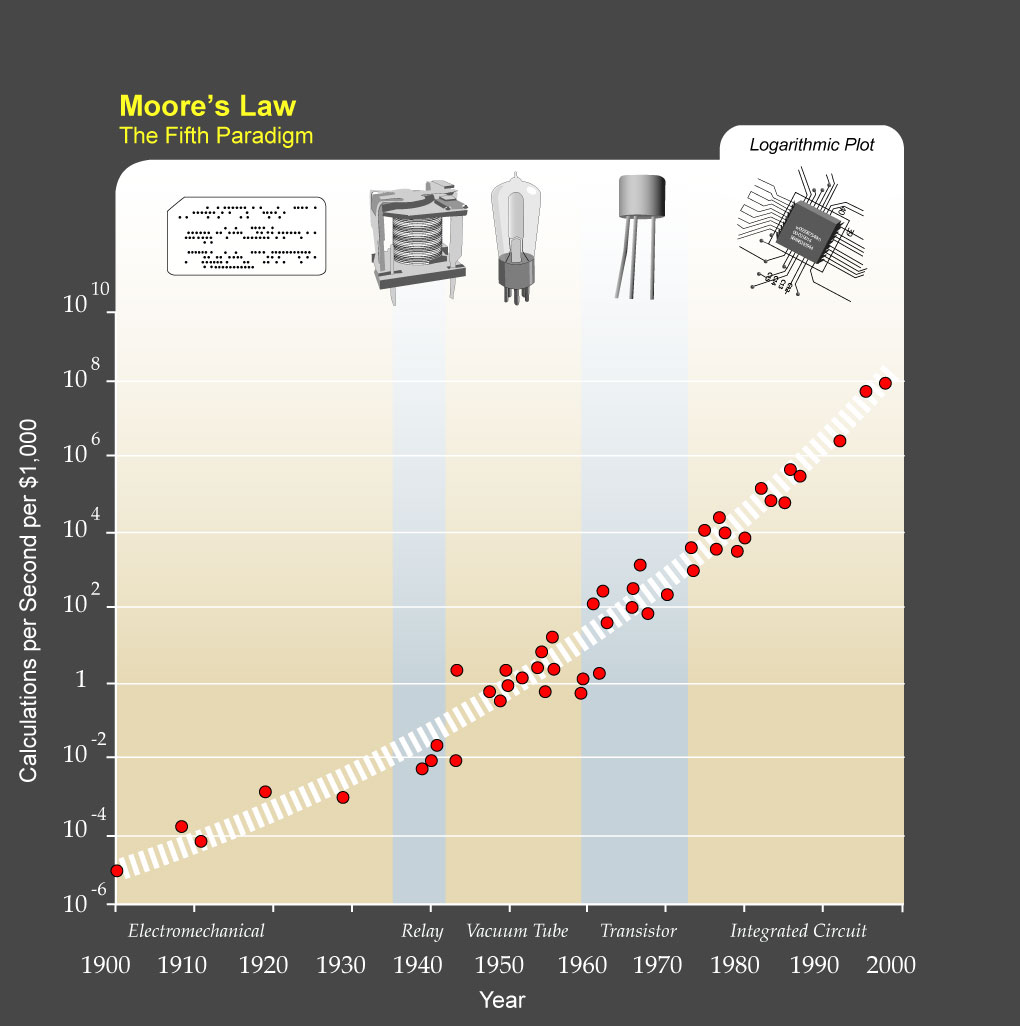
Key figures in futures studies include Peter Schwartz, co-founder of Global Business Network (GBN), who popularized scenario planning for corporations. Ray Kurzweil is a prominent futurist known for his predictions on technological singularity and the exponential growth of technology. Organizations like the United Nations' United Nations Development Programme (UNDP) have dedicated foresight units exploring global trends, while think tanks such as the Brookings Institution and RAND Corporation regularly publish analyses on future societal and geopolitical shifts. Academic conferences, like the IEEE International Workshop on Future Trends of Distributed Computing Systems (FTDCS), also serve as crucial nodes for disseminating research and fostering dialogue among experts.
🌍 Cultural Impact & Influence
Future trends exert a profound influence on culture, shaping everything from artistic expression to consumer behavior and political discourse. The rise of social media platforms like TikTok and Instagram has accelerated the spread of micro-trends in fashion, language, and entertainment, often creating viral phenomena that capture global attention for short periods. Conversely, long-term trends like climate change are increasingly influencing cultural narratives in literature, film, and art, prompting discussions about sustainability and environmental ethics. The anticipation of future technologies, such as virtual reality and augmented reality, is already shaping entertainment, education, and even social interaction, as seen in the development of metaverse concepts by companies like Meta Platforms.
⚡ Current State & Latest Developments
The current landscape of future trends is dominated by several interconnected forces. The rapid advancement and integration of artificial intelligence across industries, from healthcare to finance, is a primary driver, promising both unprecedented efficiency and significant workforce disruption. The ongoing climate crisis continues to necessitate urgent action, driving innovation in renewable energy and sustainable practices, while also posing existential threats. Geopolitical realignments, including shifts in global power dynamics and the increasing frequency of cyber warfare, are creating a more volatile international environment. Furthermore, demographic shifts, particularly aging populations in many developed countries and youth bulges in others, are reshaping economies and social structures. The COVID-19 pandemic also acted as a significant accelerant for many pre-existing trends, such as remote work and digital transformation.
🤔 Controversies & Debates
The study of future trends is not without its controversies and debates. A central tension lies between predictive accuracy and the exploration of desirable futures. Critics argue that many futurists engage in 'wishful thinking' or 'techno-optimism,' presenting speculative scenarios as inevitable outcomes, a critique often leveled at figures like Elon Musk for his pronouncements on Mars colonization. There's also debate about the inherent biases in trend analysis, which can reflect the perspectives and priorities of those conducting the research, potentially marginalizing certain groups or futures. The ethical implications of emerging technologies, particularly AI and biotechnology, are also hotly contested, raising questions about job displacement, privacy, and human augmentation. Furthermore, the very predictability of trends is questioned, with 'black swan' events like the COVID-19 pandemic demonstrating how unforeseen disruptions can radically alter trajectories.
🔮 Future Outlook & Predictions
The future outlook for trend analysis suggests an increasing integration of AI and machine learning to process vast datasets and identify subtle patterns. Expect more sophisticated scenario planning tools that can dynamically adapt to new information. The focus will likely shift further from predicting a single future to understanding and shaping multiple plausible futures, emphasizing resilience and adaptability. Key areas to watch include the convergence of biological and digital technologies, the potential for decentralized autonomous organizations (DAOs) to reshape governance and economics, and the ongoing struggle to address global challenges like climate change and inequality. The next decade could see significant breakthroughs in areas like fusion power, quantum computing, and personalized medicine, each carrying profound implications for society.
💡 Practical Applications
Understanding future trends has immense practical applications across virtually every sector. Businesses use trend analysis for strategic planning, product development, and market entry, as exemplified by Toyota's early adoption of hybrid vehicle technology based on anticipated environmental concerns. Governments and policymakers rely on foresight to inform legislation, infrastructure development, and national security strategies, such as the U.S. Department of Defense's use of scenario planning to anticipate future conflicts and technological needs.
Key Facts
- Category
- trends
- Type
- topic