
Contents
Overview
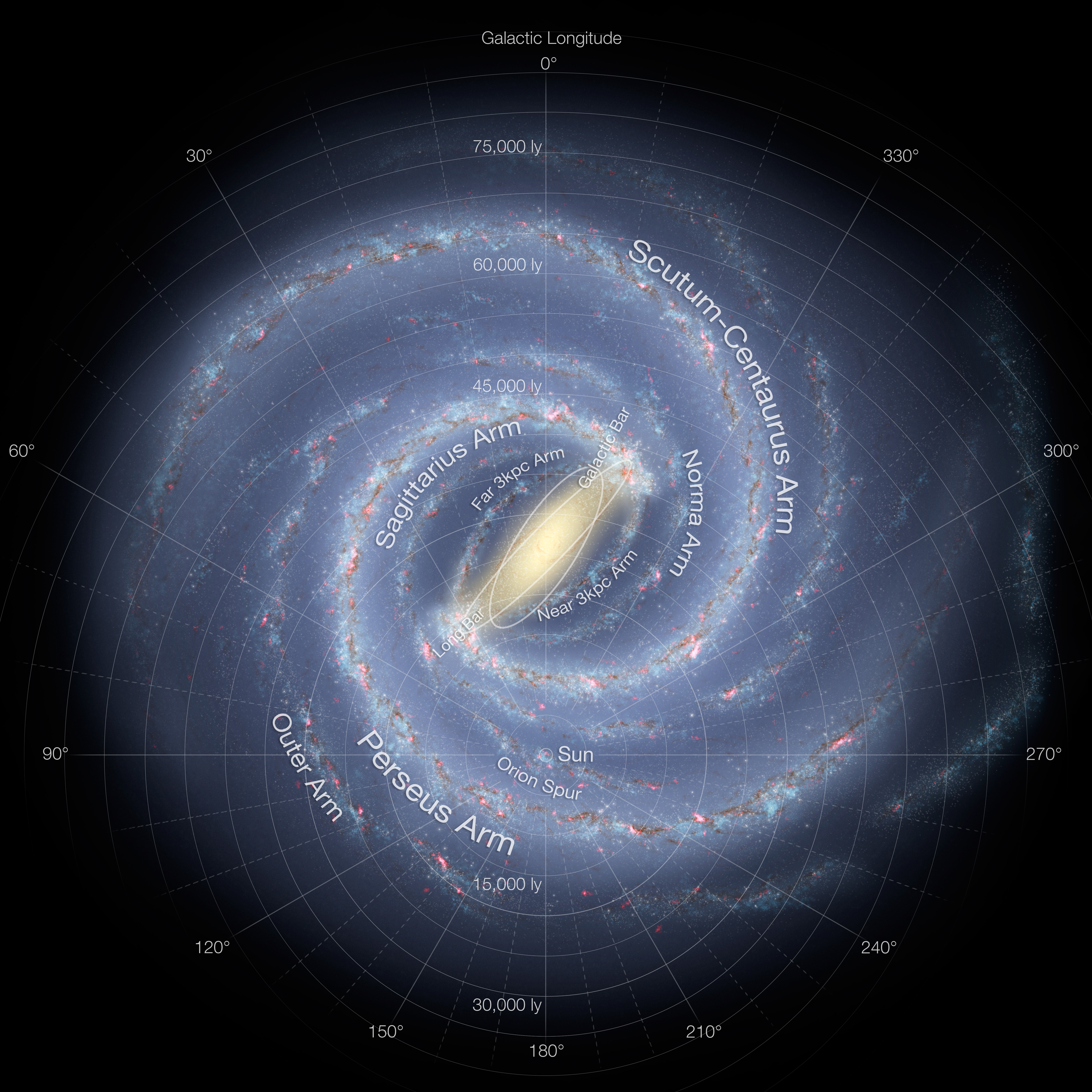
Galactic astronomy is the specialized branch of astrophysics dedicated to the study of our own Milky Way galaxy. Unlike extragalactic astronomy, which gazes outward at distant galaxies, galactic astronomy focuses inward, scrutinizing the structure, components, dynamics, and evolution of our home galaxy. This field grapples with the unique challenges posed by observing the Milky Way, particularly the obscuring effects of interstellar dust that block visible light, necessitating the use of radio, infrared, and X-ray telescopes. Key areas of study include the galactic center, the spiral arms, the stellar halo, the distribution of dark matter, and the processes of star formation and death within our galactic neighborhood. Understanding the Milky Way is crucial, as it serves as a vital laboratory for testing theories of galaxy formation and evolution that apply universally across the cosmos.
🎵 Origins & History
The formal study of our galaxy, the Milky Way, as a distinct field emerged with the advent of more sophisticated observational tools in the early 20th century. While ancient civilizations charted stars and recognized the band of light across the sky, it was not until the work of astronomers like Harlow Shapley in the 1910s and 1920s that the true scale and structure of the Milky Way began to be understood. The subsequent development of radio astronomy by pioneers like Karl Jansky in the 1930s, and later infrared astronomy and X-ray astronomy, proved indispensable for piercing the veil of interstellar dust that obscures much of the Milky Way's interior in visible light, allowing for the mapping of gas clouds, stellar nurseries, and the galactic center.
⚙️ How It Works
Galactic astronomy employs a suite of observational techniques and theoretical models to probe the Milky Way's structure and contents. Astronomers utilize telescopes across the electromagnetic spectrum, from visible light observatories like the Hubble Space Telescope to radio arrays such as the Very Large Array and infrared instruments like the Spitzer Space Telescope. These instruments detect radiation emitted by stars, gas, dust, and other celestial objects, providing data on their positions, velocities, temperatures, and chemical compositions. Theoretical astrophysicists then use this data to construct dynamic models of the galaxy, simulating the gravitational interactions of billions of stars, the distribution of dark matter, and the processes of star formation and galactic evolution. Techniques like spectroscopy are crucial for determining the chemical makeup and radial velocities of stars, while astrometry precisely measures their positions and motions, allowing for the mapping of galactic structure and dynamics.
📊 Key Facts & Numbers
The Milky Way galaxy is estimated to contain between 100 billion and 400 billion stars, with our Sun being just one of them. The galactic disk, where most stars reside, spans approximately 100,000 light-years in diameter but is only about 1,000 light-years thick. The supermassive black hole at the galactic center, Sagittarius A*, has a mass of about 4 million times that of our Sun. Interstellar dust, which obscures visible light, accounts for roughly 1% of the Milky Way's mass, yet it significantly impacts our observations. Radio observations reveal that the galaxy contains vast reservoirs of molecular gas, with estimates suggesting over 10 billion solar masses of gas. The galactic halo, a spherical region surrounding the disk, contains older stars and globular clusters, and is thought to be dominated by dark matter, which constitutes an estimated 85% of the galaxy's total mass.
👥 Key People & Organizations
Key figures in galactic astronomy include Harlow Shapley, whose work in the early 20th century redefined our understanding of the Sun's position within the Milky Way. Jan Oort made significant contributions to understanding stellar motions and proposed the existence of the Oort Cloud in 1950. Vera Rubin's pioneering work on galactic rotation curves in the 1970s provided compelling evidence for the existence of dark matter. Major organizations driving research include NASA, which operates numerous space telescopes, and the European Space Agency (ESA), responsible for missions like Gaia. Leading research institutions include the California Institute of Technology, Massachusetts Institute of Technology, and the Max Planck Institutes for Astronomy and Extraterrestrial Physics, all of which host active galactic astronomy research groups and contribute to major observational projects.
🌍 Cultural Impact & Influence
The Milky Way, as our home galaxy, holds a profound place in human culture and imagination, influencing art, literature, and philosophy for millennia. From ancient myths about the celestial river of light to modern science fiction narratives set within its spiral arms, the galaxy has been a constant source of wonder. The scientific understanding of the Milky Way has also shaped our perception of humanity's place in the cosmos, moving us from a central position to one among billions. Discoveries in galactic astronomy, such as the existence of spiral arms and the galactic center, have been widely reported in popular science media, fostering public interest in space exploration and astrophysics. The ongoing mapping of the galaxy by missions like Gaia continues to capture public attention, highlighting the dynamic and complex nature of our cosmic home.
⚡ Current State & Latest Developments
Current research in galactic astronomy is heavily focused on refining our understanding of the Milky Way's structure, formation, and evolution. The Gaia space observatory, launched by the ESA in 2013, is revolutionizing the field by providing unprecedentedly precise measurements of the positions, distances, and motions of over a billion stars. This data is allowing astronomers to map the galaxy's structure with remarkable detail, revealing subtle warpings in the disk, the intricate orbits of stars, and the history of galactic mergers. Researchers are also using advanced simulations and observations from instruments like the James Webb Space Telescope to study the earliest stages of star and planet formation within the Milky Way's nebulae and to investigate the nature of the supermassive black hole at its center, Sagittarius A*.
🤔 Controversies & Debates
One persistent debate in galactic astronomy concerns the precise distribution and nature of dark matter within the Milky Way. While its existence is widely accepted, the exact distribution of dark matter halos around satellite galaxies and within the main galactic halo remains a subject of ongoing research and modeling. Another area of contention is the exact number and origin of the Milky Way's satellite galaxies, with ongoing discoveries of new dwarf galaxies challenging existing models of galactic accretion. Furthermore, the precise mechanisms driving the formation and maintenance of the spiral arms are still debated, with models proposing both density waves and transient spiral structures as potential explanations. The interpretation of data from Gaia regarding stellar streams and galactic archaeology also sparks discussion about the history of mergers and interactions the Milky Way has undergone.
🔮 Future Outlook & Predictions
The future of galactic astronomy promises even deeper insights into our cosmic home. Upcoming missions and next-generation telescopes, such as the Nancy Grace Roman Space Telescope, will provide even greater sensitivity and resolution, enabling detailed studies of stellar populations, exoplanets within the Milky Way, and the faint outer regions of the galaxy. Advances in computational power will allow for more sophisticated simulations, better integrating observational data with theoretical models of galaxy formation and evolution. Researchers anticipate a more complete census of stellar populations, a clearer picture of the Milky Way's merger history, and potentially new discoveries about the fundamental properties of dark matter and the processes occurring in the extreme environment around Sagittarius A*.
💡 Practical Applications
While galactic astronomy is primarily a field of fundamental scientific inquiry, its advancements have indirect practical applications. The development of sophisticated imaging and data analysis techniques, driven by the need to process vast astronomical datasets, often finds applications in fields like medical imaging and remote sensing. The technologies developed for space telescopes, such as advanced optics and sensitive detectors, can be adapted for terrestrial use. Furthermore, the pursuit of understanding our place in the universe inspires technological innovation and fosters a scientifically literate populace.
Key Facts
- Category
- science
- Type
- topic