
Contents
Overview
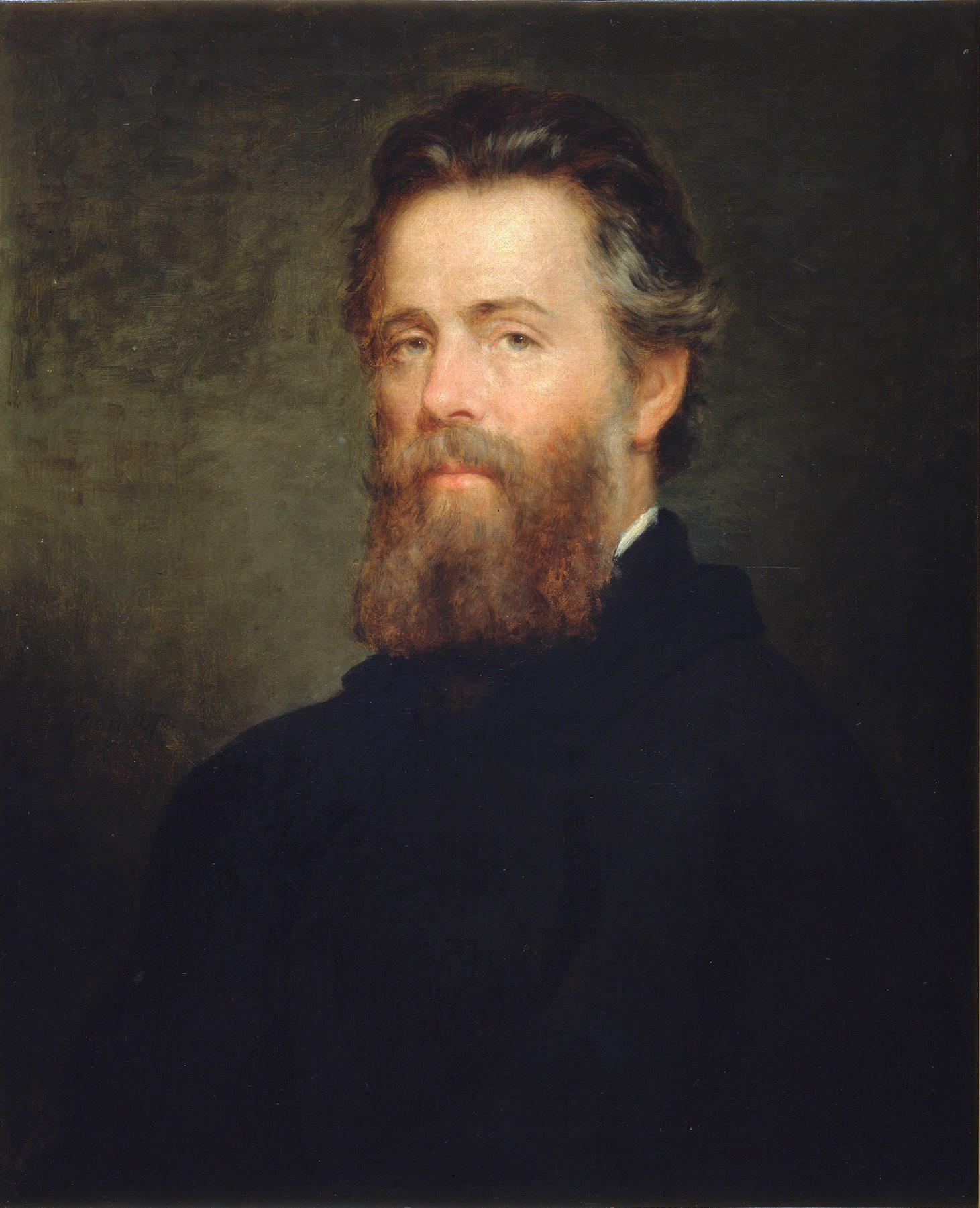
Herman Melville stands as a towering figure of the American Renaissance, a writer whose early success with Polynesian adventure tales like Typee and Omoo belied the profound philosophical and psychological depths he would later explore. His magnum opus, Moby-Dick, is now considered one of the Great American Novels, a complex allegory of obsession, nature, and the human condition. Despite critical neglect during his lifetime, a Melville revival beginning in 1919 resurrected his reputation, cementing his legacy as a master of prose and a prescient commentator on themes that continue to resonate today, from the nature of evil to the struggle against overwhelming forces.
🎵 Origins & History
Herman Melville's father was Allan Melville, a successful importer. His mother was Maria Gansevoort. His wife was Elizabeth Knapp. His early career included stints as a bank clerk, a teacher in Pittsfield, Massachusetts, and, crucially, as a sailor. It was during his voyages in the Pacific Ocean, particularly his time among the Marquesas Islands and later in French Polynesia, that he gathered the material that would launch his literary career.
⚙️ The Writer's Craft
Melville's writing is characterized by its ambitious scope, intricate symbolism, and profound philosophical inquiries. His early works, such as Typee and Omoo, were popular adventure narratives drawing on his experiences in the South Pacific. However, with Moby-Dick, he shifted towards a more complex, allegorical style, blending epic narrative with philosophical digressions and experimental prose. His use of foreshadowing, dramatic irony, and multifaceted characters, particularly Captain Ahab's monomaniacal pursuit of the white whale, showcases his mastery of literary technique. Later works like The Confidence-Man (1857) further pushed the boundaries of narrative form, often employing satire and ambiguity to explore the darker aspects of human nature and society.
📊 Key Facts & Numbers
Melville's literary output spanned over 40 years, producing 13 novels and numerous short stories and poems. His most famous work, Moby-Dick, sold fewer than 3,000 copies in the United States during his lifetime, a stark contrast to its current status as a cornerstone of American literature. By the time of his death, Melville had published over 30 works, yet his critical reputation had significantly declined from his early successes. It wasn't until the Melville revival of 1919, a century after his birth, that his work began to receive widespread scholarly and public acclaim. Today, estimates of his literary influence are immeasurable, with his works studied in thousands of academic institutions globally.
👥 Key People & Organizations
Key figures in Melville's life include his father, Allan Melville, whose financial struggles influenced Melville's early career choices, and his mother, Maria Gansevoort. His wife, Elizabeth Knapp, provided support through his later, less commercially successful years. Literary contemporaries like Nathaniel Hawthorne were significant influences and correspondents; Melville dedicated Moby-Dick to Hawthorne. The United States itself, with its burgeoning national identity and expansionist spirit, served as a crucial backdrop and thematic element in his work. Posthumously, scholars like F. O. Matthiessen were instrumental in the Melville revival of the 20th century.
🌍 Cultural Impact & Influence
Melville's impact on American literature is profound and enduring. His exploration of themes such as good versus evil, the sublime power of nature, and the complexities of the human psyche in works like Moby-Dick and Billy Budd, Sailor has shaped subsequent generations of writers. His innovative narrative techniques and philosophical depth influenced modernist and postmodernist literature. Beyond literature, his vivid depictions of maritime life and the Pacific Islands have contributed to broader cultural understandings and romanticized perceptions of these regions. The very notion of the "Great American Novel" is often discussed in relation to his oeuvre, particularly Moby-Dick.
⚡ Melville's Later Years & Legacy
The latter half of Melville's life saw a significant decline in his literary output and public recognition. After the critical and commercial failure of The Confidence-Man (1857), he increasingly turned to poetry, publishing collections like Battle-Pieces and Aspects of the War (1866) and Clarel (1876). He also worked as a customs inspector for the U.S. Customs House in New York City from 1866 to 1885, a period of relative financial stability but literary quietude. His novella Billy Budd, Sailor was not discovered and published until 1924, long after his death on September 28, 1891, in New York City, marking a poignant posthumous rediscovery of his genius.
🤔 Controversies & Debates
One of the primary controversies surrounding Melville is the interpretation of Moby-Dick. Is Captain Ahab a tragic hero or a madman whose obsession dooms his crew? The novel's allegorical nature invites myriad readings, from theological to psychological. Furthermore, the portrayal of non-Western cultures in his early works, particularly Typee, has been subject to scrutiny for its romanticization and potential exoticism, reflecting the colonial attitudes of the 19th century. The posthumous publication of Billy Budd, Sailor also sparked debate about Melville's final artistic intentions and the novella's ambiguous moral landscape.
🔮 The Enduring Resonance
Melville's work continues to be a fertile ground for interpretation and adaptation. His exploration of existential themes, the nature of authority, and the human capacity for both great good and profound evil ensures his relevance. The enduring fascination with Moby-Dick suggests that the archetypal struggle against overwhelming forces, embodied by Ahab and the white whale, speaks to timeless human anxieties. Future scholarship will likely continue to uncover new layers of meaning in his complex prose and explore his connections to contemporary issues of environmentalism, identity, and the search for meaning in a chaotic world.
💡 Practical Applications
While Melville's work is primarily appreciated for its literary merit, its themes and narratives have found practical applications in various fields. The psychological depth of his characters, particularly Ahab's obsession, is studied in psychology and leadership courses to understand motivation and destructive ambition. His detailed descriptions of whaling and maritime life offer historical insights for maritime historians and naval architects. Furthermore, the philosophical questions raised in his novels continue to inform discussions in ethics, theology, and existential philosophy, providing frameworks for understanding complex moral dilemmas and the human condition.
Key Facts
- Category
- culture
- Type
- person