
Contents
Overview
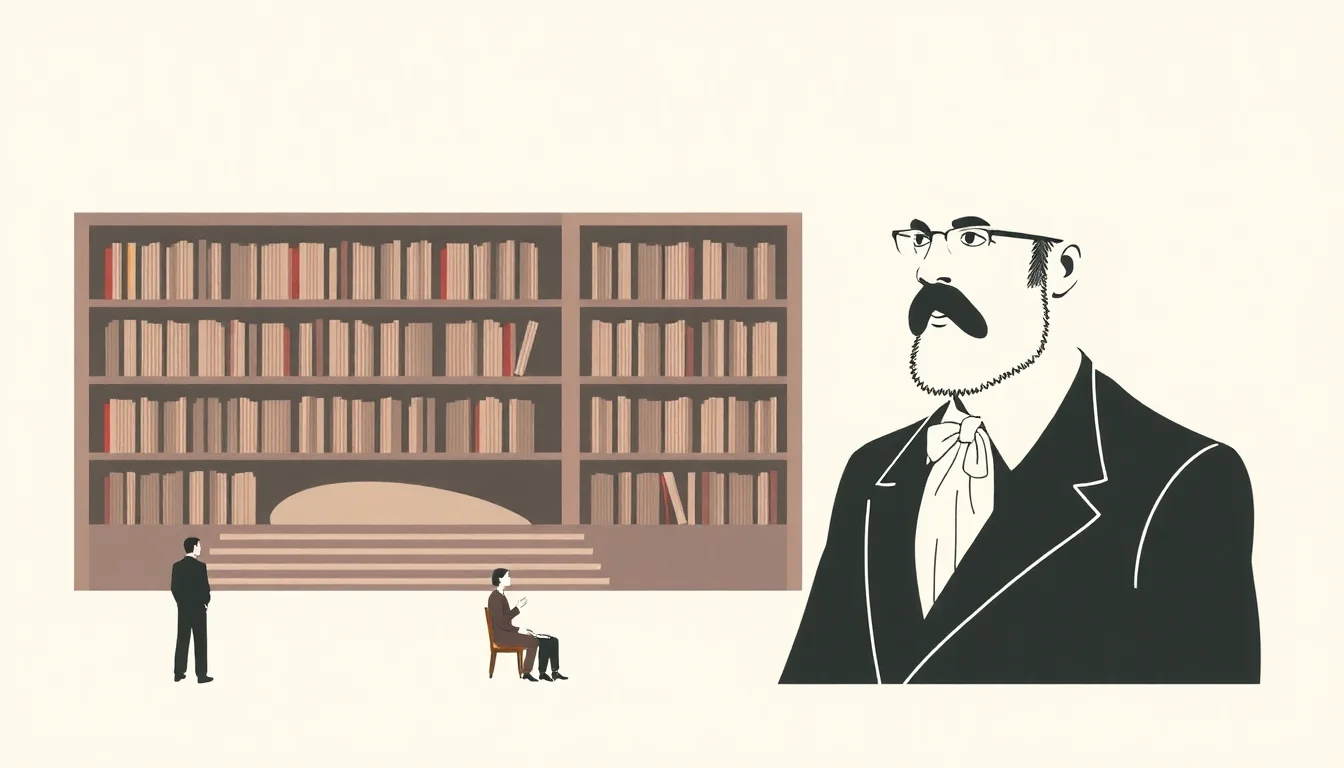
Jacob L. Moreno (1902-1974) was a Romanian-born psychiatrist, sociologist, and philosopher, widely recognized as the founder of psychodrama, sociometry, and group psychotherapy. He envisioned a world where individuals could actively explore their emotions and relationships through dramatic enactment, moving beyond passive observation. Moreno's work challenged the prevailing individualistic therapeutic models of his time, emphasizing the power of spontaneous interaction and shared experience. His intellectual journey spanned Vienna, where he interacted with figures like Freud, and later the United States, where he established his most influential institutions. He was a prolific writer and a charismatic, if sometimes controversial, figure in 20th-century psychology.
💡 The Birth of Psychodrama
The genesis of psychodrama can be traced to Moreno's early experiences in Vienna, where he organized spontaneous theatrical performances in parks, inviting audience members to step onto the stage and act out their own lives. He called this the 'theater of spontaneity,' a precursor to his formal development of psychodrama. This method, which he later codified and established at the Moreno Institute in Beacon, New York, uses dramatic techniques to explore personal and interpersonal issues. The core idea is that by re-enacting and exploring situations in a safe, therapeutic environment, individuals can gain new insights and develop more effective ways of coping. This marked a significant departure from traditional talk therapy, introducing a kinetic and experiential dimension.
🌍 Moreno's Global Impact
Moreno's influence extended far beyond the confines of the therapy room. His development of sociometry provided a quantitative method for understanding social relationships and group dynamics, impacting fields from organizational psychology to urban planning. He applied these principles to understand social networks, group cohesion, and the spread of influence. His work laid the groundwork for much of modern group therapy and community psychology, demonstrating that individual well-being is deeply intertwined with social structures. The application of his methods can be seen in diverse areas, from educational settings to correctional facilities, highlighting the broad applicability of his theories.
🤝 The Moreno Institute Today
The Moreno Institute, founded in Beacon, New York, remains a central hub for psychodrama training and practice. It continues to offer accredited training programs for therapists, educators, and social workers seeking to integrate psychodramatic techniques into their work. The institute preserves Moreno's legacy by fostering research, providing clinical services, and promoting the ongoing development of psychodrama. While the original physical location has evolved, the spirit of Moreno's innovative approach to human connection and therapeutic exploration persists through its global network of practitioners and affiliated organizations. The institute serves as a vital resource for understanding and applying his foundational principles.
🌟 Key Concepts & Techniques
At the heart of Moreno's therapeutic system are several key concepts and techniques. Psychodrama itself involves the protagonist (the client) enacting a past, present, or future situation, often with auxiliary egos (therapists or other group members playing roles) and a director (the psychodramatist). Core techniques include role reversal, where the protagonist takes on the role of another person involved in the situation, and the double, where another person embodies the protagonist's feelings or thoughts. Sociometry, his other major contribution, uses matrices and graphs to map relationships within groups, identifying leaders, isolates, and subgroups. These methods are designed to foster spontaneity, creativity, and catharsis.
📚 Essential Reading
For those looking to engage with Moreno's foundational ideas, several texts are essential. His seminal work, "Who Shall Survive?" (1934), first introduced the concepts of sociometry and psychodrama, laying out his vision for a new science of social relations. "Psychodrama" (Vol. 1, 1946; Vol. 2, 1959; Vol. 3, 1969) offers a comprehensive exploration of his therapeutic method, detailing its theory and practice. "The First Book on Group Therapy" (1932) showcases his early insights into the dynamics of group interaction. Reading these works provides direct access to Moreno's original thought and the intellectual context from which his innovations emerged.
⚖️ Debates & Criticisms
Moreno's work, while influential, has not been without its critics. Some have questioned the ethical implications of psychodrama, particularly regarding the potential for re-traumatization or the intense emotional exposure involved. The highly theatrical nature of psychodrama has also led to debates about its suitability for all clients and its integration with more traditional therapeutic modalities. Furthermore, the quantitative rigor of sociometry has been debated, with some arguing for its limitations in capturing the full complexity of human relationships. Despite these discussions, the enduring appeal of Moreno's experiential approach suggests a persistent need for methods that address the social and dramatic dimensions of human experience.
🚀 The Future of Moreno's Work
The legacy of Jacob Moreno continues to evolve. Modern applications of psychodrama are exploring its use in diverse settings, from trauma recovery and addiction treatment to organizational development and conflict resolution. Sociometry remains a valuable tool for analyzing social networks and understanding group dynamics in the digital age, with new computational approaches emerging. The emphasis on spontaneity and creativity championed by Moreno resonates with contemporary interest in mindfulness and authentic self-expression. As we grapple with increasingly complex social challenges, Moreno's focus on active engagement and relational understanding offers a potent framework for fostering individual and collective well-being, suggesting that his work is far from complete.
Key Facts
- Year
- 1889
- Origin
- Bucharest, Romania
- Category
- Psychology & Social Sciences
- Type
- Person
Frequently Asked Questions
What is the primary difference between psychodrama and traditional talk therapy?
The fundamental difference lies in their approach to exploration. Traditional talk therapy primarily relies on verbal communication and introspection. Psychodrama, on the other hand, is an active, experiential method where individuals enact their issues, emotions, and relationships through dramatic representation. This allows for a more embodied and immediate processing of experiences, often leading to different kinds of insights than purely verbal methods. It emphasizes spontaneity and action over passive reflection.
Is psychodrama suitable for everyone?
While psychodrama can be highly effective for many, its intense and experiential nature means it may not be suitable for every individual or every situation. Clients experiencing acute psychosis or severe dissociation might require more stabilization before engaging in psychodrama. Therapists are trained to assess suitability and adapt techniques. The Moreno Institute and its accredited practitioners emphasize careful client assessment and ethical application of the methods to ensure safety and efficacy.
How is sociometry different from standard social surveys?
Sociometry goes beyond simply asking people about their preferences; it aims to map the actual patterns of attraction and rejection within a group. It uses specific matrices and graphical representations to visualize these relationships, identifying leaders, isolates, and subgroups. Standard social surveys often focus on attitudes or behaviors, whereas sociometry quantifies the structure of social bonds, providing actionable insights for group management and intervention. It's a tool for understanding the 'who likes whom' dynamics.
Where can I find training in psychodrama?
The primary resource for accredited training in psychodrama is the Moreno Institute, with its main center in Beacon, New York. Numerous affiliated institutes and training programs exist globally, often certified by organizations like the American Board of Examiners in Psychodrama and Group Psychotherapy (ABEPG). Prospective trainees should look for programs that adhere to established standards and offer comprehensive theoretical and practical instruction in psychodrama and sociometry.
What are some common psychodrama techniques?
Key techniques include the 'warm-up' phase to build trust and spontaneity, the 'action' phase where the protagonist enacts their situation, and the 'sharing' or 'integration' phase for processing. Specific methods involve the 'auxiliary ego' (playing another person), the 'double' (representing the protagonist's inner state), 'role reversal' (taking on another's perspective), and the 'magic shop' (imagining ideal solutions). These tools facilitate exploration and insight within the psychodrama framework.
Did Jacob Moreno have any significant rivalries or controversies?
Yes, Jacob Moreno was a figure who often courted controversy. His flamboyant style and bold claims sometimes clashed with the more staid academic establishment. He had a notable, though complex, relationship with Sigmund Freud, initially being seen as a rival and later engaging in debates about the nature of the unconscious and therapeutic approaches. Moreno's emphasis on spontaneity and group dynamics was a departure from Freudian psychoanalysis, leading to ongoing discussions about the relative merits of different therapeutic schools.