
Contents
Overview
Low impact scaffolding design represents a specialized branch of structural engineering focused on minimizing the physical and environmental footprint of temporary support structures. This approach prioritizes the preservation of existing building fabric, particularly in heritage sites, and reduces disruption to surrounding ecosystems. Key considerations include load distribution, material selection for reduced weight and environmental impact, and innovative erection/dismantling techniques that avoid damage. There is a growing demand for sustainable and sensitive scaffolding solutions, driven by stricter heritage protection laws and increasing environmental awareness. Low impact designs often employ modular systems, advanced bracing, and specialized anchoring to distribute loads more evenly and reduce the need for invasive fixings. This evolution is critical for projects ranging from delicate historical building restorations to urban construction in sensitive ecological zones.
🎵 Origins & History
Early pioneers in heritage conservation began experimenting with lighter materials and less invasive fixing methods. English Heritage championed the preservation of irreplaceable architectural assets. The National Trust championed the preservation of irreplaceable architectural assets. However, the explicit focus on 'low impact' as a design philosophy solidified in the early 2000s with advancements in materials science and structural analysis software, allowing for more precise load calculations and optimized component design.
⚙️ How It Works
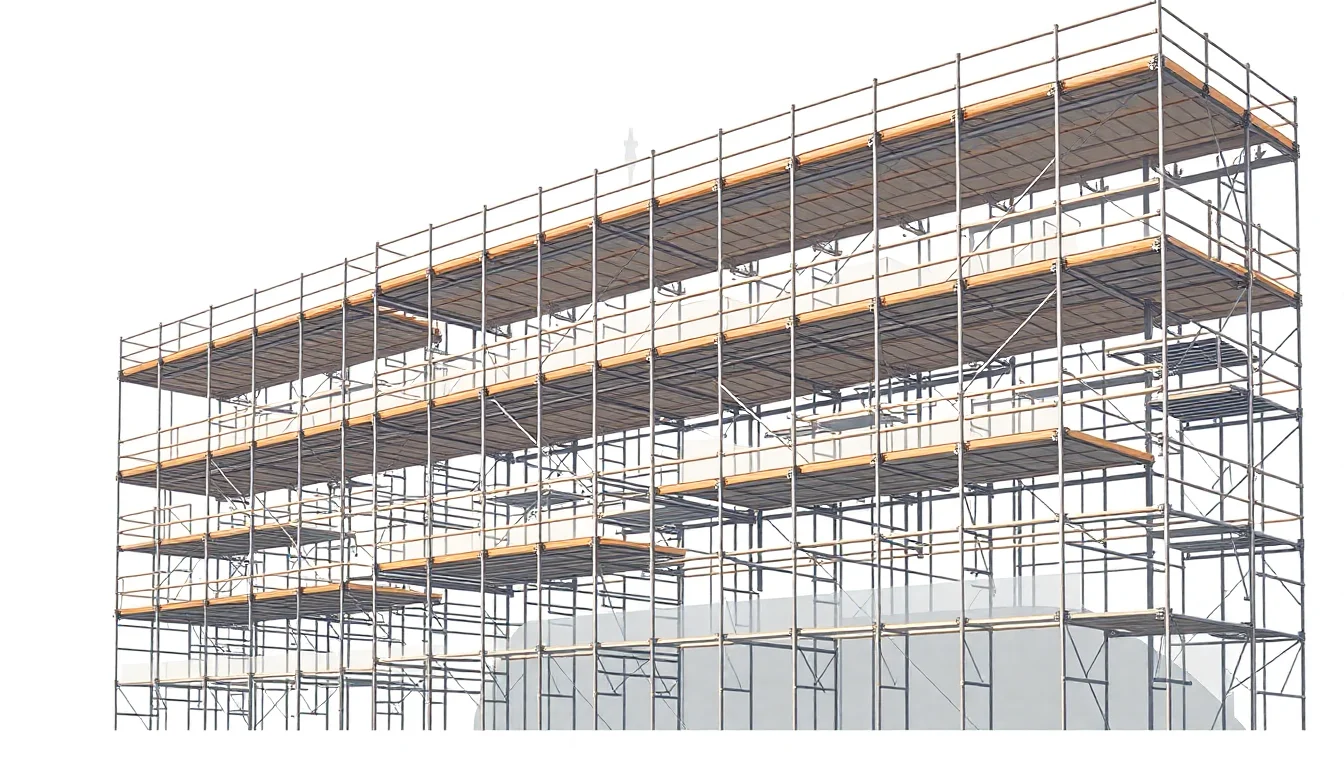
Low impact scaffolding design operates on principles of meticulous load management and minimal physical intrusion. Instead of concentrating loads on specific points, these systems distribute weight across a wider area, often utilizing specialized base plates, ground protection mats, and adjustable leg systems to prevent damage to sensitive surfaces like historical paving or delicate foundations. Material selection is paramount; lightweight yet high-strength alloys like aluminum or advanced composites are favored over traditional steel where feasible, reducing overall weight and handling strain. Furthermore, innovative bracing techniques, such as cantilevered systems or tensioned cable supports, can minimize the need for extensive ground anchors or wall fixings. The erection and dismantling processes are also carefully planned, often employing pre-assembly of larger sections off-site and using specialized lifting equipment to reduce on-site activity and potential for accidental damage. This contrasts sharply with conventional scaffolding, which might rely on direct wall ties or heavy ground supports.
📊 Key Facts & Numbers
The global scaffolding market, estimated at $18.5 billion in 2023, is witnessing a significant shift towards low impact solutions. UNESCO World Heritage sites, for instance, often mandate strict low impact protocols. The use of recycled or recyclable materials in aluminum and composite scaffolding contributes to a lower carbon footprint, a factor increasingly scrutinized in construction projects aiming for LEED or BREEAM accreditation.
👥 Key People & Organizations
Key figures in the advancement of low impact scaffolding include engineers and conservation architects who have championed these specialized techniques. John Burge developed innovative systems for complex historical structures. Companies like BrandSafway and Perrin Scaffolding have dedicated divisions focusing on heritage and low impact solutions, investing in research and development for specialized equipment. Architectural firms specializing in heritage conservation, such as Adams and Remers or Gregory and Co Architects, often specify these systems. The International Council on Monuments and Sites (ICOMOS) also plays a role by setting guidelines and promoting best practices for interventions on heritage properties, indirectly influencing scaffolding design standards.
🌍 Cultural Impact & Influence
The cultural impact of low impact scaffolding is most evident in the successful preservation and continued accessibility of historical landmarks. By enabling sensitive restoration work, these systems allow the public to engage with centuries-old architecture without the visual blight or physical damage often associated with intrusive construction. Think of the ongoing restoration of Notre Dame Cathedral in Paris, where meticulous scaffolding was essential to protect the remaining structure. This approach fosters a deeper appreciation for architectural heritage and demonstrates a societal commitment to safeguarding cultural legacies. It also influences public perception of construction, shifting it from a purely utilitarian necessity to a more considered, respectful process, especially in urban environments where aesthetics and historical context are paramount. The ability to work on sensitive sites without permanent scarring elevates the perceived professionalism and responsibility of the construction industry.
⚡ Current State & Latest Developments
The current state of low impact scaffolding design is characterized by increasing integration of digital technologies and advanced materials. Building Information Modeling (BIM) is now routinely used to plan scaffolding layouts with unprecedented precision, identifying potential conflict points and optimizing load paths before any physical work begins. The development of self-climbing scaffolding systems, which can ascend a structure without extensive external support, is also gaining traction, further reducing ground impact. Furthermore, research into bio-based or recycled composite materials for scaffolding components is ongoing, aiming to improve sustainability metrics. The industry is also seeing a rise in modular, adaptable systems that can be quickly reconfigured for different site constraints, minimizing waste and erection time. The focus is shifting from simply providing support to designing scaffolding as an integral, intelligent part of the construction or conservation process.
🤔 Controversies & Debates
A significant controversy surrounds the cost-effectiveness of low impact scaffolding. While proponents argue that the long-term benefits of heritage preservation and reduced damage outweigh the initial investment, critics point to the higher upfront costs, which can be prohibitive for smaller projects or organizations with limited budgets. Another debate centers on the definition and standardization of 'low impact'; what one firm considers low impact, another might deem insufficient, leading to inconsistencies in application. There's also tension between the need for robust structural integrity and the desire for minimal intervention. Some argue that overly cautious low impact designs might compromise efficiency or safety in certain complex scenarios, though proponents counter that advanced engineering and materials mitigate these concerns. The potential for proprietary systems to limit competition and drive up costs is also a recurring point of contention.
🔮 Future Outlook & Predictions
The future of low impact scaffolding design points towards greater automation, enhanced material science, and deeper integration with smart building technologies. We can expect to see more robotic erection and dismantling systems, reducing human error and improving safety on complex sites. The development of 'smart scaffolding' with integrated sensors to monitor structural integrity, environmental conditions, and even worker safety in real-time is on the horizon. Material innovation will likely yield even lighter, stronger, and more sustainable components, potentially incorporating self-healing properties or advanced energy absorption capabilities. Furthermore, as urban density increases and heritage preservation becomes more critical, the demand for highly adaptable, minimally invasive scaffolding solutions will only g
Key Facts
- Category
- technology
- Type
- topic