
Contents
Overview
The origins of the Magyar language trace back to the migration of the Magyar tribes from the Ural Mountains region, likely around the 5th century CE, eventually settling in the Carpathian Basin by the 9th century. Unlike its closest linguistic relatives, Finnish and Estonian, which are spoken thousands of kilometers away, Magyar developed in relative isolation. Early written records are scarce, and the language's unique structure and vocabulary have long puzzled linguists, with extensive research conducted by scholars like József Budenz in the 19th century who solidified its Uralic classification. The influence of Old Turkic and later Slavic and Germanic languages is evident in its lexicon, yet the core structure remains distinctly Uralic.
⚙️ How It Works
Magyar is an agglutinative language, meaning it forms words by adding multiple suffixes to a root word, each suffix carrying a specific grammatical meaning. This contrasts sharply with analytic languages like English, which rely more on word order and prepositions. A hallmark of Magyar is its complex vowel harmony system, where vowels within a word must belong to specific sets (front or back), influencing the form of suffixes. For instance, the possessive suffix for 'my' can be '-m' or '-em' depending on the preceding vowels. Word order is relatively flexible, often used for emphasis rather than grammatical function, with the verb typically appearing in the second position.
📊 Key Facts & Numbers
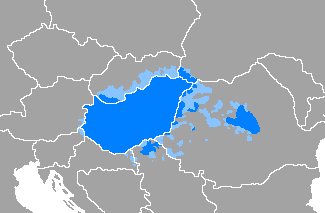
With significant minority populations reportedly speaking it in neighboring countries, Magyar is the most widely spoken language within the Uralic family. Globally, diaspora communities in the United States and Canada account for hundreds of thousands of speakers, with estimates suggesting around 1.5 million Hungarians living abroad.
👥 Key People & Organizations
Key figures in the study and preservation of the Magyar language include József Budenz, a 19th-century linguist who played a crucial role in establishing its Uralic connections. More recently, linguists like István Fodor have contributed to understanding its historical development and dialectology. The Hungarian Academy of Sciences has been instrumental in standardizing the language and supporting linguistic research. Numerous universities globally, including Eötvös Loránd University in Budapest and the University of Vienna, offer programs in Hungarian studies. Organizations like the Petőfi Literary Fund actively promote Hungarian literature and language abroad, ensuring its continued visibility.
🌍 Cultural Impact & Influence
The Magyar language is deeply intertwined with Hungarian culture and national identity. Its distinctiveness has historically served as a unifying force for Hungarians, particularly during periods of foreign rule or political upheaval. Literary works by authors such as Sándor Petőfi, Endre Ady, and Imre Kertész have shaped and enriched the language, with their works translated into numerous languages, showcasing Magyar's literary prowess. The language is a central element in Hungarian folklore, music, and traditions, from folk songs to the intricate grammar of historical documents. Its presence in neighboring countries also signifies the enduring cultural ties of Hungarian minorities to their ancestral homeland, influencing regional linguistic landscapes.
⚡ Current State & Latest Developments
In the 21st century, the Magyar language faces the ongoing challenges of globalization and digital integration. While it remains the official language of Hungary and is widely used in education and media, the influence of English as a global lingua franca is undeniable, particularly in academic and technological spheres. Efforts to preserve and promote the language are active, with initiatives like the National Széchényi Library's digital archives and online language learning platforms. The language is fully integrated into the European Union's official documentation, requiring translation services and ensuring its continued relevance on a supranational level. Debates persist regarding the influence of loanwords and the preservation of linguistic purity in the face of digital communication trends.
🤔 Controversies & Debates
One of the primary debates surrounding the Magyar language concerns its precise Finno-Ugric origins and its relationship with other languages in the family. While its classification is widely accepted, the exact timeline and migration routes of its ancestors remain subjects of academic discussion. Another point of contention, particularly in neighboring countries, involves the language's status as a minority language and the extent of its official use and educational provision. The influx of loanwords, especially from English, also sparks debate among purists who advocate for linguistic conservatism versus those who embrace linguistic evolution. The political implications of language policy, particularly concerning Hungarian minorities abroad, often fuel heated discussions.
🔮 Future Outlook & Predictions
The future of the Magyar language appears stable within Hungary, where it holds a dominant position. However, maintaining its vitality among diaspora communities will require continued investment in cultural institutions and language education programs. The increasing digitization of communication presents both opportunities for wider reach through online platforms and challenges in combating the dominance of English. Linguists predict that while the core structure of Magyar will likely remain intact, its lexicon will continue to evolve, incorporating new terms and concepts. The ongoing demographic trends in Hungary and among Hungarian minorities abroad will also play a significant role in shaping the language's future speaker base. The potential for further linguistic research into its unique features may also unlock new insights into language evolution.
💡 Practical Applications
The Magyar language is primarily used for communication within Hungary and by Hungarian communities abroad. It serves as the medium of instruction in all levels of education in Hungary, from primary schools to universities like Corvinus University of Budapest. It is the language of government, law, and business within Hungary. For linguistic researchers and historical linguists, Magyar offers a unique case study in language evolution and areal linguistics due to its isolation. For translation professionals, it represents a distinct linguistic challenge and opportunity, requiring specialized knowledge of its agglutinative structure and vowel harmony. Its literature and cultural output are accessible to a global audience through translation, enabling wider appreciation of Hungarian arts and thought.
Key Facts
- Category
- language
- Type
- topic