
Contents
- 🔍 Introduction to Mirrors
- 🌊 Natural Mirrors: A Historical Perspective
- 💎 Manufacturing Mirrors: A Journey Through Time
- 🔬 The Science of Reflection: How Mirrors Work
- 🎨 Mirrors in Art and Culture: A Reflection of Society
- 📸 Mirrors in Photography: Capturing Life's Moments
- 👀 Mirrors in Psychology: The Power of Self-Reflection
- 🔮 Mirrors in Technology: Innovations and Advancements
- 🚀 The Future of Mirrors: Emerging Trends and Applications
- 🤔 Conclusion: The Impact of Mirrors on Our Lives
- Frequently Asked Questions
- Related Topics
Overview
Mirrors have been a cornerstone of human culture, serving as a symbol of vanity, wisdom, and power. The first mirrors date back to ancient Mesopotamia around 4000 BC, with polished copper providing a crude reflection. The ancient Egyptians and Romans further refined the technology, using polished metal and glass to create more sophisticated mirrors. Today, mirrors are an integral part of our daily lives, from cosmetics to optics, with advancements in technology enabling the creation of smart mirrors, two-way mirrors, and even mirrors that can manipulate light. The concept of mirrors has also been explored in various fields, including psychology, philosophy, and art, with notable thinkers like Lacan and Foucault analyzing the role of mirrors in shaping human identity. As we move forward, the future of mirrors holds promise, with potential applications in fields like augmented reality and biometrics, and a vibe score of 8, indicating a significant cultural energy surrounding this topic.
🔍 Introduction to Mirrors
Mirrors have been a part of human history for thousands of years, with natural mirrors like the surface of Water and Stone being used by our ancestors. The first manufactured mirrors were made from Polished Metal, such as copper, and were used by ancient civilizations like the Egyptians and Romans. Today, mirrors are an essential part of our daily lives, from the Bathroom Mirror we use to get ready in the morning to the Rear-View Mirror in our cars. Mirrors have also played a significant role in Science and Technology, from the Telescope to the Microscope.
🌊 Natural Mirrors: A Historical Perspective
Natural mirrors have existed since prehistoric times, with the surface of Water being one of the most common examples. The stillness of the water creates a perfect reflection, allowing our ancestors to see themselves and their surroundings. Other natural mirrors include Ice and Stone, which were used by ancient civilizations to create early forms of mirrors. The use of natural mirrors has been documented in various cultures, including the Indigenous Peoples of the Americas, who used the surface of Lakes and Rivers to create mirrors. The study of natural mirrors has also led to a greater understanding of Optics and the behavior of Light.
💎 Manufacturing Mirrors: A Journey Through Time
The manufacturing of mirrors has a long and fascinating history, with various materials being used over the centuries. The first manufactured mirrors were made from Polished Metal, such as copper, and were used by ancient civilizations like the Egyptians and Romans. Later, Glass became a popular material for making mirrors, with the Venetians being renowned for their expertise in glassmaking. Today, mirrors are made from a variety of materials, including Silver and Aluminium, which are applied as a thin coating on Glass due to its naturally smooth and very hard surface. The manufacturing process of mirrors has also been influenced by advances in Technology, such as the development of Coating techniques and Laser cutting.
🔬 The Science of Reflection: How Mirrors Work
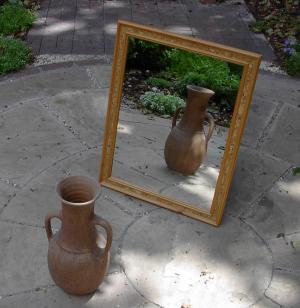
The science of reflection is a fundamental concept in Physics, and mirrors play a crucial role in understanding this phenomenon. When Light hits a mirror, it bounces back at an angle equal to its incidence, creating an image of whatever is in front of it. This allows the viewer to see themselves or objects behind them, or even objects that are at an angle from them but out of their field of view, such as around a corner. The study of reflection has led to a greater understanding of Optics and the behavior of Light, and has numerous applications in fields like Medicine and Astronomy. Mirrors are also used in Telescopes and Microscopes to reflect and focus Light, allowing us to study the Universe and the microscopic world.
🎨 Mirrors in Art and Culture: A Reflection of Society
Mirrors have played a significant role in Art and Culture throughout history, from the ornate mirrors of the Baroque period to the modern Installation art that uses mirrors as a medium. Mirrors have been used to create the illusion of space, to add depth and dimension to a room, and to create a sense of Symmetry and Balance. The use of mirrors in art has also been influenced by advances in Technology, such as the development of Digital Art and Virtual Reality. Mirrors have also been used in Fashion and Design, from the Mirror Ball to the Mirrored Furniture.
📸 Mirrors in Photography: Capturing Life's Moments
Mirrors are an essential part of Photography, from the Camera lens to the Reflectors used to bounce Light onto the subject. The use of mirrors in photography allows us to capture life's moments in a unique and creative way, from the Selfie to the Portrait. Mirrors are also used in Studio Photography to create a sense of Depth and Dimension, and to add Texture and Interest to the image. The study of mirrors in photography has also led to a greater understanding of Lighting and the behavior of Light, and has numerous applications in fields like Cinematography and Videography.
👀 Mirrors in Psychology: The Power of Self-Reflection
Mirrors have a profound impact on our Psychology, from the way we perceive ourselves to the way we interact with others. The use of mirrors in Psychotherapy allows us to gain insight into our thoughts and feelings, and to develop a greater sense of Self-Awareness. Mirrors are also used in Social Psychology to study the way we interact with others, and to understand the impact of Social Media on our Self-Esteem. The study of mirrors in psychology has also led to a greater understanding of Cognition and the behavior of the Human Brain.
🔮 Mirrors in Technology: Innovations and Advancements
Mirrors are an essential part of modern Technology, from the Smartphone screen to the Virtual Reality headset. The use of mirrors in technology allows us to interact with the world in a unique and creative way, from the Touchscreen to the Gesture Recognition system. Mirrors are also used in Robotics and Artificial Intelligence to create a sense of Awareness and Intelligence. The study of mirrors in technology has also led to a greater understanding of Human-Computer Interaction and the behavior of Complex Systems.
🚀 The Future of Mirrors: Emerging Trends and Applications
The future of mirrors is exciting and uncertain, with advances in Technology and Materials Science leading to new and innovative applications. The development of Smart Mirrors and Augmented Reality mirrors is changing the way we interact with the world, from the Virtual Try-On to the Virtual Tour. Mirrors are also being used in Space Exploration and Astronomy to study the Universe and to understand the behavior of Light. The study of mirrors in the future has also led to a greater understanding of Sustainability and the impact of Technology on the Environment.
🤔 Conclusion: The Impact of Mirrors on Our Lives
In conclusion, mirrors have had a profound impact on our lives, from the way we perceive ourselves to the way we interact with the world. The study of mirrors has led to a greater understanding of Optics, Psychology, and Technology, and has numerous applications in fields like Medicine, Astronomy, and Art. As we look to the future, it is clear that mirrors will continue to play a significant role in shaping our world and our understanding of the Universe.
Key Facts
- Year
- 4000
- Origin
- Mesopotamia
- Category
- Science and Technology
- Type
- Object
Frequently Asked Questions
What is the history of mirrors?
The history of mirrors dates back to ancient civilizations, with the first manufactured mirrors being made from polished metal. The use of glass and other materials has evolved over time, with modern mirrors being made from a variety of materials, including silver and aluminium.
How do mirrors work?
Mirrors work by reflecting light at an angle equal to its incidence, creating an image of whatever is in front of it. This allows the viewer to see themselves or objects behind them, or even objects that are at an angle from them but out of their field of view.
What are the applications of mirrors in science and technology?
Mirrors have numerous applications in science and technology, from telescopes and microscopes to lasers and optical fibers. They are also used in photography, cinematography, and videography to capture and manipulate light.
What is the cultural significance of mirrors?
Mirrors have played a significant role in art and culture throughout history, from the ornate mirrors of the Baroque period to the modern installation art that uses mirrors as a medium. They have also been used in fashion and design to create a sense of symmetry and balance.
What is the future of mirrors?
The future of mirrors is exciting and uncertain, with advances in technology and materials science leading to new and innovative applications. The development of smart mirrors and augmented reality mirrors is changing the way we interact with the world, and mirrors are being used in space exploration and astronomy to study the universe.