
Contents
- 🎵 Origins & History
- ⚙️ How It Works
- 📊 Key Facts & Numbers
- 👥 Key People & Organizations
- 🌍 Cultural Impact & Influence
- ⚡ Current State & Latest Developments
- 🤔 Controversies & Debates
- 🔮 Future Outlook & Predictions
- 💡 Practical Applications
- 📚 Related Topics & Deeper Reading
- Frequently Asked Questions
- References
- Related Topics
Overview
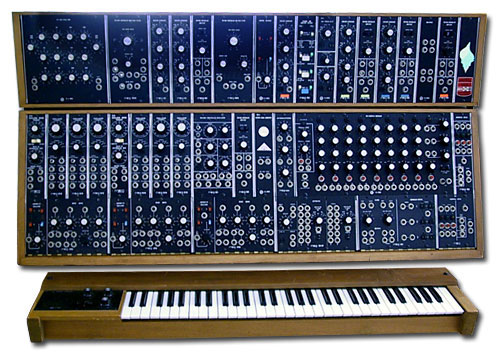
The genesis of modular synthesizers can be traced back to the mid-20th century, with early pioneers like Hugo Gernsback and his 'Radio Music Box' in 1920 hinting at the concept of electronic sound generation. However, the true birth of the modular synthesizer as we know it began with RCA's Mark II Sound Synthesizer in 1957, a colossal machine that, while not fully modular in the modern sense, laid crucial groundwork. The first instruments truly embodying the modular philosophy emerged in the 1960s, most notably with Robert Moog's groundbreaking Moog modular system in 1964 and Don Buchla's similarly innovative, albeit philosophically different, systems around the same time. These early systems, often costing tens of thousands of dollars, were primarily confined to academic institutions and the studios of avant-garde composers like Wendy Carlos and Morton Subotnick, who used them to create seminal works such as 'Switched-On Bach' (1968) and 'Silver Apples of the Moon' (1967), respectively. The subsequent decades saw the rise of more integrated, less complex synthesizers, pushing modular systems to the fringes until a resurgence in the late 1990s and early 2000s, fueled by the development of the compact and affordable Eurorack format by Doepfer Musikelektronik in 1996.
⚙️ How It Works
At its core, a modular synthesizer is a collection of individual electronic circuits, known as modules, each responsible for a specific sonic or control function. These modules are interconnected by the user via patch cables, which carry audio signals, control voltages (CV), or digital data. A typical setup includes voltage-controlled oscillators (VCOs) to generate raw waveforms, voltage-controlled filters (VCFs) to sculpt the timbre by removing or emphasizing frequencies, voltage-controlled amplifiers (VCAs) to manage the signal's volume over time, and envelope generators (EGs) or low-frequency oscillators (LFOs) to create dynamic changes in pitch, timbre, or amplitude. The 'voltage-controlled' aspect is key: control voltages from one module can influence parameters of another, enabling complex feedback loops, evolving textures, and highly dynamic performances. This patch-bay approach allows for an almost infinite number of signal flows and sonic manipulations, far exceeding the fixed architecture of most conventional synthesizers.
📊 Key Facts & Numbers
The modular synthesizer market has seen explosive growth, with estimates suggesting the global market size reached approximately $300 million in 2023, a significant increase from previous years. The dominant format, Eurorack, boasts over 500 active manufacturers worldwide, offering more than 10,000 unique modules. A typical mid-range Eurorack system can cost between $1,000 and $5,000, while high-end or expansive setups can easily exceed $20,000. Module prices range from as little as $30 for basic utilities to over $1,000 for complex digital sound sources or sequencers. Despite the niche appeal, sales figures indicate a consistent year-over-year growth of 15-20% in the modular synthesizer sector, driven by both established electronic musicians and a new generation of hobbyists attracted to its creative potential. The number of active Eurorack users is estimated to be in the hundreds of thousands globally.
👥 Key People & Organizations
Several key figures and organizations have shaped the modular synthesizer landscape. Robert Moog and Don Buchla are undeniably the founding fathers, establishing the core concepts in the 1960s with their respective companies, Moog Music and Buchla Electronic Music. Dieter Doepfer's introduction of the Eurorack format in 1996 with his company Doepfer Musikelektronik democratized modular synthesis, making it accessible to a much wider audience. Other influential manufacturers include Intellijel, Mutable Instruments (now closed but highly influential), Erica Synths, and Make Noise, each contributing unique module designs and philosophies. Independent module developers and small boutique companies now number in the hundreds, fostering a vibrant and competitive ecosystem. Online communities like ModWiggler and dedicated YouTube channels featuring creators like Bender Modular and Andrew Huang play a crucial role in knowledge sharing and community building.
🌍 Cultural Impact & Influence
Modular synthesizers have profoundly influenced the trajectory of electronic music and sound design. Their experimental nature fostered genres like ambient, industrial, and early electronic dance music. Composers like Aphex Twin and Squarepusher have extensively utilized modular systems to craft their intricate and often alien soundscapes, pushing the boundaries of sonic possibility. The visual aspect of patching also lends itself to performance art and live electronic music, where the act of creation is as much a part of the experience as the sound itself. Beyond music, modular principles have found their way into visual art installations, interactive media, and even scientific research, demonstrating the universal appeal of reconfigurable systems. The DIY ethos inherent in modular synthesis has also inspired a generation of makers and tinkerers, fostering innovation in hardware hacking and custom instrument design.
⚡ Current State & Latest Developments
The modular synthesizer market is currently experiencing a dynamic period of innovation and diversification. The Eurorack format remains the dominant standard, with new modules appearing weekly from established and emerging manufacturers like Qu-Bit Electronics and Noise Engineering. There's a growing trend towards more complex digital modules, including granular synthesizers, advanced wavetable oscillators, and sophisticated sequencers, often incorporating AI or machine learning elements. Furthermore, hybrid systems that blend modular control with digital audio workstations (DAWs) are becoming more prevalent, offering seamless integration for producers. The rise of affordable, high-quality modules from Asian manufacturers has also increased accessibility. Live performance with modular synths is also seeing a resurgence, with artists incorporating them into their stage setups more frequently than in the past decade.
🤔 Controversies & Debates
The debate surrounding modular synthesizers often centers on accessibility versus complexity. Critics argue that the sheer number of modules, the steep learning curve, and the significant financial investment required can be prohibitive for newcomers, leading to a perception of elitism. The "Eurorack gold rush" has also led to a saturation of modules, with many arguing that innovation has slowed, and a proliferation of similar, uninspired designs. Conversely, proponents champion the unparalleled creative freedom and sonic depth that modular offers, asserting that the challenges are part of its reward and that the community actively supports newcomers. Another point of contention is the environmental impact of manufacturing numerous small electronic devices, though many manufacturers are increasingly adopting sustainable practices and offering repairability.
🔮 Future Outlook & Predictions
The future of modular synthesizers appears to be one of continued integration and intelligent expansion. We can expect to see more modules that leverage advanced digital signal processing, artificial intelligence for generative sequencing, and even bio-feedback integration. The line between hardware modular systems and software-based modular environments like VCV Rack will likely continue to blur, offering hybrid solutions that combine the tactile immediacy of hardware with the infinite recall and processing power of software. Furthermore, as the technology matures, we might see a push towards more standardized, interoperable formats beyond Eurorack, potentially incorporating higher-resolution control signals or even networked modular systems. The ongoing democratization of manufacturing, coupled with advancements in chip technology, suggests that even more powerful and specialized modules will become available at increasingly accessible price points.
💡 Practical Applications
Modular synthesizers are incredibly versatile tools with applications spanning numerous creative fields. In music production, they are used for crafting unique basslines, evolving pads, complex rhythmic sequences, and experimental sound effects that are difficult or impossible to achieve with other instruments. Sound designers for film, television, and video games utilize modular synths to create distinctive atmospheric textures, alien soundscapes, and Foley effects. Researchers in academia employ them for psychoacoustic studies, signal processing experiments, and exploring the frontiers of electronic sound generation. Hobbyists and DIY enthusiasts build custom modules and systems for personal exploration and artistic expression. Even in live performance, modular synths serve as central instruments for electronic musicians, offering a dynamic and visually engaging performance element.
Key Facts
- Year
- 1964 (first Moog modular)
- Origin
- United States
- Category
- technology
- Type
- technology
Frequently Asked Questions
What is the main difference between a modular synthesizer and a regular synthesizer?
The primary distinction lies in architecture and flexibility. Regular (or 'fixed-architecture') synthesizers have their components (oscillators, filters, amplifiers) permanently wired together in a set signal path. Modular synthesizers, conversely, consist of individual modules that users connect themselves using patch cables. This allows for an almost infinite number of signal routings and sonic possibilities, offering far greater experimental freedom than a fixed-architecture instrument. While a regular synth might offer 10-20 sound-shaping options, a modular system can be configured with hundreds or even thousands of different module combinations.
Is modular synthesis difficult to learn?
Modular synthesis presents a steeper learning curve than using a typical keyboard synthesizer. The complexity arises from understanding signal flow, control voltages, and the vast array of available modules. However, the learning process is often described as rewarding, akin to learning a new language or a complex instrument. Many users start with a small, focused system or a semi-modular synth (which has some fixed connections that can be overridden with patching) to ease into the concepts. Online communities, tutorials, and educational resources are abundant, providing ample support for newcomers willing to invest the time.
What are the essential modules for a beginner modular setup?
For a beginner, a core set of modules is recommended to grasp fundamental concepts. This typically includes at least one Voltage-Controlled Oscillator (VCO) for sound generation, a Voltage-Controlled Filter (VCF) to shape the tone, a Voltage-Controlled Amplifier (VCA) to control volume, and an Envelope Generator (EG) or Low-Frequency Oscillator (LFO) for dynamic modulation. A Sequencer module is also highly beneficial for creating musical patterns. Utility modules like mixers for combining signals and attenuators for controlling signal strength are also crucial for effective patching. Many manufacturers offer 'starter packs' or bundles designed to provide these essential building blocks.
How much does a modular synthesizer typically cost?
The cost of a modular synthesizer can vary dramatically, from a few hundred dollars for a very basic setup to tens of thousands for professional-grade systems. A beginner-friendly Eurorack system with essential modules might cost between $500 and $1,500. A more comprehensive system with a wider variety of sound sources, modulation options, and effects could range from $3,000 to $10,000. High-end or expansive setups, often featuring rare or specialized modules, can easily exceed $20,000. It's important to consider that costs can be spread out over time as users gradually expand their systems module by module.
What is the difference between analog and digital modular synthesizers?
Analog modular synthesizers generate and process sound using purely analog electronic circuits, producing warm, organic tones often associated with classic synthesizers. Digital modular synthesizers, on the other hand, use digital signal processing (DSP) to create sounds and effects, offering greater precision, complex algorithms, and often more features within a single module. Many modern modular systems are hybrid, incorporating both analog and digital modules to leverage the strengths of each. For instance, an analog VCO might be paired with a digital effects module, or a digital oscillator could be filtered by an analog VCF. The choice between analog and digital often comes down to desired sound characteristics, workflow preferences, and budget.
Where can I buy modular synthesizer modules and systems?
Modular synthesizer modules and systems are available through a variety of channels. Dedicated online retailers specializing in electronic music gear are a primary source, such as Control Voltage, Perfect Circuit, and Signal Chain. Many manufacturers also sell directly from their websites, especially smaller boutique brands. Physical music stores that carry synthesizers may also stock modular gear, though selection can be limited. Additionally, the used market, including forums like ModWiggler and platforms like Reverb.com, offers opportunities to find modules at lower prices, though buyers should exercise caution and check seller reputations.
What is the significance of the Eurorack format?
The Eurorack format, introduced by Doepfer Musikelektronik in 1996, revolutionized modular synthesis by standardizing module size (3U height, typically 3-104HP width), power connectors, and voltage levels. This standardization created an open ecosystem where modules from hundreds of different manufacturers are compatible, allowing users to mix and match components freely. Its relatively compact size and affordability compared to earlier modular systems made it accessible to a much wider audience, leading to its current dominance in the modular market and fostering an explosion of innovation and module variety.