
Contents
Overview
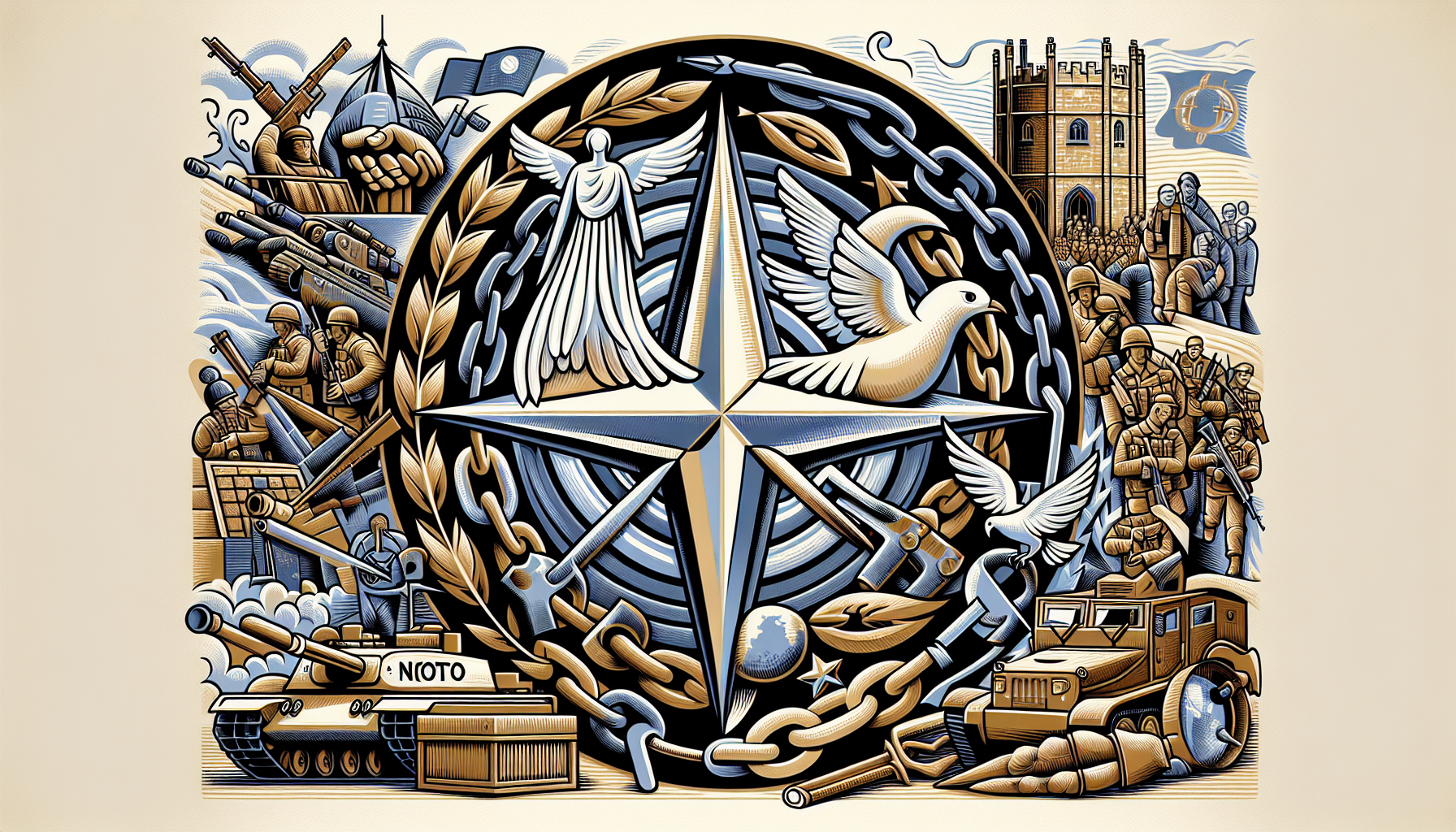
The North Atlantic Treaty Organization (NATO) was established on April 4, 1949, with the signing of the North Atlantic Treaty in Washington, D.C. The 12 founding members were Belgium, Canada, Denmark, France, Iceland, Italy, Luxembourg, the Netherlands, Norway, Portugal, the United Kingdom, and the United States. This alliance was a direct response to the post-World War II geopolitical landscape, particularly the growing influence of the Soviet Union and the perceived threat of communist expansion across Europe. The Truman Doctrine, proposed by U.S. President Harry S. Truman, laid the groundwork for this collective security approach, emphasizing U.S. support for free peoples resisting subjugation. The subsequent Marshall Plan further fostered economic integration and cooperation between the United States and Western Europe, reinforcing shared interests against the backdrop of the developing Cold War, as detailed in historical accounts from the U.S. Department of State.
⚙️ How It Works
At its core, NATO operates on the principle of collective defense, enshrined in Article 5 of the North Atlantic Treaty. This article states that an armed attack against one member is considered an attack against all members, obligating each Ally to assist the attacked party, potentially with armed forces. NATO's purpose is to safeguard the freedom and security of its members through political and military means, promoting democratic values and encouraging consultation on security matters. The alliance has a political component, with the North Atlantic Council serving as its principal decision-making body, and a military component, comprising integrated command structures and forces contributed by member states. This structure allows for both political dialogue and coordinated military action, as seen in its operations and exercises, according to NATO's official website.
🌍 Cultural Impact
NATO's establishment marked a significant departure from historical isolationist policies, particularly for the United States, which entered its first peacetime military alliance outside the Western Hemisphere. The alliance has played a crucial role in maintaining stability in Europe and North America, fostering a sense of shared security and democratic values among its members. Its expansion over the decades, incorporating countries from Central and Eastern Europe, has been seen as a key factor in realizing a vision of a united and peaceful Europe, as discussed in analyses from institutions like Brookings. The alliance's commitment to collective defense and its role in international security have shaped global geopolitical dynamics since its inception, influencing numerous countries and international relations.
🔮 Legacy & Future
Since the end of the Cold War, NATO has continuously adapted its purpose and missions to address evolving security challenges. While its founding purpose was to counter the Soviet Union, it has expanded to include crisis management, peacekeeping operations, and addressing new threats such as cyber attacks and terrorism. The alliance has grown significantly, with Sweden becoming the 32nd member in March 2024, and Finland joining in April 2023, both in response to changing security environments. NATO continues to be a cornerstone of transatlantic security, promoting cooperation and stability, and its future evolution will likely involve further adaptation to global security challenges, as highlighted by NATO's own historical accounts and analyses from organizations like the Belfer Center.
Key Facts
- Year
- 1949
- Origin
- Washington, D.C.
- Category
- history
- Type
- organization
Frequently Asked Questions
What is the primary purpose of NATO?
NATO's primary purpose is to guarantee the freedom and security of its members through political and military means. It operates on the principle of collective defense, where an attack on one member is considered an attack on all.
When was NATO founded and by how many countries?
NATO was founded on April 4, 1949, by 12 founding member countries: Belgium, Canada, Denmark, France, Iceland, Italy, Luxembourg, the Netherlands, Norway, Portugal, the United Kingdom, and the United States.
How many member states does NATO currently have?
As of March 2024, NATO has 32 member states, with Sweden being the most recent addition in March 2024.
What is Article 5 of the North Atlantic Treaty?
Article 5 is the core of the North Atlantic Treaty, stating that an armed attack against one or more member states shall be considered an attack against them all. This obligates each member to assist the attacked party.
Has NATO's Article 5 ever been invoked?
Yes, Article 5 has been invoked once, in response to the September 11, 2001, terrorist attacks on the United States.
References
- nato.usmission.gov — /about-nato/
- en.wikipedia.org — /wiki/NATO
- britannica.com — /topic/North-Atlantic-Treaty-Organization
- nato.int — /en
- nato.int — /en/about-us/organization/nato-member-countries
- nato.int — /en/what-is-nato
- en.wikipedia.org — /wiki/Member_states_of_NATO
- pt.wikipedia.org — /wiki/Organiza%25C3%25A7%25C3%25A3o_do_Tratado_do_Atl%25C3%25A2ntico_Norte