
Contents
- 🎵 Origins & History
- ⚙️ How It Works
- 📊 Key Facts & Numbers
- 👥 Key People & Organizations
- 🌍 Cultural Impact & Influence
- ⚡ Current State & Latest Developments
- 🤔 Controversies & Debates
- 🔮 Future Outlook & Predictions
- 💡 Practical Applications
- 📚 Related Topics & Deeper Reading
- Frequently Asked Questions
- References
- Related Topics
Overview
Resistors are a fundamental component in electronic circuits, used for reducing current flow, adjusting signal levels, and dividing voltages. With a wide range of applications in fields like audio equipment, medical devices, and automotive systems, resistors play a crucial role in modern technology. From fixed resistors to variable resistors, these components are used in various forms and compounds, including carbon composition, metal film, and wirewound resistors. With the ability to dissipate many watts of electrical power as heat, high-power resistors are used in motor controls, power distribution systems, and as test loads for generators. As a key element in electrical networks and electronic circuits, resistors are ubiquitous in electronic equipment, including Arduino boards, Raspberry Pi computers, and iPhone smartphones. The resistor market is expected to grow to $1.4 billion by 2025, driven by increasing demand for electronic devices and the development of new technologies like IoT and 5G networks.
🎵 Origins & History
The concept of resistance was first discovered by Georg Ohm in 1827, who formulated Ohm's law, which states that the current through a conductor between two points is directly proportional to the voltage across the two points and inversely proportional to the resistance between them. The first resistors were made from carbon and were used in early telegraph systems. Today, resistors are made from a variety of materials, including metal film, wire, and ceramic. The history of resistors is closely tied to the development of electronics and the discovery of new materials and technologies, such as transistors and integrated circuits.
⚙️ How It Works
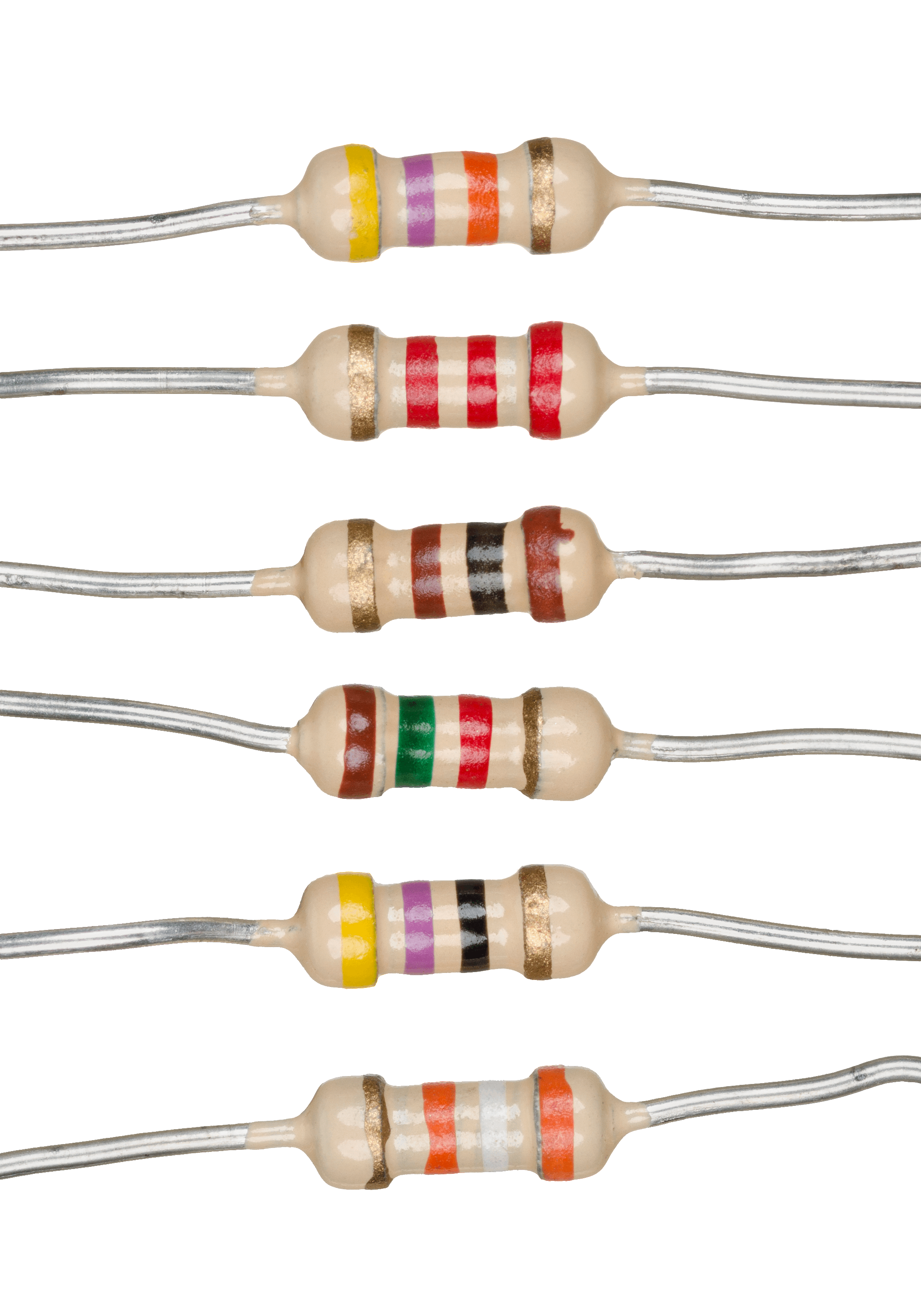
Resistors work by converting electrical energy into heat energy, which is then dissipated into the surrounding environment. The resistance of a resistor is measured in ohms (Ω) and is determined by the material and construction of the resistor. There are several types of resistors, including fixed resistors, variable resistors, and thermistors. Fixed resistors have a fixed resistance value, while variable resistors can be adjusted to change the resistance value. Thermistors are temperature-sensitive resistors that change their resistance value in response to changes in temperature. Resistors are used in a wide range of applications, including audio equipment, medical devices, and automotive systems.
📊 Key Facts & Numbers
The global resistor market was valued at $1.1 billion in 2020 and is expected to grow to $1.4 billion by 2025, at a compound annual growth rate (CAGR) of 4.5%. The market is driven by increasing demand for electronic devices, such as smartphones and laptops, and the development of new technologies like IoT and 5G networks. The resistor market is dominated by companies like Vishay, Tyco, and Panasonic. In 2020, the resistor market was led by the Asia-Pacific region, which accounted for 45% of the global market share. The use of resistors in renewable energy systems, such as solar panels and wind turbines, is also on the rise, with the global market for renewable energy resistors expected to reach $1.3 billion by 2027.
👥 Key People & Organizations
Key people in the development of resistors include Georg Ohm, who discovered the concept of resistance, and James Clerk Maxwell, who formulated the equations that describe the behavior of resistors. Other notable companies in the resistor industry include Texas Instruments and Analog Devices. The resistor market is also influenced by companies like Google and Amazon, which are developing new technologies like artificial intelligence and machine learning that rely on resistors. The use of resistors in space exploration is also an area of growing interest, with companies like SpaceX and Blue Origin using resistors in their spacecraft and rockets.
🌍 Cultural Impact & Influence
Resistors have had a significant impact on modern society, enabling the development of a wide range of electronic devices and systems. The use of resistors in medical devices has improved healthcare outcomes and saved countless lives. The use of resistors in automotive systems has improved vehicle safety and efficiency. The cultural impact of resistors can also be seen in the development of music and art, with resistors used in a wide range of musical instruments and artistic projects. The influence of resistors can also be seen in the work of artists like Marcel Duchamp, who used resistors in his artwork.
⚡ Current State & Latest Developments
The current state of the resistor market is characterized by increasing demand for high-power resistors, which are used in applications like electric vehicles and renewable energy systems. The development of new technologies like nanotechnology and graphene is also expected to drive growth in the resistor market. In 2022, the global resistor market was valued at $1.2 billion, with the Asia-Pacific region accounting for 50% of the global market share. The use of resistors in cybersecurity is also an area of growing interest, with companies like Microsoft and IBM using resistors in their security systems.
🤔 Controversies & Debates
There are several controversies and debates surrounding the use of resistors, including concerns about the environmental impact of resistor production and the potential for resistors to be used in malicious devices like bombs and hacking tools. The use of resistors in surveillance systems is also a topic of controversy, with some arguing that it infringes on individual privacy rights. The resistor industry is also facing challenges related to counterfeiting and intellectual property theft, with some companies like Vishay and Tyco working to develop anti-counterfeiting measures.
🔮 Future Outlook & Predictions
The future outlook for resistors is positive, with increasing demand for electronic devices and the development of new technologies like IoT and 5G networks. The use of resistors in artificial intelligence and machine learning is also expected to drive growth in the resistor market. By 2027, the global resistor market is expected to reach $1.6 billion, with the Asia-Pacific region accounting for 55% of the global market share. The development of new materials and technologies, such as graphene and nanotechnology, is also expected to improve the performance and efficiency of resistors.
💡 Practical Applications
Resistors have a wide range of practical applications, including use in audio equipment, medical devices, and automotive systems. They are also used in space exploration, renewable energy systems, and cybersecurity systems. The use of resistors in education is also an area of growing interest, with resistors used in a wide range of educational projects and curricula. Companies like National Instruments and Tektronix offer a range of resistor-based products and solutions for educational and research applications.
Key Facts
- Year
- 2020
- Origin
- Germany
- Category
- technology
- Type
- technology
Frequently Asked Questions
What is the purpose of a resistor?
A resistor is used to reduce current flow, adjust signal levels, and divide voltages in electronic circuits. Resistors are also used to terminate transmission lines and to provide a voltage drop in a circuit. The resistance of a resistor is measured in ohms (Ω) and is determined by the material and construction of the resistor. For example, Vishay offers a range of resistors with different resistance values and tolerances.
What are the different types of resistors?
There are several types of resistors, including fixed resistors, variable resistors, and thermistors. Fixed resistors have a fixed resistance value, while variable resistors can be adjusted to change the resistance value. Thermistors are temperature-sensitive resistors that change their resistance value in response to changes in temperature. For example, Texas Instruments offers a range of thermistors for temperature sensing applications.
What is the resistor market size?
The global resistor market was valued at $1.1 billion in 2020 and is expected to grow to $1.4 billion by 2025, at a compound annual growth rate (CAGR) of 4.5%. The market is driven by increasing demand for electronic devices and the development of new technologies like IoT and 5G networks. For example, Google and Amazon are developing new technologies that rely on resistors, such as artificial intelligence and machine learning.
Who are the key players in the resistor market?
The key players in the resistor market include Vishay, Tyco, and Panasonic. These companies are leading manufacturers of resistors and offer a wide range of resistor products and solutions. For example, Vishay offers a range of resistors with different resistance values and tolerances, while Tyco offers a range of resistor products for automotive and industrial applications.
What are the applications of resistors?
Resistors have a wide range of applications, including use in audio equipment, medical devices, and automotive systems. They are also used in space exploration, renewable energy systems, and cybersecurity systems. For example, SpaceX uses resistors in their spacecraft and rockets, while National Instruments offers a range of resistor-based products and solutions for educational and research applications.
What is the future outlook for resistors?
The future outlook for resistors is positive, with increasing demand for electronic devices and the development of new technologies like IoT and 5G networks. The use of resistors in artificial intelligence and machine learning is also expected to drive growth in the resistor market. For example, Google and Amazon are developing new technologies that rely on resistors, such as artificial intelligence and machine learning.
What are the challenges facing the resistor industry?
The resistor industry is facing challenges related to counterfeiting and intellectual property theft, as well as concerns about the environmental impact of resistor production. For example, Vishay and Tyco are working to develop anti-counterfeiting measures, while Google and Amazon are developing new technologies that rely on resistors, such as artificial intelligence and machine learning.