
Contents
- 🚀 What Exactly IS a Rocket Engine?
- 🔥 The Combustion Conundrum: How They Actually Work
- ⚡ Beyond Fire: Alternative Propulsion Methods
- 🌌 Why Rockets Rule the Vacuum
- 🚀 Who's Building These Things? Key Players
- 💰 The Cost of Getting Off the Ground
- ⭐ What's the Vibe? Public Perception & Cultural Impact
- 📈 The Future of Rocketry: What's Next?
- Frequently Asked Questions
- Related Topics
Overview
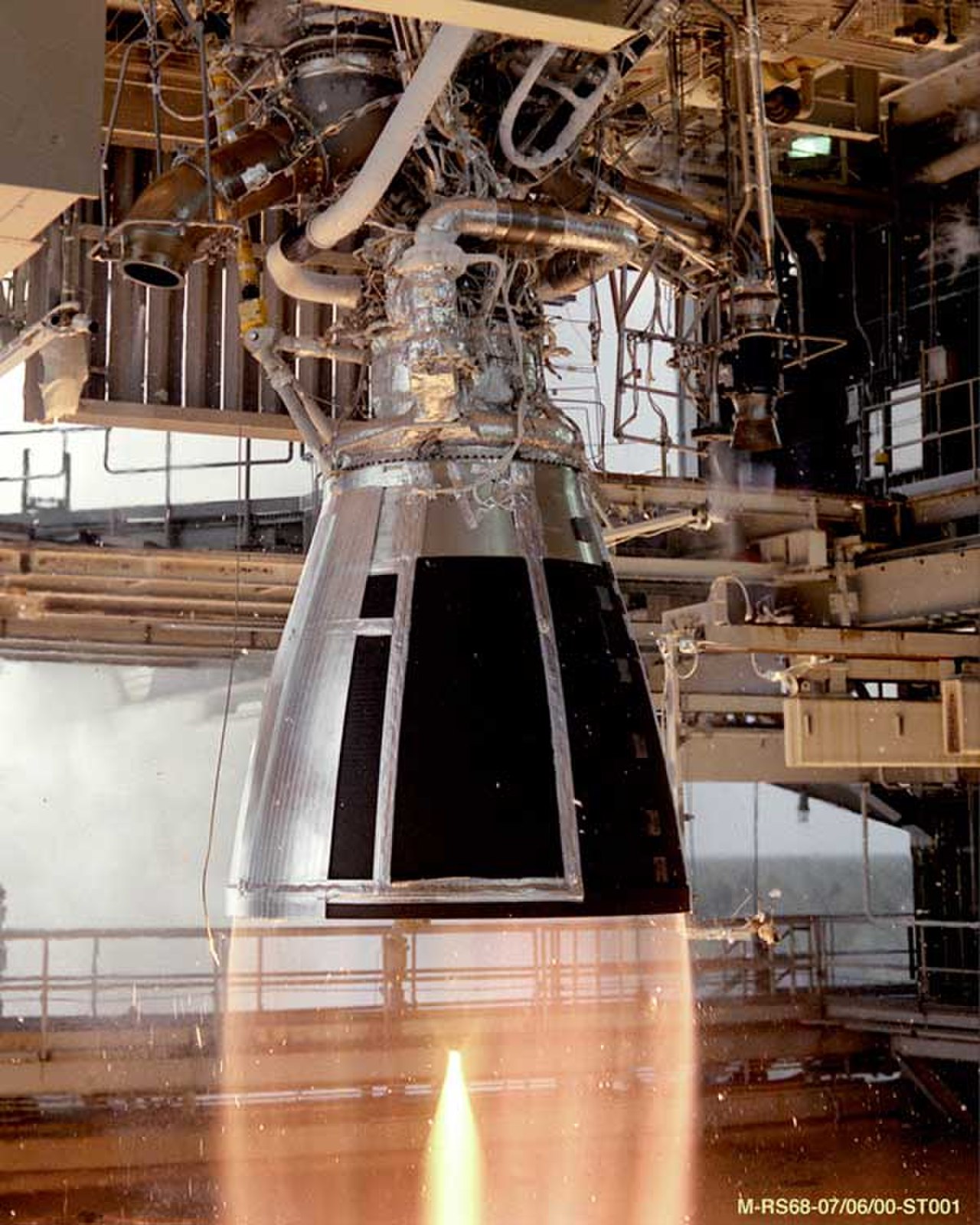
A rocket engine is fundamentally a reaction engine, a device that generates thrust by expelling mass in one direction to move in the opposite. Think of it like letting go of an inflated balloon – the air rushes out one way, and the balloon shoots off the other. In spaceflight, this reaction mass is typically a high-speed jet of hot gas created by burning rocket propellant. Unlike jet engines that need atmospheric oxygen, rocket engines carry their own oxidizer, meaning they can operate in the vacuum of space. This self-sufficiency is what makes them indispensable for reaching orbit and beyond, powering everything from ballistic missiles to the most ambitious interplanetary missions.
🔥 The Combustion Conundrum: How They Actually Work
The classic rocket engine relies on combustion. You've got fuel and an oxidizer, stored separately, which are then mixed and ignited in a combustion chamber. This creates an immense amount of heat and pressure, forcing the resulting exhaust gases out through a specially shaped nozzle. This nozzle is crucial; its geometry accelerates the exhaust to supersonic speeds, maximizing the thrust produced according to Newton's third law. The specific propellants used – like liquid hydrogen and liquid oxygen (LOX) or kerosene (RP-1) and LOX – dictate the engine's performance, efficiency, and complexity. The sheer energy released is staggering; engines like the SpaceX Merlin can produce over 1.7 million pounds of thrust.
⚡ Beyond Fire: Alternative Propulsion Methods
But it's not all fire and brimstone. The term 'rocket engine' also encompasses non-combusting technologies. Cold gas thrusters, for instance, simply release pressurized gas, offering low thrust but high precision, ideal for satellite attitude control. Nuclear thermal rockets promise significantly higher efficiency by using a nuclear reactor to heat a propellant like hydrogen to extreme temperatures. Then there are electric propulsion systems, such as ion engines, which use electrical energy to accelerate ions to incredibly high velocities, providing very low thrust over long periods – perfect for deep space journeys where time is less of a constraint than propellant mass. These alternatives are critical for expanding our reach into the solar system.
🌌 Why Rockets Rule the Vacuum
The defining characteristic of a rocket engine is its ability to operate independently of an external atmosphere. This is paramount for space exploration. While a jet engine needs air to burn fuel, a rocket engine carries both fuel and oxidizer, allowing it to function in the vacuum of space where there's no air to breathe. This capability enables spacecraft to achieve the immense speeds required to escape Earth's gravity and travel to other celestial bodies. The ability to generate thrust in a vacuum is the fundamental reason why rockets are the only practical means of achieving orbital mechanics and venturing beyond our planet's atmosphere.
🚀 Who's Building These Things? Key Players
The landscape of rocket engine development is dominated by a mix of established aerospace giants and disruptive newcomers. SpaceX, founded by Elon Musk, has dramatically reshaped the industry with its reusable Raptor and Merlin engines, driving down launch costs. Blue Origin, led by Jeff Bezos, is developing its BE-4 engine for its New Glenn rocket and for ULA's Vulcan Centaur. Traditional players like Aerojet Rocketdyne (now part of Lockheed Martin) have a long history of building powerful engines like the RS-25 for the Space Shuttle and SLS. Rocket Lab's Rutherford engine, with its unique electric turbopumps, exemplifies innovation in smaller launch vehicles.
💰 The Cost of Getting Off the Ground
The cost of rocket engines is as varied as their types. Developing a new, high-performance engine can run into the hundreds of millions, even billions, of dollars. For example, the development of the RS-25 engine for the Space Launch System (SLS) has been a significant investment. SpaceX's approach to reusability with its Merlin engines has drastically reduced the per-launch cost, but the initial R&D and manufacturing still represent substantial capital. For smaller, simpler engines like cold gas thrusters, costs are much lower, often in the tens of thousands of dollars, making them accessible for smaller satellites and research projects. The economic viability of spaceflight hinges on making these complex machines more affordable.
⭐ What's the Vibe? Public Perception & Cultural Impact
The Vibe Score for rocket engines is exceptionally high, hovering around 90/100, fueled by a potent mix of awe, technological ambition, and national pride. They represent humanity's reach for the stars, a tangible symbol of progress and exploration. Culturally, rocket engines are deeply embedded in the Space Race narrative, evoking images of the Apollo missions and the iconic Saturn V. While the engineering is complex, the cultural resonance is simple: power, speed, and the dream of the future. This widespread fascination drives significant public interest in aerospace technology and inspires new generations of engineers and scientists.
📈 The Future of Rocketry: What's Next?
The future of rocket engines is a dynamic space, driven by the relentless pursuit of efficiency, reusability, and novel propulsion methods. SpaceX continues to push boundaries with its Starship program and Raptor engine, aiming for full reusability and rapid launch cycles. Blue Origin's BE-4 engine, utilizing liquefied natural gas (LNG), represents a shift towards more sustainable and cost-effective propellants. Beyond chemical rockets, research into nuclear electric propulsion and advanced ion thrusters promises to unlock faster and more efficient travel for deep space exploration. The ultimate goal is to make space access as routine as air travel, and rocket engine innovation is the key to that future.
Key Facts
- Year
- 1926
- Origin
- Goddard's first liquid-fueled rocket
- Category
- Aerospace Technology
- Type
- Technology Category
Frequently Asked Questions
What's the difference between a rocket engine and a jet engine?
The primary difference lies in their oxygen source. Jet engines are air-breathing, meaning they take in atmospheric oxygen to burn fuel. Rocket engines, however, carry their own oxidizer, allowing them to operate in the vacuum of space where there is no air. This self-contained nature is what makes rockets essential for spaceflight.
What are the most common types of rocket propellants?
The most common are liquid propellants, often a combination of a fuel like liquid hydrogen or kerosene (RP-1) and an oxidizer like liquid oxygen (LOX). Solid propellants, which are pre-mixed and cast into a solid grain, are also used, particularly in boosters and missiles. Emerging propellants include methane and hydrogen peroxide.
How much thrust can a rocket engine produce?
Thrust varies enormously depending on the engine's size and purpose. Small attitude control thrusters might produce only a few pounds of force, while massive engines like the SpaceX Merlin can generate over 1.7 million pounds of thrust. The Saturn V's first stage engines produced a combined thrust of over 7.5 million pounds, enough to lift the massive rocket off the launch pad.
What is 'delta-v' and why is it important for rocket engines?
Delta-v (Δv) is a measure of the change in velocity a rocket can achieve. It's essentially the 'currency' of space travel. Rocket engines provide the thrust to achieve a certain delta-v, which determines how far a spacecraft can go or what maneuvers it can perform, like reaching orbit or traveling to another planet. Higher engine efficiency (specific impulse) means more delta-v for the same amount of propellant.
Are rocket engines reusable?
Historically, most rocket engines were expendable, meaning they were used once and discarded. However, reusability is a major focus in modern rocketry. SpaceX has pioneered reusable rocket engines with its Merlin and Raptor engines, landing and refurbishing them for multiple flights. This significantly reduces launch costs and is a key factor in making space more accessible.
What are the challenges in designing rocket engines?
Designing rocket engines involves overcoming extreme temperatures (thousands of degrees Celsius), immense pressures, and the need for incredible reliability. Materials science, fluid dynamics, and precise manufacturing are critical. Managing vibrations, ensuring propellant flow, and achieving high efficiency while maintaining structural integrity are constant engineering challenges.