
Contents
Overview
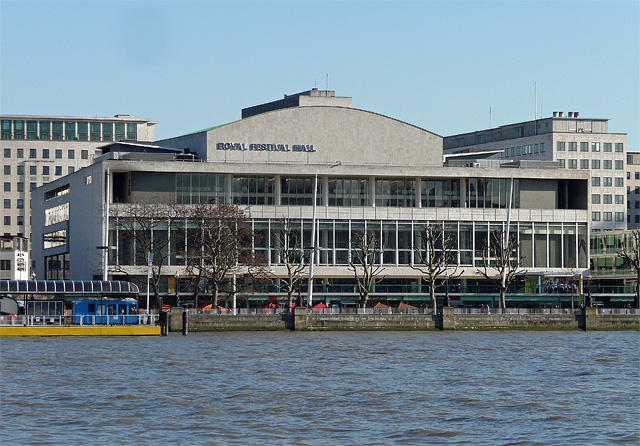
The Royal Festival Hall, a landmark concert venue on London's South Bank, stands as a potent symbol of post-war cultural resurgence. Opened as the centerpiece of the Festival of Britain, this hall was designed by a team led by Leslie Martin and Robert Matthew, embodying a spirit of modernist optimism and public service. Its distinctive Brutalist architecture, characterized by exposed concrete and bold geometric forms, initially drew criticism but has since earned it Grade I listed status, recognizing its architectural significance. Beyond its iconic facade, the Hall has been a vital hub for music, dance, and public discourse, hosting countless world-class performances and serving as the resident home for several prestigious orchestras, including the London Philharmonic Orchestra and the Philharmonia Orchestra. Now managed by the Southbank Centre, it continues to be a cornerstone of London's cultural landscape, adapting to contemporary needs while preserving its historical legacy.
🎵 Origins & History
The genesis of the Royal Festival Hall is inextricably linked to the ambitious Festival of Britain, a national exhibition conceived in the aftermath of World War II to showcase British innovation and boost national morale. Commissioned by the London County Council (LCC), the Hall was intended to be a permanent legacy of the festival. Construction began in 1949, and it officially opened its doors on May 3, 1951, becoming the festival's principal venue. Its initial purpose was to provide a grand, modern space for the arts, a stark contrast to the austerity of the preceding years. Following the abolition of the LCC in 1986, management transitioned to the Arts Council of Great Britain, eventually leading to the formation of the independent Southbank Centre in 1998, which now oversees the Hall alongside the Queen Elizabeth Hall and Purcell Room.
⚙️ Architectural Design & Engineering
The architectural design of the Royal Festival Hall is a defining example of post-war modernist and Brutalist aesthetics. The structure prominently features exposed concrete, a hallmark of Brutalism, with its raw, unadorned surfaces and massive, block-like forms. Architects Leslie Martin, Robert Matthew, and Edwin Williams, alongside engineers such as Ove Arup, collaborated to create a building that was both functional and visually striking. The main auditorium, with its distinctive curved ceiling and wooden paneling, was engineered for optimal acoustics, a critical consideration for a concert hall. The building's integration with its riverside location, offering panoramic views of the River Thames, was also a key design element. Its innovative use of materials and structural expression was groundbreaking for its time, influencing subsequent public building designs across the UK.
📊 Key Facts & Figures
The Royal Festival Hall boasts a seating capacity of approximately 2,700, making it one of London's largest concert venues. Since its opening in 1951, it has hosted an estimated tens of thousands of performances, attracting millions of visitors annually. The building's footprint covers a significant area on the South Bank, contributing to the vibrant cultural complex managed by the Southbank Centre. In 1981, it achieved Grade I listed building status, a remarkable distinction for a post-war structure, underscoring its architectural and historical importance. The venue hosts over 450 events per year, ranging from orchestral concerts to contemporary music, dance performances, and public talks, with ticket sales often exceeding 1 million annually.
👥 Key People & Organizations
The vision for the Royal Festival Hall was shaped by numerous influential figures and organizations. Leslie Martin and Robert Matthew led the architectural design team, while Ove Arup & Partners provided the crucial engineering expertise. The London County Council was the commissioning body, representing a significant public investment in the arts. Over the decades, numerous resident orchestras have called the Hall home, including the London Philharmonic Orchestra, the Philharmonia Orchestra, and the Orchestra of the Age of Enlightenment. The Southbank Centre, established as an independent arts organization in 1998, now manages the Hall, ensuring its continued programming and preservation.
🌍 Cultural Impact & Influence
The Royal Festival Hall has profoundly shaped London's cultural identity and the perception of post-war British architecture. Its construction signaled a commitment to public arts and cultural accessibility, providing a world-class venue for diverse artistic expressions. Architecturally, its bold Brutalist design, initially controversial, has become an iconic element of the South Bank skyline and a subject of study for architectural historians. The Hall has been instrumental in establishing the Southbank Centre as a major international arts complex, attracting global talent and fostering a vibrant public space. Its influence can be seen in the subsequent development of cultural institutions and the ongoing appreciation for modernist architecture, challenging traditional aesthetic norms and championing a new civic grandeur.
⚡ Current State & Latest Developments
In recent years, the Royal Festival Hall has undergone significant refurbishment and modernization to enhance its visitor experience and operational efficiency. A redevelopment project, led by Foster + Partners, updated the building's facilities, improved accessibility, and revitalized public spaces, including the foyer areas and the main auditorium's acoustics. The Southbank Centre continues to program a diverse range of events, from classical music premieres by contemporary composers to cutting-edge dance and spoken word performances. The Hall remains a key venue for major festivals and residencies, adapting its programming to reflect current social and artistic trends, ensuring its relevance in the 21st century.
🤔 Controversies & Debates
The Royal Festival Hall's architectural style, particularly its prominent use of Brutalist concrete, has been a source of ongoing debate. While lauded by architectural critics and protected as a Grade I listed building, its imposing aesthetic has also faced public criticism, with some finding it unwelcoming or monolithic. The initial reception in 1951 was mixed, with contemporary reviews highlighting both its innovative spirit and its starkness. Debates also arise regarding the balance between preserving its original modernist integrity and the necessity of modernizing facilities to meet contemporary standards and audience expectations. The extensive 2007 refurbishment by Foster + Partners itself sparked discussion about how best to update such an iconic structure without compromising its historical character.
🔮 Future Outlook & Predictions
The future of the Royal Festival Hall appears robust, anchored by its status as a premier cultural venue and its ongoing adaptation to evolving artistic and technological landscapes. The Southbank Centre is likely to continue investing in its infrastructure and programming to maintain its position as a leading international arts destination. Potential future developments could include further integration of digital technologies for enhanced audience engagement, expanded educational outreach programs, and continued efforts to promote diversity and inclusion within its artistic offerings. The Hall's enduring architectural significance and its central role in London's cultural ecosystem suggest it will remain a vital public space for decades to come, a testament to the enduring power of post-war civic ambition.
💡 Practical Applications
The primary practical application of the Royal Festival Hall is as a multi-purpose venue for the performing arts. Its main auditorium is engineered for exceptional acoustics, making it ideal for orchestral concerts, chamber music, and opera. Beyond music, the Hall is frequently used for dance performances, large-scale lectures, public debates, and conferences, demonstrating its versatility. The foyer spaces and surrounding areas within the Southbank Centre complex also serve as public gathering spots, exhibition areas, and dining venues. Its strategic location on the River Thames makes it a significant tourist attraction and a key component of London's cultural tourism infrastructure, facilitating access to world-class artistic experiences for both local residents and international visitors.
Key Facts
- Category
- culture
- Type
- topic