
Contents
Overview
Saturation diving is a specialized ambient pressure diving technique that allows divers to remain at extreme depths for extended periods by saturating their body tissues with the breathing gas mixture. This saturation means that the time required for decompression back to surface pressure remains constant, regardless of how long the diver stays at depth. This dramatically increases the ratio of productive working time to unproductive decompression time, while also minimizing the physiological risks associated with repeated decompressions. Unlike other diving methods, saturation divers are only exposed to the crushing external ambient pressure while at their working depth, with decompression occurring only once at the end of the entire mission. The physiological demands are immense, making it one of the most extreme and technically challenging professions in the world.
🎵 Origins & History
The genesis of saturation diving can be traced back to the mid-20th century, driven by the burgeoning need for longer underwater working periods, particularly in the offshore oil and gas industry. Early experiments by figures like Edwin Link and Robert Stewart laid the groundwork. The U.S. Navy's SEALAB program were pivotal in demonstrating the feasibility and physiological effects of prolonged exposure to simulated and actual deep-sea environments. These programs, though not without tragedy, proved that humans could live and work for extended durations under pressure, paving the way for commercial saturation diving operations that began to flourish, with companies like COMEX S.A. leading the charge.
⚙️ How It Works
Saturation diving operates on the principle of gas saturation. Divers live in pressurized underwater habitats or on surface support vessels, breathing a specialized gas mixture, typically helium and oxygen (heliox) at a pressure equivalent to their working depth. Over time, inert gases from this mixture diffuse into the diver's tissues, saturating them. Once saturation is achieved, the diver can remain at that depth for weeks without increasing the physiological burden of gas in their tissues. Decompression, a slow and carefully controlled process of reducing ambient pressure, is only performed once at the end of the entire mission, taking days or even weeks depending on the depth and duration of the saturation. This method is distinct from bounce diving, where divers ascend and decompress between dives.
📊 Key Facts & Numbers
Saturation diving missions can extend for up to 28 days, with divers working at depths ranging from 50 meters (164 feet) to over 300 meters (984 feet). The record for the longest saturation dive is held by Dr. Joseph Dituri, who spent 100 days submerged in Jules' Undersea Lodge in Key Largo, Florida, in 2023, reaching a depth equivalent of 90 meters (295 feet). A typical saturation system involves a surface support vessel, a saturation diving habitat (often called a 'chamber stack'), and a diving bell or transfer capsule for transporting divers to and from the seabed. The cost of a saturation diving operation can range from tens of thousands to hundreds of thousands of dollars per day, reflecting the complex logistics and high-risk nature of the work.
👥 Key People & Organizations
Key figures in saturation diving include Edwin Link, an American inventor and pioneer in underwater technology, and Robert Stewart, a British physiologist who conducted significant research on gas toxicity and decompression. COMEX S.A., a French company, has been a major player in developing and executing deep saturation dives, including the historic HYDRA VIII experiment, which reached 534 meters (1,752 feet). The U.S. Navy's Experimental Diving Unit (EDU) has also been instrumental in advancing saturation diving techniques and safety protocols through extensive research and operational experience, particularly in military salvage and underwater construction.
🌍 Cultural Impact & Influence
Saturation diving has profoundly influenced our ability to explore and work in the deep ocean, enabling complex underwater construction projects, ship salvage operations, and scientific research that would otherwise be impossible. It has also captured the public imagination, appearing in films like James Cameron's The Abyss, which, while fictionalized, showcased the intense pressure and psychological challenges faced by deep-sea divers. The development of specialized equipment, such as hyperbaric chambers and advanced diving bells, has had ripple effects in medical applications like hyperbaric oxygen therapy. The rigorous training and psychological resilience required for saturation divers have also contributed to a unique subculture within the maritime and oil and gas sectors.
⚡ Current State & Latest Developments
The current state of saturation diving remains critical for deepwater operations, particularly in the oil and gas industry for subsea installations and maintenance. However, the industry faces evolving challenges, including increasing automation and the development of remotely operated vehicles (ROVs) and autonomous underwater vehicles (AUVs) that can perform many tasks without direct human intervention. Despite this, human divers are still required for complex tasks demanding dexterity and judgment. Recent developments include advancements in gas mixture analysis, improved habitat environmental controls, and enhanced safety monitoring systems, such as those employed by companies like Subsea 7 and TechnipFMC.
🤔 Controversies & Debates
One of the most significant controversies surrounding saturation diving is the inherent physiological risk, despite safety advancements. Incidents like the tragic loss of a crew member during the SEALAB III mission, or the COMEX S.A. accident during the HYDRA VIII experiment, highlight the dangers. Debates also persist regarding the long-term health effects of prolonged exposure to high-pressure environments, including potential neurological issues and decompression sickness, even with meticulous decompression schedules. Furthermore, the high cost of saturation diving operations often leads to pressure to cut corners, raising ethical concerns about diver safety versus economic expediency.
🔮 Future Outlook & Predictions
The future of saturation diving will likely involve a greater integration with robotic technologies. While saturation divers will remain essential for complex, high-judgment tasks, ROVs and AUVs will continue to take over more routine or extremely hazardous operations, potentially reducing the overall demand for saturation divers in certain sectors. Research into alternative breathing gases or physiological aids to mitigate the effects of pressure and extend safe working limits may also emerge. The development of more efficient and cost-effective saturation systems, perhaps with greater modularity and automation, could also shape its future, alongside a continued focus on minimizing decompression times and improving diver well-being.
💡 Practical Applications
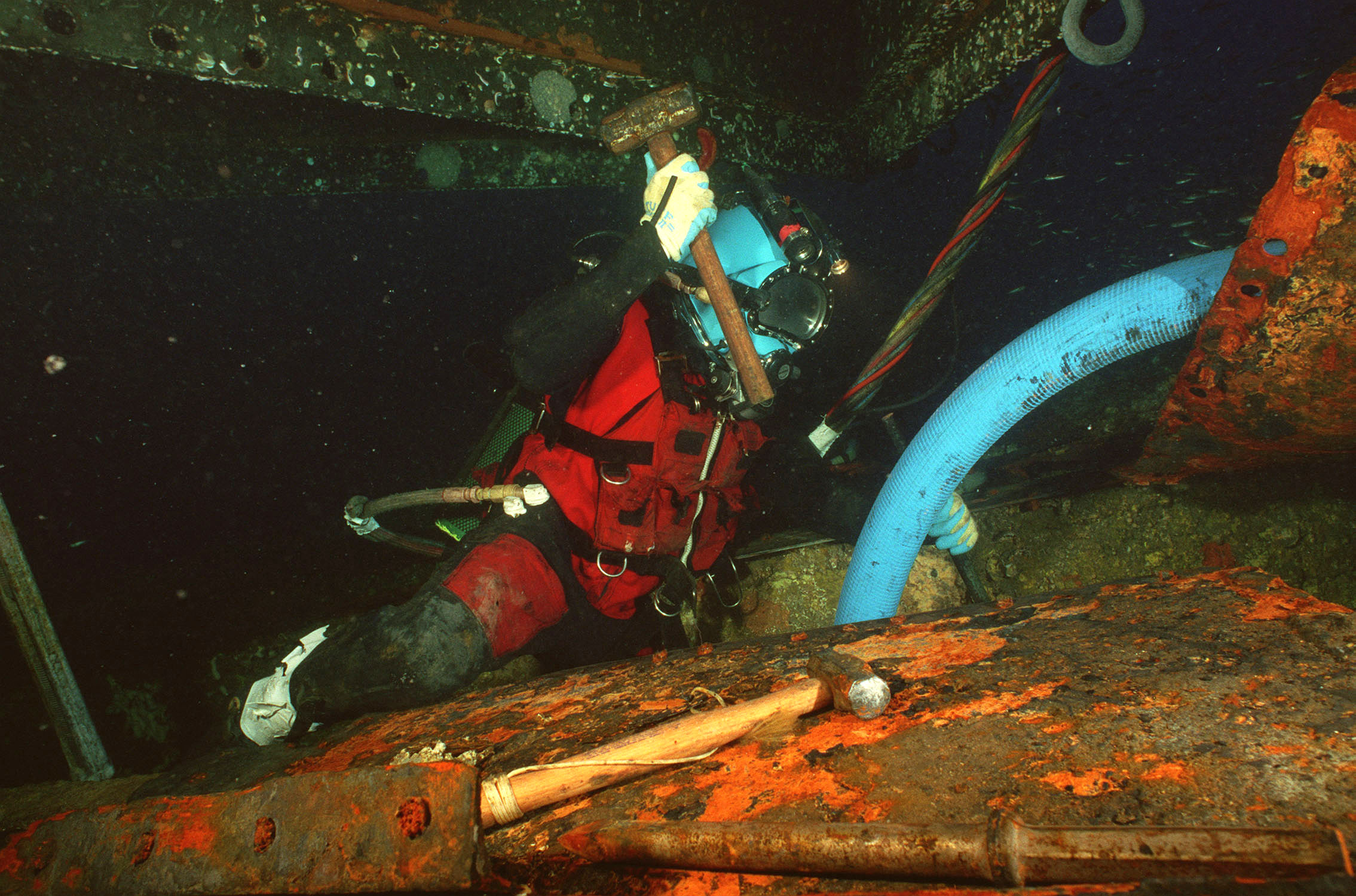
Saturation diving's primary application remains in the offshore oil and gas industry, where divers are essential for installing, inspecting, and repairing subsea pipelines, wellheads, and structures at depths exceeding the capabilities of conventional diving. Other applications include underwater construction for bridges, dams, and offshore wind farms, as well as ship salvage operations and specialized military diving tasks. Scientific research, such as marine biology studies or geological surveys in deep-sea environments, also occasionally utilizes saturation diving techniques, though less frequently than commercial operations.
Key Facts
- Category
- technology
- Type
- technology