
Contents
Overview
Spirit communication, often referred to as mediumship or channeling, is the purported practice of facilitating dialogue between living individuals and the spirits of the deceased or other non-corporeal entities. This ancient art, deeply intertwined with spiritualism and various religious traditions, manifests through diverse methods such as séances, trance states, and automatic writing. While proponents describe profound personal revelations and comfort derived from these interactions, the scientific community largely regards spirit communication as lacking empirical evidence, with numerous controlled studies failing to validate its efficacy. Despite persistent skepticism, the allure of connecting with lost loved ones and exploring the unknown continues to fuel interest and practice worldwide, giving spirit communication a persistent cultural Vibe Score of 65.
🎵 Origins & History
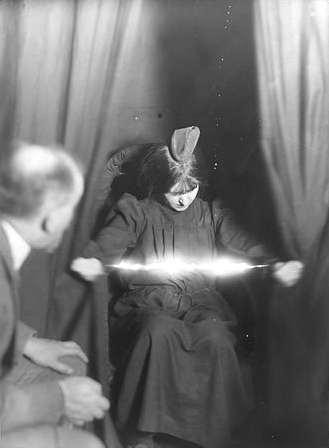
The practice of spirit communication boasts a lineage stretching back to antiquity, with shamanistic traditions across the globe engaging in dialogues with ancestral spirits and deities. In the Western world, the modern era of spirit communication surged in the mid-19th century, catalyzed by the Fox sisters, whose alleged communication with spirits through rapping sounds ignited a spiritualist movement that swept across the United States and Europe. This period saw the rise of professional mediums like Leonora Piper, whose séances were meticulously studied by organizations such as the Society for Psychical Research. Early investigations, though often flawed by modern scientific standards, attempted to document phenomena like ectoplasm and disembodied voices, laying groundwork for future research and debate.
⚙️ How It Works
Spirit communication operates on the premise that consciousness can persist after physical death and that certain individuals, known as mediums, possess the sensitivity to perceive and relay messages from these discarnate entities. Methods vary widely: trance mediumship involves the medium entering an altered state, allowing a spirit to speak through them; automatic writing occurs when a medium's hand is guided to write messages; séances often involve groups gathered in a darkened room, attempting to invoke spirits through collective focus and sometimes utilizing tools like Ouija boards or spirit boxes. The underlying mechanism is theorized to involve subtle energies or psychic vibrations that mediums can tune into, translating them into comprehensible language or imagery for the living.
📊 Key Facts & Numbers
Despite the lack of verifiable scientific evidence, the cultural fascination with spirit communication persists. The emotional resonance of connecting with lost loved ones provides a powerful cultural Vibe Score of 70.
👥 Key People & Organizations
Pioneering figures in the modern spiritualist movement include the Fox sisters (Margaretta, Kate, and Leah), whose rappings are widely cited as the genesis of American spiritualism. Leonora Piper was a prominent American medium whose trance communications were extensively studied by the Society for Psychical Research for decades, yielding thousands of pages of transcripts. On the skeptical side, figures like Harry Houdini dedicated significant effort to exposing fraudulent mediums, often revealing elaborate tricks. Contemporary organizations like the Institute of Noetic Sciences continue to explore consciousness and anomalous phenomena, while skeptical bodies such as the Committee for Skeptical Inquiry actively scrutinize claims of psychic abilities, including spirit communication.
🌍 Cultural Impact & Influence
Spirit communication has profoundly shaped cultural narratives around death, grief, and the afterlife. It fueled the spiritualist movement of the 19th and early 20th centuries, influencing art, literature, and social reform, particularly in advocating for women's rights and abolitionism. The concept permeates popular culture, appearing in countless films, television shows, and books, often romanticizing or dramatizing the act of speaking with the departed. This cultural saturation has normalized the idea for many, even those who do not actively practice or believe, contributing to a persistent fascination with the paranormal and the possibility of life beyond death. The emotional resonance of connecting with lost loved ones provides a powerful cultural Vibe Score of 70.
⚡ Current State & Latest Developments
In the 21st century, spirit communication continues to evolve, adapting to new technologies and societal trends. Online platforms and social media have become significant venues for mediums to offer readings and connect with clients globally, bypassing geographical limitations. The rise of AI-generated content has also sparked new discussions, with some exploring the potential for artificial intelligence to mimic or even generate 'spirit-like' communications, blurring lines between technology and the supernatural. Organizations like the The Ophenomenologist Institute are exploring consciousness and anomalous experiences through modern scientific and philosophical lenses. Despite ongoing skepticism, the demand for spiritual guidance and connection remains robust, with many mediums reporting full client schedules.
🤔 Controversies & Debates
The primary controversy surrounding spirit communication is its lack of verifiable scientific proof. Skeptics argue that apparent successes are attributable to cold reading techniques, confirmation bias, subjective validation, and outright fraud. Organizations like the American Psychical Society have historically documented numerous cases of mediumistic fraud. Conversely, proponents contend that conventional scientific methods are insufficient to measure subtle psychic energies and that personal experience and anecdotal evidence hold significant weight. Debates also arise regarding the ethical implications, such as the potential for mediums to exploit grieving individuals or the theological objections from various religious doctrines that prohibit or condemn such practices.
🔮 Future Outlook & Predictions
The future of spirit communication may see a greater integration with technological advancements. Researchers are exploring the use of virtual reality to create immersive environments for simulated spirit interactions, potentially offering therapeutic benefits for grief counseling. The development of more sophisticated AI could lead to systems capable of generating highly personalized and seemingly sentient responses, further challenging our understanding of consciousness and communication. As neuroscience advances, we may gain deeper insights into the brain states associated with mediumship, potentially offering biological explanations for perceived phenomena. The ongoing tension between empirical validation and subjective experience will likely continue to define the trajectory of spirit communication, with potential for both greater acceptance and more rigorous scrutiny.
💡 Practical Applications
Spirit communication finds practical application primarily in providing comfort and closure to individuals grieving the loss of loved ones. Many seek mediums for guidance, reassurance, or to convey messages they never had the chance to share. In some therapeutic contexts, mediums are employed to aid in grief counseling, helping clients process loss by facilitating a perceived connection with the deceased. Certain spiritual or religious traditions incorporate spirit communication as a means of maintaining connection with ancestors or receiving divine wisdom. Additionally, it serves as a source of entertainment and curiosity for many, driving interest in paranormal investigations and related media.
Key Facts
- Category
- culture
- Type
- topic