
Contents
Overview
Steam engine technology refers to the devices that convert thermal energy from burning fuel into mechanical work, primarily through the expansion of steam. Its origins trace back to ancient Hellenistic inventions like the aeolipile, but it wasn't until the early 18th century that Thomas Newcomen's atmospheric engine achieved commercial success, revolutionizing mine drainage. James Watt's subsequent innovations in the late 18th century, particularly the separate condenser and rotary motion, dramatically improved efficiency and versatility, making steam power the ubiquitous force driving the Industrial Revolution. This technology powered factories, locomotives, and ships, fundamentally altering manufacturing, transportation, and global economies, and laid the groundwork for subsequent advancements in thermodynamics and mechanical engineering.
🎵 Origins & History
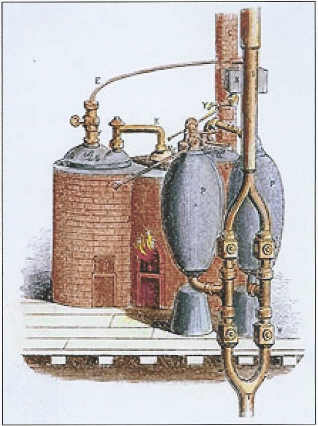
The conceptual seeds of steam power were sown in antiquity, with the aeolipile, a simple steam-powered rotor, described by Heron of Alexandria in the 1st century CE. However, these were largely scientific curiosities. The practical journey began in 17th-century England with Thomas Savery's "Miner's Friend" (1698), a steam pump that, while innovative, suffered from low efficiency and explosion risks. The true breakthrough for widespread application arrived in 1712 with Thomas Newcomen's atmospheric engine, which used a piston and cylinder to pump water from mines, becoming the first commercially viable steam engine. This engine, though inefficient by modern standards, was crucial for enabling deeper coal mining, which in turn fueled further industrial development.
⚙️ How It Works
At its core, a steam engine operates by heating water in a boiler to produce high-pressure steam. This steam is then directed into a cylinder, where it expands and pushes a piston. In early engines like Newcomen's, the steam was condensed by injecting cold water, creating a vacuum that atmospheric pressure then exploited to return the piston. James Watt's critical innovation was the separate condenser (patented 1769), which kept the cylinder hot and dramatically improved efficiency. Further refinements, such as double-acting cylinders and rotary motion mechanisms like the sun and planet gear, allowed steam engines to power machinery directly, not just pumps, ushering in the era of factory production.
📊 Key Facts & Numbers
The steam engine's impact is quantifiable. By 1840, Britain had an estimated 1.5 million horsepower of steam power installed, with steam engines consuming approximately 15 million tons of coal annually. George Stephenson's "Rocket" locomotive, a pinnacle of early steam railway technology, achieved speeds of up to 30 mph in 1829. By the mid-19th century, steamships accounted for over 40% of global shipping tonnage. The efficiency of Watt's engines was roughly 2.5 times that of Newcomen's, a leap that directly translated into reduced fuel consumption and increased operational scope, with some later compound engines achieving thermal efficiencies exceeding 15%.
👥 Key People & Organizations
Key figures in steam engine development include Heron of Alexandria, who documented early steam principles, Thomas Newcomen, credited with the first practical atmospheric engine, and James Watt, whose improvements were foundational to the Industrial Revolution. Richard Trevithick pioneered high-pressure steam engines, leading to the first full-scale working railway steam locomotive in 1804. Isambard Kingdom Brunel was a visionary engineer who extensively utilized steam power in shipbuilding and railway construction, notably with the SS Great Britain and the Great Western Railway. Organizations like the Royal Society played a role in disseminating early scientific findings, while companies like Boulton and Watt commercialized Watt's designs.
🌍 Cultural Impact & Influence
The steam engine's cultural resonance is immense, symbolizing progress, power, and the dawn of the modern industrial age. It fueled the growth of cities, the expansion of empires through faster transportation, and the rise of a new industrial working class. The iconic imagery of steam locomotives and factories became central to 19th-century art and literature, from the paintings of J.M.W. Turner to the novels of Charles Dickens. The very concept of "steam power" became a metaphor for energy and momentum, influencing everything from political discourse to early science fiction narratives.
⚡ Current State & Latest Developments
While large-scale steam engines are largely superseded in developed nations by electric motors and internal combustion engines, they remain relevant in specific niches. Modern industrial applications include steam turbines for electricity generation in fossil fuel and nuclear power plants, which are the backbone of global power grids. Some historical railways and maritime vessels still operate steam engines for heritage purposes or specialized tasks. Research continues into advanced steam cycles and materials for potential future applications, particularly in waste heat recovery and geothermal energy systems, though their dominance has waned significantly since the early 20th century.
🤔 Controversies & Debates
The development of the steam engine was not without its controversies. Early engines, particularly those operating at high pressures like Richard Trevithick's designs, posed significant safety risks due to boiler explosions, leading to debates about regulation and engineering standards. The immense demand for coal to fuel these engines raised early environmental concerns regarding air pollution and resource depletion, issues that continue to resonate today. Furthermore, the social upheaval caused by industrialization, including harsh working conditions in factories powered by steam and the displacement of traditional craftspeople, remains a subject of historical and ethical debate.
🔮 Future Outlook & Predictions
The future of steam engine technology is likely to be one of niche applications and integration with renewable energy sources. Advanced supercritical and ultra-supercritical steam cycles are being developed to improve the efficiency of thermal power plants, potentially extending the life of coal and nuclear facilities while reducing emissions. There is also interest in using concentrated solar power to generate steam for electricity, creating a cleaner form of steam power. Furthermore, innovations in materials science could enable smaller, more efficient, and safer steam engines for specialized industrial or even portable applications, though they are unlikely to reclaim their former ubiquitous role.
💡 Practical Applications
Steam engines found their most transformative applications in powering the Industrial Revolution. They were crucial for pumping water out of coal and tin mines, enabling deeper extraction of vital resources. In factories, steam engines provided a reliable, stationary power source for machinery like looms and spinning machines, driving mass production. The development of steam locomotives, such as Stephenson's Rocket, revolutionized land transport, enabling faster and more efficient movement of goods and people. Steamships, like Brunel's SS Great Britain, similarly transformed maritime travel and trade, shrinking the world and facilitating global commerce.
Key Facts
- Category
- technology
- Type
- technology