
Contents
Overview
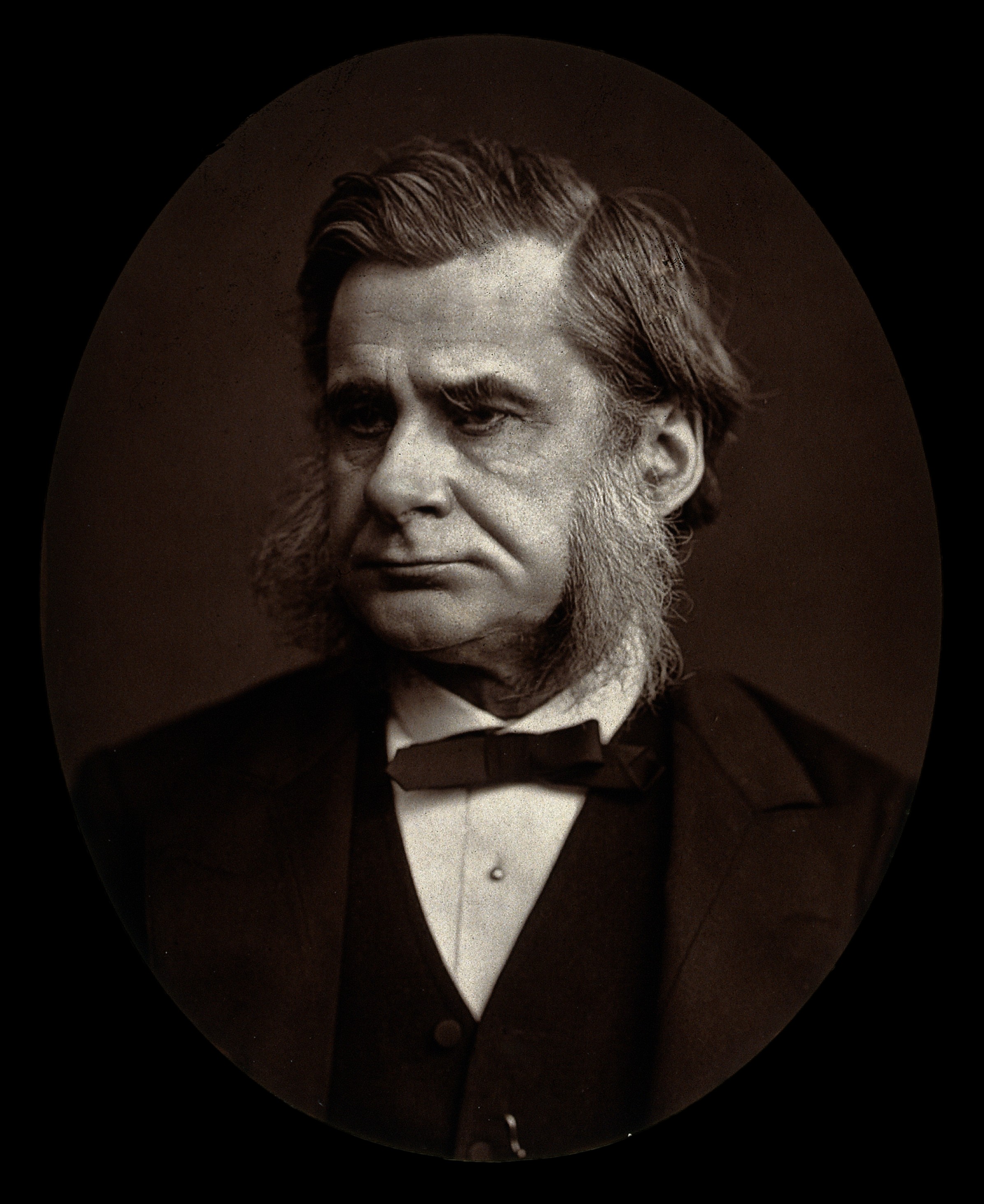
Thomas Henry Huxley (1825-1895) was a towering figure in Victorian science, a biologist whose sharp intellect and formidable debating skills earned him the moniker "Darwin's Bulldog." Far more than just an advocate, Huxley was a rigorous scientist in his own right, contributing significantly to comparative anatomy and paleontology. His tireless efforts to popularize science and defend evolutionary theory against religious and philosophical opposition shaped the intellectual landscape of his era and beyond. He championed a rational, evidence-based approach to understanding the natural world, a stance that continues to resonate in contemporary scientific discourse. Huxley's legacy is one of intellectual courage and a profound commitment to empirical truth.
🌍 Huxley's Intellectual Footprint
Huxley's influence spread far beyond the lecture halls of London. He was instrumental in establishing scientific education as a serious academic pursuit, advocating for its inclusion in curricula and the establishment of institutions dedicated to its advancement. His travels and correspondence connected him with leading thinkers across Europe and America, disseminating his ideas and fostering a global network of scientific inquiry. The scientific method he so ardently promoted became a cornerstone of modern research, influencing fields from medicine to engineering. His work laid groundwork for the philosophy of science as a distinct field of study, emphasizing the importance of verifiable evidence.
🧠 Key Philosophical Stances
At the heart of Huxley's philosophy was agnosticism, a term he coined to describe his position on religious dogma. He argued that one should only assent to propositions for which there is evidence, and that claims about the supernatural or divine lacked such grounding. This led him to champion materialism and naturalism, asserting that the universe operates according to discoverable natural laws, without recourse to supernatural intervention. His commitment to intellectual honesty meant a refusal to accept beliefs on faith alone, a principle that often put him at odds with the prevailing religious sentiments of his time. This rigorous adherence to evidence forms a core tenet of skepticism.
💥 The Darwinian Crusader
Huxley's most famous role was as the staunch defender of Charles Darwin's theory of evolution by natural selection. He famously debated Bishop Samuel Wilberforce in 1860 at the Oxford meeting of the British Association for the Advancement of Science, a confrontation that became legendary. Huxley's articulate and forceful defense of evolutionary principles, particularly his assertion of human kinship with apes, was crucial in shifting public and scientific opinion. This advocacy wasn't merely rhetorical; it was backed by his own extensive research in comparative anatomy, which provided compelling evidence for evolutionary connections. His role solidified the theory of evolution's place in scientific thought.
📚 Major Works & Impact
Huxley's prolific writing career produced numerous influential works. His essays, such as "On the Origin of Species" (a review of Darwin's book, not Darwin's own work) and "Man's Place in Nature," were widely read and debated. "Man's Place in Nature" (1863) was particularly groundbreaking, presenting anatomical evidence for human evolution and directly challenging anthropocentric views. He also wrote extensively on education, ethics, and the role of science in society. These writings not only disseminated scientific ideas but also engaged with broader philosophical questions, making complex concepts accessible to a general audience. His collected essays remain a vital resource for understanding Victorian intellectual history.
🎓 Huxley's Educational Legacy
Beyond his scientific contributions, Huxley was a passionate advocate for educational reform. He believed that a robust scientific education was essential for national progress and individual empowerment. He served on numerous government commissions and played a key role in establishing institutions like the Royal School of Mines (now part of Imperial College London). Huxley championed the idea of meritocracy in education, arguing that opportunities should be based on ability rather than social standing. His efforts helped to professionalize scientific teaching and research, laying the foundation for modern university systems and the widespread accessibility of scientific knowledge. His influence can be seen in the structure of STEM education globally.
🤔 Huxley vs. The Establishment
Huxley's intellectual battles were not confined to the scientific arena; they extended into the social and political spheres. He frequently clashed with religious authorities and traditionalists who resisted the implications of scientific discovery. His advocacy for secular education and his critique of established religious institutions made him a controversial figure. Yet, his unwavering commitment to reason and empirical evidence earned him widespread respect, even among his opponents. This tension between scientific progress and entrenched dogma is a recurring theme in intellectual history, and Huxley stands as a prime example of a thinker who navigated these conflicts with remarkable tenacity. His debates with figures like Bishop Wilberforce are case studies in science communication.
💡 The Modern Relevance of Huxley
In the 21st century, Huxley's emphasis on evidence-based reasoning and critical thinking remains profoundly relevant. In an era awash with misinformation and pseudoscience, his call for intellectual honesty and skepticism towards unsubstantiated claims is more vital than ever. His agnostic stance continues to inform discussions about faith, reason, and the limits of human knowledge. Furthermore, his advocacy for accessible and rigorous scientific education underscores the ongoing need to equip citizens with the tools to understand complex scientific issues, from climate change to public health. Huxley's legacy challenges us to approach the world with curiosity, rigor, and an open, yet critical, mind.
Key Facts
- Year
- 1825
- Origin
- London, England
- Category
- Philosophy & Science
- Type
- Person
Frequently Asked Questions
What is agnosticism and why did Huxley coin the term?
Agnosticism, a term coined by Thomas Henry Huxley, describes the view that the existence of God, the divine, or the supernatural is unknown and perhaps unknowable. Huxley used it to express his belief that one should only assent to propositions for which there is evidence. He felt existing terms like 'atheist' or 'theist' implied a certainty he did not possess regarding religious claims. His position was one of intellectual humility, emphasizing the limits of human knowledge when faced with unprovable assertions. This stance became a cornerstone of his philosophical outlook.
What was the significance of Huxley's debate with Bishop Wilberforce?
The 1860 debate between Huxley and Bishop Samuel Wilberforce at the Oxford meeting of the British Association for the Advancement of Science was a pivotal moment in the public reception of Darwin's theory of evolution. Wilberforce, a skilled orator, attempted to ridicule evolutionary ideas, famously asking Huxley if he descended from an ape on his grandfather's or grandmother's side. Huxley's reportedly sharp retort, questioning Wilberforce's own intellectual lineage, turned the tide. The event is widely seen as a victory for evolutionary science, demonstrating the power of reasoned argument against dogma and bolstering Huxley's reputation as 'Darwin's Bulldog'.
How did Huxley contribute to science education?
Huxley was a fervent advocate for reforming science education, believing it was crucial for societal progress. He pushed for the inclusion of science in school curricula, arguing for its practical and intellectual benefits. He was instrumental in the establishment and development of institutions like the Royal School of Mines, emphasizing empirical learning and rigorous training. Huxley believed that scientific literacy should be accessible to all, not just an elite few, and championed meritocracy in educational opportunities. His efforts helped professionalize scientific teaching and research, shaping modern educational systems.
What is 'Man's Place in Nature' about?
'Man's Place in Nature' (1863) is one of Thomas Henry Huxley's most important works, where he presented anatomical evidence for human evolution and argued for humanity's kinship with other primates. He meticulously compared human and ape anatomy, highlighting similarities that challenged prevailing views of human exceptionalism. The book directly supported Darwin's theories by placing humans within the natural evolutionary process, rather than as a separate creation. It was a bold and controversial statement that significantly influenced discussions on human origins and our relationship with the animal kingdom.
Was Huxley an atheist?
Huxley identified as an agnostic, not an atheist. While both positions reject belief in God, agnosticism specifically emphasizes the unknowability of God's existence. Huxley believed that without sufficient evidence, it was intellectually dishonest to claim either the existence or non-existence of a deity. He preferred the term 'agnostic' to describe his position, highlighting his commitment to withholding judgment in the absence of proof. This distinction is crucial to understanding his philosophical stance on religious and metaphysical questions.
What is the lasting impact of Huxley's work?
Huxley's lasting impact lies in his championing of scientific rationalism, his defense of evolutionary theory, and his advocacy for science education. He popularized a rigorous, evidence-based approach to understanding the world, which remains the bedrock of modern science. His coining of 'agnosticism' provided a framework for discussing the limits of human knowledge. Furthermore, his efforts to reform education helped establish science as a vital academic discipline, influencing countless educational institutions and curricula worldwide. His writings continue to inspire critical thinking and intellectual honesty.