
Contents
Overview
The wah-wah pedal is an iconic audio effects unit that manipulates an instrument's timbre by sweeping a band-pass filter across the frequency spectrum, creating a distinctive 'wah-wah' sound reminiscent of the human voice. Its origins trace back to early 20th-century brass instrument techniques, later translated into electronic circuits for electric guitars. Controlled by a foot-operated treadle connected to a potentiometer, it allows players to dynamically alter their tone, from subtle timbral shifts to pronounced vocal-like glides and rhythmic 'wacka-wacka' patterns. Beyond live performance, 'cocked-wah' settings offer fixed tonal shaping, while envelope-controlled 'auto-wah' pedals automate the effect. With an estimated Vibe Score of 88, the wah pedal remains a cornerstone of guitar effects, influencing genres from psychedelic rock to funk and beyond, and continues to be a vital tool for sonic exploration.
🎵 Origins & History
Brass players like Vic Fountain and Trummy Young discovered that by manipulating the bell of their trombones with a mute, they could achieve a vocal, crying effect. This expressive technique, often described as a 'wah-wah' sound, was later meticulously replicated electronically. Early prototypes emerged from companies like Vox and Thomas Organ Company. This innovation transformed the electric guitar's sonic palette, moving it beyond mere amplification to a more vocal and expressive instrument.
⚙️ How It Works
At its heart, the wah-wah pedal is a frequency-sweeping filter. A foot-controlled potentiometer dictates the position of a rocker pedal. This potentiometer is wired to control the center frequency of a band-pass filter. As the player rocks the pedal forward (toe down), the filter's center frequency moves up the audible spectrum, emphasizing higher frequencies and creating a brighter, more open sound. Conversely, rocking the pedal back (heel down) lowers the center frequency, accentuating lower frequencies and producing a darker, more muted tone. This spectral glide, when applied to an electric guitar signal, generates the characteristic 'wah-wah' sound, mimicking the human vocal tract's resonance changes. Some pedals also incorporate inductors and capacitors to shape the filter's 'Q' factor, influencing the sharpness and intensity of the frequency sweep.
📊 Key Facts & Numbers
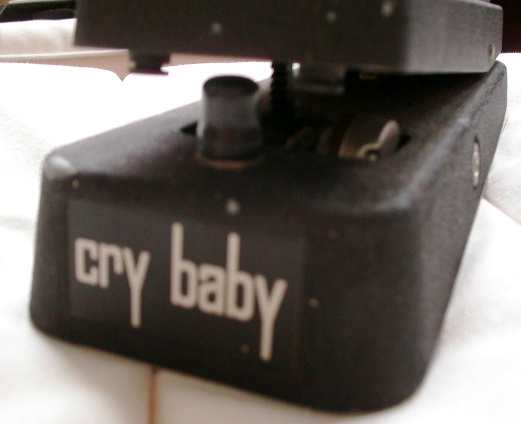
The wah-wah pedal has been a staple in music for over five decades. The Vox Cry Baby alone has seen over 1.5 million units produced. Estimates suggest that over 50 distinct wah pedal models are currently available from various manufacturers, ranging from vintage reissues to modern digital interpretations. The global market for guitar effects pedals, including wahs, is valued at hundreds of millions of dollars annually, with projections indicating continued growth. Guitarists worldwide, from hobbyists to professionals, utilize wah pedals, with an estimated 70% of electric guitar players owning at least one wah pedal at some point in their careers.
👥 Key People & Organizations
Several key figures and organizations shaped the wah-wah pedal's history. Del Casher, a guitarist and engineer, is widely recognized for his pioneering work in adapting the wah effect for electric guitar, notably for Frank Zappa. George Fulller, an engineer at Vox, is credited with developing the first commercially successful wah pedal, the Vox V846. Brad Plumb and Jim Dunlop of the Jim Dunlop Corporation revitalized the pedal's popularity with their reissue of the classic Vox Cry Baby in the 1980s, which has since become a dominant force in the market. Other influential manufacturers include Dunlop, Morley, and Dunlop, each offering distinct takes on the classic design. Jimi Hendrix and Kirk Hammett are legendary users whose iconic solos cemented the wah's place in guitar lexicon.
🌍 Cultural Impact & Influence
The wah-wah pedal's influence extends far beyond its technical function, deeply embedding itself into the cultural fabric of popular music. It became synonymous with the psychedelic rock of the late 1960s, famously employed by Jimi Hendrix on tracks like 'Voodoo Child (Slight Return)' and Eric Clapton with Cream on 'White Room'. In the 1970s, it became a cornerstone of funk music, with artists like Jimi Hendrix and Shuggie Otis utilizing its rhythmic 'wacka-wacka' sound. Its expressive capabilities have made it a go-to effect for countless guitar solos across genres, from blues and rock to metal and jazz fusion. The pedal's distinctive sound has been sampled and emulated in electronic music, hip-hop, and even film scores, demonstrating its pervasive sonic reach and enduring appeal.
⚡ Current State & Latest Developments
The wah-wah pedal remains a vibrant and evolving segment of the effects pedal market. While classic designs like the Vox Cry Baby and Morley continue to be bestsellers, manufacturers are pushing boundaries. New models incorporate digital signal processing (DSP) for greater versatility, offering multiple wah voicings and programmable settings. Dunlop reportedly introduced the Cry Baby Bass Wah, specifically voiced for bass guitar frequencies, acknowledging the growing use of wahs by bassists. The rise of MIDI integration allows wah pedals to sync with other studio gear and stage setups. Furthermore, boutique pedal builders are experimenting with unique inductor types, circuit modifications, and even optical control systems to offer distinct sonic flavors, ensuring the wah pedal's relevance for a new generation of musicians.
🤔 Controversies & Debates
The primary debate surrounding wah pedals often centers on analog versus digital implementations. Purists argue that analog circuits offer a more organic, dynamic, and harmonically rich sweep that digital emulations struggle to replicate. Conversely, digital wah pedals offer greater consistency, programmability, and the ability to emulate a vast array of classic and novel wah sounds within a single unit, appealing to players seeking maximum flexibility. Another point of contention is the 'cocked-wah' effect: while some view it as a useful fixed filter for tonal shaping, others consider it a less dynamic and more static sound compared to the expressive sweep of a moving pedal. The debate over which type of wah pedal is 'superior' often depends on individual player preference, musical context, and desired sonic outcome.
🔮 Future Outlook & Predictions
The future of the wah-wah pedal likely involves a continued convergence of analog warmth and digital intelligence. We can anticipate more sophisticated DSP algorithms that more accurately capture the nuances of vintage analog circuits, potentially offering the best of both worlds. Expect to see increased integration with DAW software and mobile music production apps, allowing wah effects to be controlled and automated with unprecedented precision. The exploration of new control methods beyond the traditional foot treadle, such as gesture control or brain-computer interfaces, remains a speculative but exciting possibility for truly novel sonic manipulation. Furthermore, as bass guitarists increasingly adopt wah effects, dedicated bass wah pedals with extended low-frequency response and robust build quality will likely become more prevalent.
💡 Practical Applications
The wah-wah pedal's applications are diverse, extending beyond its iconic use in rock and funk guitar solos. Guitarists employ it as a subtle tone-shaping tool, using a 'cocked-wah' setting to add presence or cut through a dense mix. Bassists utilize wah pedals to add rhythmic articulation and vocal-like qualities to their lines, particularly in funk and fusion genres. Keyboardists and synthesizers can also benefit from wah effects, adding expressive sweeps to organ pads or synth leads. In audio production, wah filters are used on vocals, drums, and even orchestral elements to create unique timbral textures or rhythmic effects. Its ability to dynamically alter the spectral content of any audio signal makes it a versatile tool for sound designers and producers seeking to add movement and character to their mixes.
Key Facts
- Category
- technology
- Type
- topic