
Contents
Overview
A wiki for education and research is a dynamic, collaboratively edited online platform designed to aggregate, organize, and disseminate knowledge within academic and scholarly communities. Unlike static textbooks or traditional journals, these wikis allow a broad base of users—students, educators, researchers, and experts—to contribute, refine, and update content in real-time. This approach fosters a living repository of information, enabling rapid integration of new findings and corrections of errors, a stark contrast to the often-glacial pace of academic publishing. The underlying technology, derived from the original WikiWikiWeb, emphasizes ease of contribution and decentralized authorship, making knowledge creation accessible. Specialized wikis focused on specific scientific disciplines or research areas exist, such as WikiGenes for genetics. These platforms are not merely repositories but active environments for scholarly discourse and knowledge co-creation.
🎵 Origins & History
The genesis of wikis for education and research is inextricably linked to the invention of the WikiWikiWeb, a platform designed for rapid, collaborative web content creation. Early adopters recognized its potential for shared knowledge building. By the early 2000s, the concept began to permeate academic circles, with projects like Wikipedia, launched in 2001, demonstrating the power of mass collaboration on an unprecedented scale. This global encyclopedia, initially met with skepticism by academics, rapidly evolved into a primary reference point for students and the public alike, proving that decentralized, community-driven knowledge could rival traditional authoritative sources. Specialized academic wikis, though less visible, began to emerge, focusing on specific domains like biology and medicine, aiming to provide more curated and expert-driven content than general-purpose platforms.
⚙️ How It Works
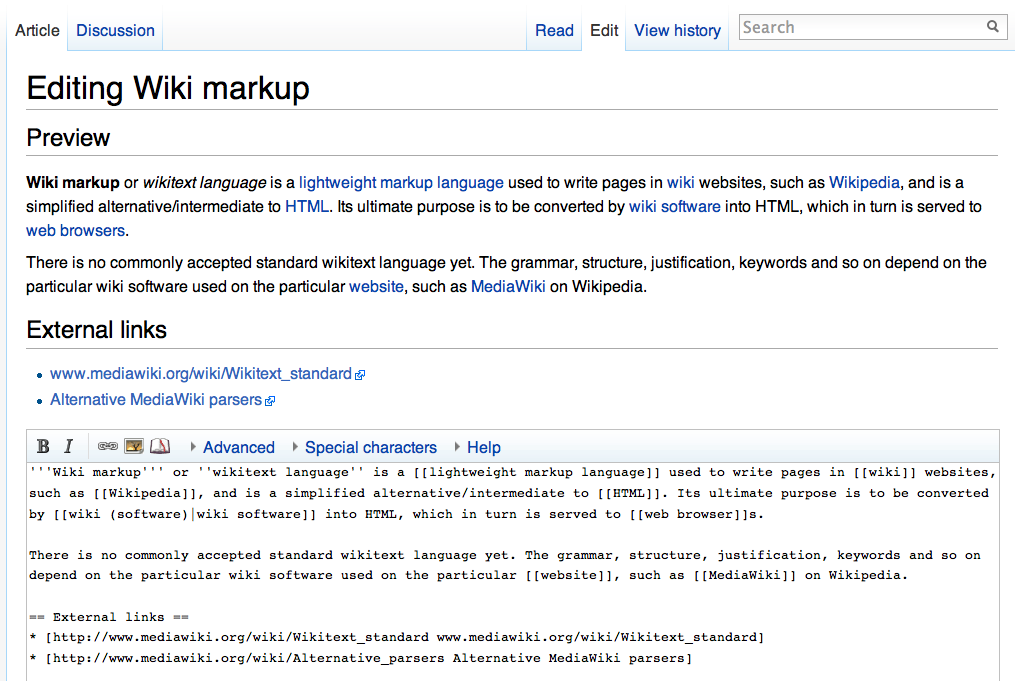
At its core, a wiki for education and research operates on a simple yet powerful principle: open, browser-based editing. Users can create new pages or modify existing ones using a lightweight markup language or a visual editor, with changes logged in a version history. This transparency allows for peer review and accountability; any edit can be traced back to its author, and previous versions are readily accessible. The decentralized nature means there's no single editor-in-chief; authority is distributed among contributors and often managed through community consensus and established editorial policies. This structure facilitates the rapid incorporation of new research findings, corrections of factual errors identified by the community, and the development of comprehensive knowledge bases that grow organically based on user needs. Platforms like MediaWiki, the software powering Wikipedia, are foundational, providing the robust infrastructure for managing these complex, interconnected knowledge graphs.
📊 Key Facts & Numbers
The scale of knowledge managed by educational and research wikis is staggering. Specialized wikis cater to niche academic fields. For instance, WikiGenes aims to catalog human genes and diseases, featuring thousands of entries. The collaborative effort involves millions of volunteer editors globally, contributing billions of words of content. The cost-effectiveness is also a significant factor; many such wikis are maintained with minimal funding, relying heavily on volunteer labor, a stark contrast to the multi-million dollar budgets of traditional academic publishers.
👥 Key People & Organizations
Key figures in the wiki movement include Ward Cunningham, the inventor of the wiki concept, and Jimmy Wales and Larry Sanger, co-founders of Wikipedia. While Cunningham provided the foundational technology, Wales and Sanger scaled the wiki concept into a global phenomenon. Beyond these pioneers, countless domain experts and passionate volunteers form the backbone of educational wikis. Organizations like the Wikimedia Foundation provide crucial infrastructure and governance for large-scale projects like Wikipedia. In specialized fields, research institutions and academic societies often play a role in endorsing or supporting discipline-specific wikis, ensuring a level of scholarly rigor. For example, the NCBI supports resources like PubChem which, while not strictly a wiki, embodies the collaborative data-sharing ethos vital to modern research.
🌍 Cultural Impact & Influence
Wikis for education and research have profoundly reshaped how information is accessed and understood globally. Wikipedia has become a default starting point for countless students and researchers, influencing curricula and research methodologies. Its open nature has democratized access to information, breaking down traditional barriers to knowledge. Specialized wikis, such as those in medicine or genetics, are becoming indispensable tools for practitioners and scientists, enabling faster dissemination of critical data and collaborative problem-solving. The very act of contributing to a wiki can be an educational experience in itself, teaching users about research, citation, and collaborative writing. However, this widespread adoption has also sparked debates about reliability and academic integrity, forcing educational institutions to adapt their policies regarding the use of wiki-based resources.
⚡ Current State & Latest Developments
The landscape of educational and research wikis is continually evolving. While Wikipedia remains the dominant force, there's a growing trend towards more specialized, community-governed wikis focused on specific scientific domains. Projects are increasingly exploring the integration of advanced features like semantic web technologies to enable more sophisticated data querying and interlinking of knowledge. The rise of AI is also beginning to impact wiki development, with tools being explored for automated content generation, fact-checking, and identifying areas needing expansion. Furthermore, there's a push to enhance the accessibility and usability of these platforms for a wider range of users, including those with disabilities or limited technical expertise. The Wikimedia movement continues to innovate, exploring new governance models and content formats to maintain relevance in a rapidly changing digital world.
🤔 Controversies & Debates
The primary controversy surrounding wikis in education and research centers on their reliability and authority. Critics, particularly in traditional academic settings, point to the potential for factual inaccuracies, vandalism, and bias introduced by unvetted contributors. The decentralized editing model, while a strength for rapid updates, can also be a weakness, allowing misinformation to persist until community consensus or moderation intervenes. This has led to ongoing debates about whether wiki content should be considered a legitimate academic source, with many institutions advising students to use them as starting points for research rather than definitive references. Another point of contention is the perceived 'democratization' of knowledge, which some argue dilutes the authority of established experts and peer-reviewed scholarship. The balance between open access and rigorous editorial control remains a persistent challenge.
🔮 Future Outlook & Predictions
The future of wikis in education and research points towards greater integration with emerging technologies and a more sophisticated approach to knowledge management. We can anticipate wikis becoming more interactive, potentially incorporating simulations, interactive datasets, and AI-driven personalized learning paths. The concept of the 'living textbook' will likely expand, with wikis serving as dynamic, continuously updated educational resources that adapt to new discoveries and pedagogical approaches. Furthermore, the interoperability between different specialized wikis and larger knowledge graphs will likely increase, creating a more interconnected web of scholarly information. The challenge will be to maintain the core principles of open collaboration and accessibility while ensuring the accuracy, depth, and scholarly integrity demanded by advanced research and education. Expect to see more AI-assisted curation and fact-checking tools becoming standard features.
💡 Practical Applications
Wikis serve a multitude of practical applications within educational and research contexts. For students, they offer an accessible entry point to understanding complex topics, providing overview
Key Facts
- Category
- platforms
- Type
- topic