
Contents
Overview
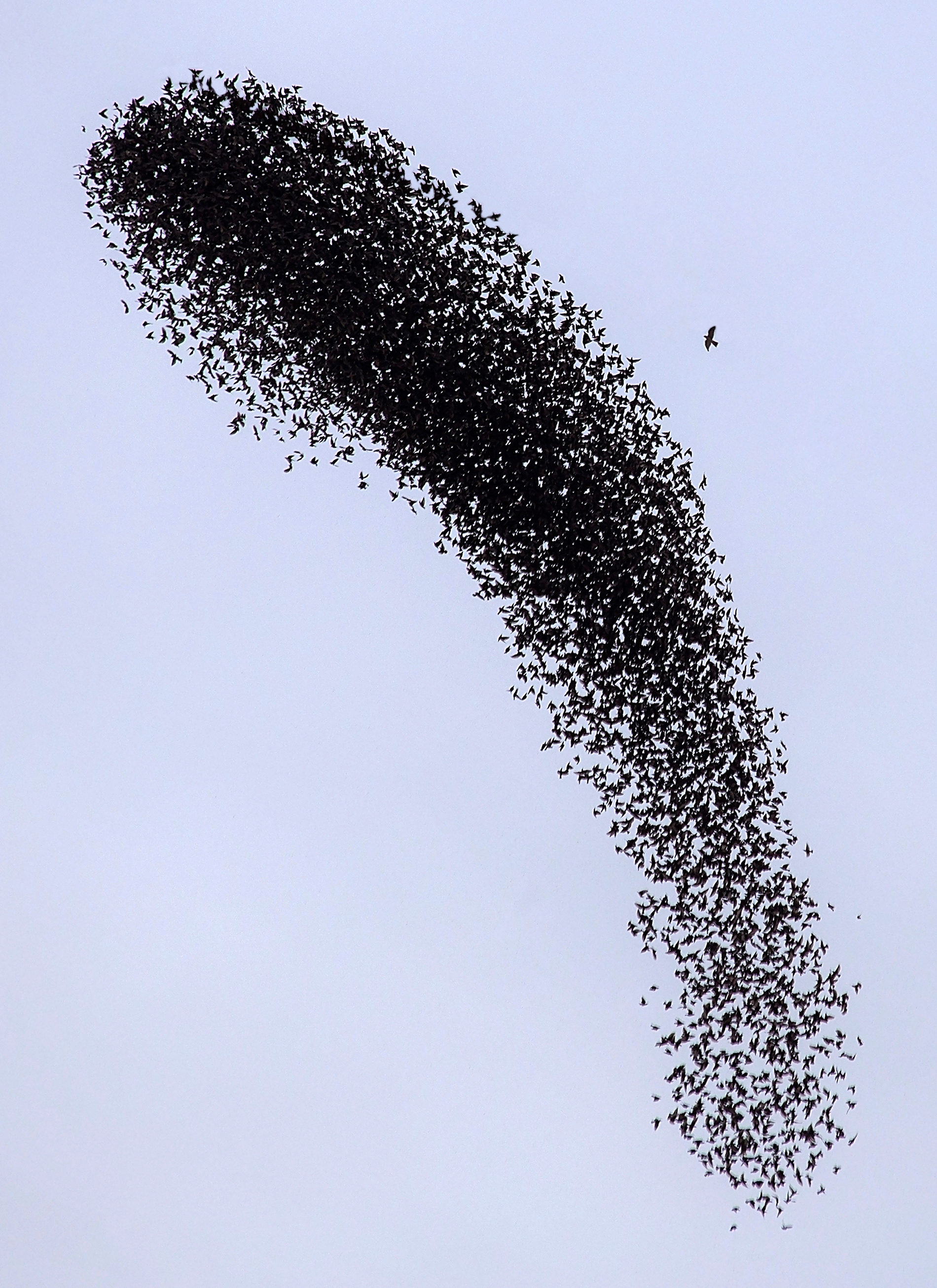
The conceptual seeds of swarm intelligence were sown long before its formal christening. Ancient observers marveled at the coordinated movements of flocks of birds and schools of fish, noting an apparent collective purpose. The formalization of swarm intelligence as a computational concept has been influenced by research into the remarkable efficiency of social insects like ants and bees in foraging and navigation, leading to algorithms like Ant Colony Optimization (ACO) and Particle Swarm Optimization (PSO). Precursors can also be found in early cybernetics and systems theory, which explored feedback loops and emergent properties in complex systems, though not explicitly framed as SI.
⚙️ How It Works
At its heart, swarm intelligence operates on the principle of decentralized control and local interactions. A swarm system typically consists of a population of simple agents, often referred to as 'boids' or 'particles,' each possessing limited sensing and processing capabilities. These agents interact with their immediate neighbors and their environment according to a predefined set of simple rules. Crucially, there is no single leader or central controller dictating the swarm's actions. Instead, global behavior emerges from the aggregate of these local interactions. For instance, in Ant Colony Optimization, artificial ants deposit virtual pheromones on paths, influencing subsequent ants to favor shorter routes, thus leading the swarm to the most efficient path to a food source. This emergent property, where the whole is greater than the sum of its parts, is the hallmark of SI.
📊 Key Facts & Numbers
The efficacy of swarm intelligence algorithms is often demonstrated through their performance on complex optimization problems. The computational complexity of SI algorithms is often polynomial, making them scalable to large problem sizes, unlike some exponential-time algorithms. SI systems exhibit robustness; the failure of a small percentage of agents typically does not cripple the entire system's functionality, a testament to their distributed nature.
👥 Key People & Organizations
Beyond the pioneering work in the field, several key figures and organizations have shaped swarm intelligence. Researchers have been instrumental in developing and applying swarm robotics, demonstrating how simple robots can collectively solve complex tasks. The Association for the Advancement of Artificial Intelligence (AAAI) and the IEEE regularly host conferences and publish research that advances SI theory and applications.
🌍 Cultural Impact & Influence
Swarm intelligence has permeated various cultural and technological spheres, often inspiring science fiction narratives and influencing design principles. The elegant, seemingly effortless coordination of a bird flock or fish school has captivated artists and filmmakers, appearing in documentaries and animated features that highlight the beauty of emergent behavior. In technology, the principles of SI have influenced the design of distributed computing systems, traffic management algorithms, and even the choreography of drone light shows, where hundreds of individual drones act as a cohesive unit. The concept itself has become a metaphor for effective teamwork and decentralized problem-solving in business and organizational theory, emphasizing collaboration and emergent leadership over rigid hierarchies.
⚡ Current State & Latest Developments
The field of swarm intelligence is experiencing rapid evolution, particularly in the integration of SI with other AI paradigms like deep learning and reinforcement learning. Researchers are developing hybrid algorithms that combine the global search capabilities of SI with the pattern recognition and decision-making prowess of deep learning models. In robotics, the focus is shifting towards more autonomous and adaptive swarms capable of operating in unpredictable environments, such as disaster zones or underwater exploration.
🤔 Controversies & Debates
Despite its successes, swarm intelligence is not without its controversies and debates. A primary concern revolves around the 'black box' nature of emergent behavior; while the global outcome is often desirable, understanding precisely why a particular emergent behavior arises from specific agent rules can be challenging, making debugging and guaranteed performance difficult. Critics also point to the potential for unintended consequences, where simple local rules could lead to catastrophic global failures under unforeseen circumstances, a phenomenon sometimes dubbed 'swarm collapse.' Furthermore, the ethical implications of deploying autonomous swarms, particularly in military contexts, raise significant questions about accountability and control, a debate that intensified following advancements in autonomous drone technology in the late 2010s and early 2020s.
🔮 Future Outlook & Predictions
The future of swarm intelligence appears poised for significant expansion, driven by advancements in robotics, AI, and sensor technology. We can anticipate increasingly sophisticated swarm robotics capable of complex construction, environmental monitoring, and even medical interventions. The integration of SI with edge computing will enable swarms to make real-time decisions without constant reliance on centralized servers, enhancing their autonomy and responsiveness. Furthermore, SI principles are likely to be applied to novel domains, such as managing complex biological systems or optimizing large-scale energy grids, pushing the boundaries of what collective intelligence can achieve.
💡 Practical Applications
Swarm intelligence finds practical application across a diverse range of fields. In logistics and transportation, SI algorithms like Ant Colony Optimization are used for optimizing delivery routes and managing traffic flow in smart cities. In robotics, swarms of drones are employed for aerial mapping, surveillance, and search-and-rescue operations, as demonstrated by projects from companies like Parrot and DJI. In telecommunications, SI helps in dynamic resource allocation and network routing. The financial sector utilizes Particle Swarm Optimization for portfolio optimization and algorithmic trading. Even in biological research, SI models help understand complex ecological interactions and disease spread.
Key Facts
- Category
- science
- Type
- topic